
Browse by Category
Fiction
- Action & Adventure
- African American
- Anthologies
- Children's Fiction
- Classics
- Comics & Graphic Novels
- Coming of Age
- Contemporary
- Cultural & Regional
- Drama
- Erotica
- Fantasy
- General
- Historical Fiction
- Horror
- Humor & Satire
- Literary Fiction
- Mystery, Thriller & Suspense
- Poetry
- Religious & Inspirational
- Romance
- Science Fiction
- Short Stories
- War & Military
- Westerns
- Women's Fiction
- Young Adult
Non-Fiction
- Antiques & Collectibles
- Arts & Photography
- Biographies & Memoirs
- Business & Money
- Children's Non-Fiction
-
Computers & Technology
- Artificial Intelligence
- Computer Science
- Cybersecurity & Cryptography
- Data Science & Analytics
- Databases & Big Data
- Game Development & Design
- General
- Hardware & DIY
- Mobile App Development
- Networking & Cloud Computing
- Operating Systems
- Programming
- Robotics
- Software
- Software Engineering
- User Experience (UX) & Design
- Web Development & Design
- Cooking, Food & Wine
- Crafts, Hobbies & Home
- Education & Teaching
- Engineering
- General
- Health, Fitness & Dieting
-
History
- African History
- African History - North Africa
- African History - Sub-Saharan Africa
- American History
- American History - 20th Century
- American History - Civil War
- American History - Colonial Period
- Ancient History
- Asian History
- Asian History - China
- Asian History - India
- Asian History - Japan
- Asian History - Southeast Asia
- European History
- European History - Ancient Greece
- European History - Ancient Rome
- European History - Medieval
- European History - Modern
- European History - Renaissance
- General
- Middle Eastern History
- Military History
- Military History - Aviation
- Military History - Naval
- Social & Cultural History
- World History
- Humor & Entertainment
- Industrial Technology
- Language Learning
- Law
- LGBTQ+ Non-Fiction
- Literary Criticism
- Medical Books
- Parenting & Relationships
- Philosophy
- Politics & Social Sciences
- Reference
- Religion & Spirituality
-
Science & Math
- Agricultural Sciences
- Astronomy & Space Science
- Behavioral Sciences
- Biological Sciences
- Botany & Plant Science
- Chemistry
- Earth Sciences
- Engineering - Chemical
- Engineering - Civil
- Engineering - Electrical
- Engineering - Mechanical
- Environment
- General
- Geology
- Mathematics
- Nature & Ecology
- Oceanography
- Paleontology
- Physics
- Statistics
- Self-Help
- Sports & Outdoors
- Study Aids
- Sustainability & Green Living
- Textbooks
- Transportation
- Travel
- True Crime
- Urban Planning & Development
- Veterinary Medicine
- Writing & Publishing
Jump to Section
MixCache.com Total Access
Unlimited reading and audiobooks for every book published by MixCache.com.
Included titles carry the MTA badge.
Learn more →
A History of RTX Corporation
MTA
The Story of an S&P 500 Company
About this book:
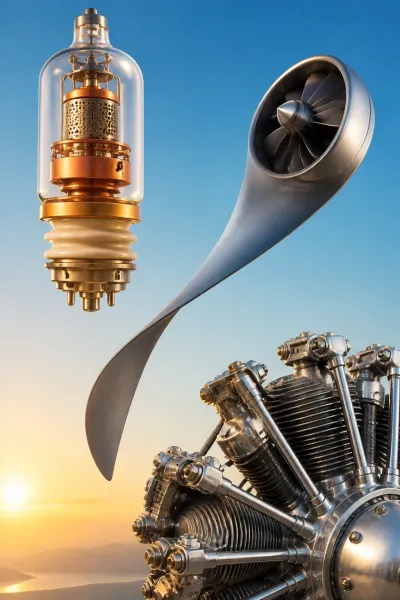
The history of RTX Corporation traces the convergent paths of two industrial titans, Raytheon Company and United Technologies Corporation (UTC), from their early 20th-century origins to their 2020 merger. Raytheon, founded in 1922 as the American Appliance Company, pivoted from refrigeration to electronics, pioneering vacuum tubes and, crucially, magnetron production for World War II radar. Simultaneously, UTC's lineage began with Frederick Rentschler’s Pratt & Whitney Aircraft Company in 1925, whose Wasp engine revolutionized aviation, and the United Aircraft and Transport Corporation, which integrated engine, airframe, and propeller manufacturing before a 1934 government-mandated breakup created United Aircraft Corporation. Both companies proved indispensable to the Allied war effort—Raytheon through radar and electronics, UTC through Pratt & Whitney engines powering vast fleets and Sikorsky helicopters pioneering rotary-wing flight—establishing deep ties to national defense that defined their post-war trajectories.
In the Cold War era, both firms expanded into global technology leaders. Raytheon became the world's largest guided missile producer, developing iconic systems like the Hawk, Sparrow, Sidewinder, and the enduring Patriot air defense system, while advancing radar and electronic warfare. UTC, renamed United Technologies Corporation in 1975, aggressively diversified under Harry Gray, acquiring Otis Elevator and Carrier Corporation to build a balanced portfolio spanning aerospace (Pratt & Whitney, Sikorsky, Hamilton Standard) and commercial building systems. This period saw Pratt & Whitney lead the jet age with engines like the J57 and F100, Sikorsky dominate military helicopters, and both companies contribute critically to the Space Race—Raytheon building the Apollo Guidance Computer and UTC providing life support, space suits, and Sea King recovery helicopters. Subsequent decades were marked by massive consolidation: Raytheon absorbed the defense units of Texas Instruments and Hughes Aircraft, while UTC acquired Sundstrand and Goodrich, forming Collins Aerospace, even as UTC eventually spun off Otis and Carrier to focus purely on aerospace.
The digital age and the rise of software and AI transformed both entities, shifting focus from hardware-centric engineering to intelligent, networked systems. Raytheon integrated AI into missile defense, cybersecurity, and ISR processing, while UTC leveraged digital twins, predictive maintenance, and smart building technologies across Pratt & Whitney engines, Collins Aerospace avionics, Otis elevators, and Carrier HVAC systems. Both navigated complex global supply chains, stringent regulatory landscapes, and escalating cyber threats, institutionalizing compliance, ethics, and sustainability—pursuing net-zero aviation goals through hybrid-electric propulsion, hydrogen, and sustainable fuels. A shared culture of relentless R&D investment, systems engineering, and intellectual property creation underpinned breakthroughs from the microwave oven and geared turbofan engines to hypersonic weapons and autonomous flight.
This century of parallel evolution culminated in the April 2020 merger of Raytheon and UTC's aerospace businesses, forming RTX Corporation. Organized into Collins Aerospace, Pratt & Whitney, Raytheon Intelligence & Space, and Raytheon Missiles & Defense, the combined entity leverages unparalleled breadth—from propulsion and avionics to advanced sensors, hypersonics, and integrated air defense—to offer full-spectrum solutions across commercial and defense domains. As an enduring S&P 500 leader, RTX sustains its legacy through massive R&D spending, a global workforce of engineers, and a strategic focus on sustainable aviation, advanced air mobility, hypersonics, and AI-driven digital integration, positioning the corporation to define the future of aerospace and defense in the 21st century.
What You'll Find Inside:
- The dual-origin story of RTX Corporation, tracing the parallel histories of Raytheon (electronics and radar pioneer) and United Technologies Corporation (aerospace engines and systems) from their 1920s foundations through their 2020 merger.
- Critical wartime innovations including Raytheon's mass production of magnetrons for radar systems and UTC's Pratt & Whitney engines powering Allied aircraft, establishing both companies as pillars of the military-industrial complex.
- Pivotal contributions to the Space Race, from Raytheon's Apollo Guidance Computer and microwave communications to Pratt & Whitney's RL10 upper-stage engines and Sikorsky Sea King helicopters for astronaut recovery.
- Cold War defense breakthroughs including Raytheon's Patriot missile system and advanced radar networks, alongside Pratt & Whitney's jet engines (J57, F100) and Sikorsky's military helicopters that defined Western air power for decades.
- The strategic 2020 merger creating RTX Corporation as an S&P 500 leader, and its current focus on next-generation technologies: sustainable aviation (hybrid-electric, hydrogen), hypersonics, AI-driven autonomous systems, and integrated air and missile defense.
Who's It For:
This book is ideal for aerospace and defense industry professionals, business historians, and investors seeking a comprehensive understanding of how two industrial giants evolved and merged to shape modern aviation and national security. It will particularly benefit readers interested in corporate strategy, technological innovation across decades, and the intersection of government policy with private enterprise in building an enduring S&P 500 company.
Table of Contents:
- Introduction: The Genesis of a Giant
- Chapter 1: The Early Seeds - Foundation and Formative Years
- Chapter 2: Pioneering the Skies - Early Aerospace Ventures
- Chapter 3: Wartime Innovations - Contribution to the Allied Effort
- Chapter 4: Post-War Diversification - Expanding Horizons
- Chapter 5: The Space Race Era - Pushing Boundaries
- Chapter 6: Cold War Technologies - Defense and Deterrence
- Chapter 7: Globalization and Expansion - Reaching New Markets
- Chapter 8: Technological Revolutions - Adapting to Change
- Chapter 9: Mergers and Acquisitions - Shaping the Modern Corporation
- Chapter 10: The Digital Age - Embracing Information Technology
- Chapter 11: Environmental Challenges - Sustainable Practices
- Chapter 12: Leadership and Vision - Guiding the Company's Destiny
- Chapter 13: Economic Downturns and Resilience - Navigating Storms
- Chapter 14: Research and Development - Fueling Future Growth
- Chapter 15: Corporate Culture and Values - The Human Element
- Chapter 16: Competing in a Globalized World - International Strategies
- Chapter 17: Breakthrough Products and Services - Defining Moments
- Chapter 18: Regulatory Landscapes - Compliance and Ethics
- Chapter 19: Philanthropy and Community - Giving Back
- Chapter 20: The Rise of Software and AI - New Frontiers
- Chapter 21: Supply Chain Complexities - Managing Global Operations
- Chapter 22: Cybersecurity and Data Protection - Safeguarding Assets
- Chapter 23: The Future of Aerospace - Next-Generation Technologies
- Chapter 24: Sustaining Innovation - A Legacy of Progress
- Chapter 25: RTX Corporation in the 21st Century - An Enduring S&P 500 Legacy
Author:
Published By:
Date Published:
October 10, 2026
Type:
Nonfiction
Language:
English
Word Count:
38,959 words
Reading Time:
2 hours 44 minutes
Sample:
MixCache.com Total Access
Get unlimited access to this book + all books published by MixCache.com for $11.99/month
Subscribe to MTAOr purchase this book individually below
Order:
Buy the A History of RTX Corporation ebook on MixCache.com:
Buy Now
Full ebook will be available immediately
- read online or download as a PDF file.
$5 account credit for all new MixCache.com accounts, usable toward any ebook purchase!*




Ratings & Reviews
Ask Questions About This Book
Have a question about the content? Ask our AI assistant!
Start by asking a question about "A History of RTX Corporation"
Example: "Does this book mention William Shakespeare?"
Thinking...