
Browse by Category
Fiction
- Action & Adventure
- African American
- Anthologies
- Children's Fiction
- Classics
- Comics & Graphic Novels
- Coming of Age
- Contemporary
- Cultural & Regional
- Drama
- Erotica
- Fantasy
- General
- Historical Fiction
- Horror
- Humor & Satire
- Literary Fiction
- Mystery, Thriller & Suspense
- Poetry
- Religious & Inspirational
- Romance
- Science Fiction
- Short Stories
- War & Military
- Westerns
- Women's Fiction
- Young Adult
Non-Fiction
- Antiques & Collectibles
- Arts & Photography
- Biographies & Memoirs
- Business & Money
- Children's Non-Fiction
-
Computers & Technology
- Artificial Intelligence
- Computer Science
- Cybersecurity & Cryptography
- Data Science & Analytics
- Databases & Big Data
- Game Development & Design
- General
- Hardware & DIY
- Mobile App Development
- Networking & Cloud Computing
- Operating Systems
- Programming
- Robotics
- Software
- Software Engineering
- User Experience (UX) & Design
- Web Development & Design
- Cooking, Food & Wine
- Crafts, Hobbies & Home
- Education & Teaching
- Engineering
- General
- Health, Fitness & Dieting
-
History
- African History
- African History - North Africa
- African History - Sub-Saharan Africa
- American History
- American History - 20th Century
- American History - Civil War
- American History - Colonial Period
- Ancient History
- Asian History
- Asian History - China
- Asian History - India
- Asian History - Japan
- Asian History - Southeast Asia
- European History
- European History - Ancient Greece
- European History - Ancient Rome
- European History - Medieval
- European History - Modern
- European History - Renaissance
- General
- Middle Eastern History
- Military History
- Military History - Aviation
- Military History - Naval
- Social & Cultural History
- World History
- Humor & Entertainment
- Industrial Technology
- Language Learning
- Law
- LGBTQ+ Non-Fiction
- Literary Criticism
- Medical Books
- Parenting & Relationships
- Philosophy
- Politics & Social Sciences
- Reference
- Religion & Spirituality
-
Science & Math
- Agricultural Sciences
- Astronomy & Space Science
- Behavioral Sciences
- Biological Sciences
- Botany & Plant Science
- Chemistry
- Earth Sciences
- Engineering - Chemical
- Engineering - Civil
- Engineering - Electrical
- Engineering - Mechanical
- Environment
- General
- Geology
- Mathematics
- Nature & Ecology
- Oceanography
- Paleontology
- Physics
- Statistics
- Self-Help
- Sports & Outdoors
- Study Aids
- Sustainability & Green Living
- Textbooks
- Transportation
- Travel
- True Crime
- Urban Planning & Development
- Veterinary Medicine
- Writing & Publishing
Jump to Section
MixCache.com Total Access
Unlimited reading and audiobooks for every book published by MixCache.com.
Included titles carry the MTA badge.
Learn more →
A History of Chipotle Mexican Grill
MTA
The Story of an S&P 500 Company
About this book:
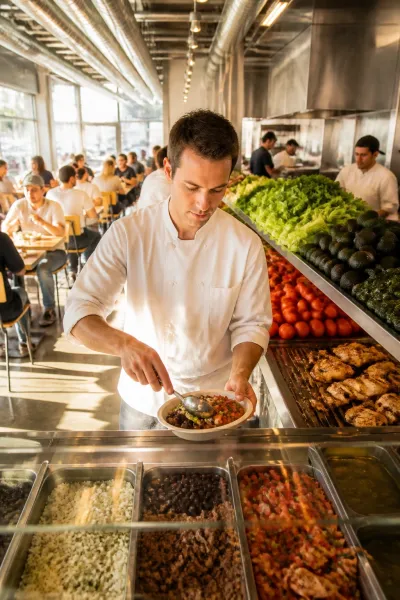
Chipotle Mexican Grill began in 1993 when Steve Ells, a classically trained chef, opened a single taqueria in Denver with the vision of serving gourmet-quality Mexican food at fast-food speed. Rejecting the industry norm of frozen, pre-packaged ingredients, Ells emphasized fresh, responsibly sourced produce and meats prepared using classic cooking techniques like slow-braising and grilling. This commitment, later formalized as "Food With Integrity," formed the core of Chipotle’s differentiation from traditional fast food, prioritizing transparency, flavor, and ethical sourcing from the outset. The modest first location’s immediate success demonstrated strong consumer demand for higher-quality convenience, proving Ells’ concept was not merely viable but highly desirable.
Early expansion was methodical, with Ells opening additional Denver locations before partnering with McDonald’s in 1998, which provided critical capital and operational expertise for national growth while allowing Chipotle to maintain its distinct brand and culinary philosophy. The company pioneered the fast-casual segment by combining the speed of counter service with the quality and customization of scratch-cooked meals, fostering a culture centered on employee empowerment through rigorous training, internal promotion paths (like the Restaurateur program), and a deep commitment to its values. Chipotle’s IPO in 2006 was a resounding success, raising over $170 million and validating its disruptive model, enabling accelerated unit growth and solidifying its path toward becoming a national powerhouse.
The company faced an existential crisis in 2015 when widespread E. coli and norovirus outbreaks linked to its restaurants devastated consumer trust and triggered a sharp stock decline. Chipotle responded by overhauling its food safety systems with expert guidance, implementing stringent "farm-to-fork" protocols including supplier DNA testing, centralized produce washing, new kill steps like high-pressure processing, enhanced HACCP-based employee training, and strict sick-leave policies. Leadership transitioned with Steve Ells stepping down as CEO in 2017, paving the way for Brian Niccol (former Taco Bell CEO) in 2018. Niccol revitalized the brand through digital innovation (expanding the Chipotlane drive-thru, mobile app, and loyalty program), strategic menu innovation (reintroducing Carne Asada, launching digital-only quesadillas, and introducing Chicken al Pastor), and culturally relevant marketing, while steadfastly upholding Food With Integrity and safety standards. This recovery culminated in Chipotle’s inclusion in the S&P 500 index in June 2021, marking its arrival among America’s elite corporations. Today, Chipotle continues to leverage technology like AI and robotics (e.g., Chippy for tortilla chips, Autocado for guacamole), pursue strategic international expansion through partnerships, and balance growth with purpose-driven initiatives in sustainability, community impact, and employee development, all rooted in its founding vision of serving fresh, integrity-driven food at scale.
What You'll Find Inside:
- How Steve Ells' founding vision transformed a single Denver taqueria into a national phenomenon by establishing 'Food With Integrity' as the core philosophy from day one, prioritizing fresh, responsibly sourced ingredients and culinary excellence.
- The innovative supply chain strategies Chipotle developed to scale its commitment to naturally raised meats, fresh produce, and ethical sourcing while maintaining quality and consistency across thousands of locations despite significant logistical challenges.
- How Chipotle pioneered and defined the fast-casual restaurant category by redefining quick-service dining with customizable meals, transparent preparation, and a focus on culinary quality that bridged the gap between fast food and casual dining.
- The company's response to the 2015 food safety crisis, including the comprehensive overhaul of food safety protocols, leadership transitions, and the remarkable resilience demonstrated in rebuilding consumer trust and restoring financial performance.
- Chipotle's journey to S&P 500 inclusion through strategic expansion, digital innovation under Brian Niccol's leadership, menu evolution, and unwavering commitment to core values while delivering shareholder value and market dominance.
Who's It For:
This book is ideal for entrepreneurs studying disruptive business models, restaurant industry professionals seeking insights on scaling and operations, business students analyzing corporate resilience and crisis management, and investors interested in successful public company case studies. It also appeals to leaders focused on purpose-driven organizations navigating growth challenges while maintaining ethical commitments and social responsibility.
Table of Contents:
- Introduction
- Chapter 1: The Culinary Vision of Steve Ells
- Chapter 2: From Denver to Dominance: Early Days and Expansion
- Chapter 3: The Power of Fresh: Sourcing and Supply Chain Innovation
- Chapter 4: Cultivating a Culture: Values, Training, and Employee Experience
- Chapter 5: The Rise of Fast-Casual: Redefining the Restaurant Landscape
- Chapter 6: Menu Matters: Crafting the Chipotle Experience
- Chapter 7: Marketing Mexican Grill: Branding and Early Advertising
- Chapter 8: Beyond Burritos: Exploring New Offerings and Concepts
- Chapter 9: Going Public: The IPO and Wall Street's Welcome
- Chapter 10: Sustaining Growth: Expansion Strategies and Market Penetration
- Chapter 11: The "Food With Integrity" Era: Commitment to Quality Ingredients
- Chapter 12: Navigating Challenges: Early Crises and Adaptations
- Chapter 13: Digital Revolution: Embracing Online Ordering and Mobile Tech
- Chapter 14: The E. Coli Crisis: A Turning Point and Test of Resilience
- Chapter 15: Rebuilding Trust: Enhanced Food Safety Protocols
- Chapter 16: Leadership in Transition: New Faces, New Directions
- Chapter 17: Menu Innovation Post-Crisis: Adapting to Consumer Demands
- Chapter 18: The S&P 500 Journey: Earning a Spot Among the Elite
- Chapter 19: International Endeavors: Global Expansion and Local Flavors
- Chapter 20: The Power of Purpose: Social Responsibility and Community Impact
- Chapter 21: Employee Empowerment: Investing in People and Performance
- Chapter 22: Technological Advancements: AI, Robotics, and the Future of Fast-Casual
- Chapter 23: Competition and Consolidation: Thriving in a Crowded Market
- Chapter 24: Shareholder Value: Delivering Returns and Sustaining Growth
- Chapter 25: The Future of Fresh: Chipotle's Vision for Tomorrow
Author:
Published By:
Date Published:
October 8, 2026
Type:
Nonfiction
Language:
English
Word Count:
38,059 words
Reading Time:
2 hours 40 minutes
Sample:
MixCache.com Total Access
Get unlimited access to this book + all books published by MixCache.com for $11.99/month
Subscribe to MTAOr purchase this book individually below
Order:
Buy the A History of Chipotle Mexican Grill ebook on MixCache.com:
Buy Now
Full ebook will be available immediately
- read online or download as a PDF file.
$5 account credit for all new MixCache.com accounts, usable toward any ebook purchase!*


Ratings & Reviews
Ask Questions About This Book
Have a question about the content? Ask our AI assistant!
Start by asking a question about "A History of Chipotle Mexican Grill"
Example: "Does this book mention William Shakespeare?"
Thinking...