
Browse by Category
Fiction
- Action & Adventure
- African American
- Anthologies
- Children's Fiction
- Classics
- Comics & Graphic Novels
- Coming of Age
- Contemporary
- Cultural & Regional
- Drama
- Erotica
- Fantasy
- General
- Historical Fiction
- Horror
- Humor & Satire
- Literary Fiction
- Mystery, Thriller & Suspense
- Poetry
- Religious & Inspirational
- Romance
- Science Fiction
- Short Stories
- War & Military
- Westerns
- Women's Fiction
- Young Adult
Non-Fiction
- Antiques & Collectibles
- Arts & Photography
- Biographies & Memoirs
- Business & Money
- Children's Non-Fiction
-
Computers & Technology
- Artificial Intelligence
- Computer Science
- Cybersecurity & Cryptography
- Data Science & Analytics
- Databases & Big Data
- Game Development & Design
- General
- Hardware & DIY
- Mobile App Development
- Networking & Cloud Computing
- Operating Systems
- Programming
- Robotics
- Software
- Software Engineering
- User Experience (UX) & Design
- Web Development & Design
- Cooking, Food & Wine
- Crafts, Hobbies & Home
- Education & Teaching
- Engineering
- General
- Health, Fitness & Dieting
-
History
- African History
- African History - North Africa
- African History - Sub-Saharan Africa
- American History
- American History - 20th Century
- American History - Civil War
- American History - Colonial Period
- Ancient History
- Asian History
- Asian History - China
- Asian History - India
- Asian History - Japan
- Asian History - Southeast Asia
- European History
- European History - Ancient Greece
- European History - Ancient Rome
- European History - Medieval
- European History - Modern
- European History - Renaissance
- General
- Middle Eastern History
- Military History
- Military History - Aviation
- Military History - Naval
- Social & Cultural History
- World History
- Humor & Entertainment
- Industrial Technology
- Language Learning
- Law
- LGBTQ+ Non-Fiction
- Literary Criticism
- Medical Books
- Parenting & Relationships
- Philosophy
- Politics & Social Sciences
- Reference
- Religion & Spirituality
-
Science & Math
- Agricultural Sciences
- Astronomy & Space Science
- Behavioral Sciences
- Biological Sciences
- Botany & Plant Science
- Chemistry
- Earth Sciences
- Engineering - Chemical
- Engineering - Civil
- Engineering - Electrical
- Engineering - Mechanical
- Environment
- General
- Geology
- Mathematics
- Nature & Ecology
- Oceanography
- Paleontology
- Physics
- Statistics
- Self-Help
- Sports & Outdoors
- Study Aids
- Sustainability & Green Living
- Textbooks
- Transportation
- Travel
- True Crime
- Urban Planning & Development
- Veterinary Medicine
- Writing & Publishing
Jump to Section

Want unlimited access to all books published by MixCache.com (plus their audiobooks)? Try MixCache.com Total Access. Look for the MTA badge on book covers to identify included titles.
Access to infinite ebooks: Don't see the book you want? Suggest it and we'll create it (free!) for you from scratch with our powerful AI book writer. Then read it with MTA - besides profiting from any sales it makes!
A History of Waste Management
MTA
The Story of an S&P 500 Company
About this book:
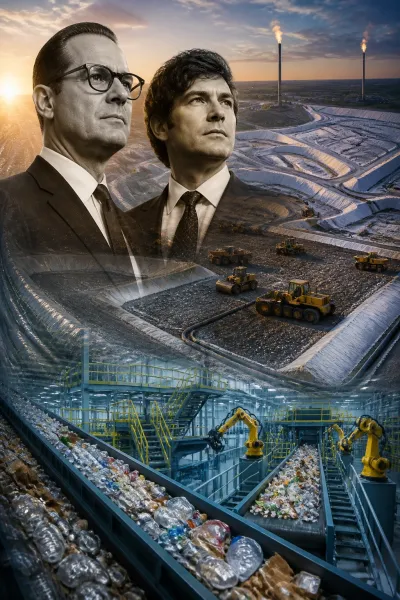
Waste Management, Inc. evolved from a fragmented collection of local haulers into a global environmental services leader and S&P 500 staple through the visionary partnership of Dean Buntrock and Wayne Huizenga. Founded officially in 1968 and fueled by a 1971 IPO, the company executed an aggressive acquisition strategy, consolidating hundreds of small operators to achieve unmatched route density and vertical integration through landfill ownership. This operational scale allowed Waste Management to navigate the dawn of modern environmental regulation—including the creation of the EPA, RCRA, and Superfund—not as a burden, but as a competitive moat that drove smaller competitors out of the market and increased demand for the company’s sophisticated, compliant infrastructure.
The company consistently pivoted to address emerging societal needs, pioneering hazardous waste management through its Chemical Waste Management subsidiary and later embracing recycling and materials recovery as public consciousness shifted toward sustainability. Technological innovation remained a constant differentiator, from early centralized data systems and hydraulic compacters to modern AI-driven sorting robots, GPS fleet optimization, and digital customer platforms. Waste Management further transformed its business model by treating waste as a resource, investing heavily in landfill-gas-to-energy projects and anaerobic digestion to become a significant renewable energy producer, while diversifying into industrial services, environmental consulting, and specialized waste streams like e-waste and medical waste.
Despite its dominance, the company weathered significant crises, including a major accounting scandal in the late 1990s that necessitated a total governance overhaul, persistent NIMBY opposition to landfill siting, and commodity price volatility in recycling markets. Each challenge prompted greater transparency, ethical rigor, and operational resilience. Today, Waste Management positions itself as a cornerstone of the circular economy, leveraging its vast logistics network and capital strength to advance chemical recycling, renewable natural gas production, and fleet decarbonization. With ambitious targets for material recovery, emissions reduction, and community impact, the company continues to redefine its legacy from a simple disposal hauler to an essential architect of a sustainable future.
What You'll Find Inside:
- The transformation of Waste Management from a fragmented collection of local haulers into a dominant S&P 500 environmental services giant through aggressive acquisitions and vertical integration.
- How the company navigated and shaped evolving environmental regulations (RCRA, Superfund) while pioneering hazardous waste solutions and advanced landfill engineering.
- The strategic pivot from pure disposal to resource recovery, including massive investments in recycling infrastructure, landfill gas-to-energy, and anaerobic digestion.
- Leadership lessons from founders Dean Buntrock and Wayne Huizenga, the 1990s accounting scandal and recovery, and the cultural shifts required to manage a global workforce.
- Future-facing strategies for the circular economy: digital transformation (AI, smart bins), renewable natural gas expansion, fleet decarbonization, and 2030 sustainability targets.
Who's It For:
This book is ideal for business leaders and strategists studying corporate growth through consolidation, environmental professionals seeking historical context on regulatory evolution, and investors analyzing the financial resilience of essential-service companies. It also appeals to sustainability practitioners and students of industrial history who want a detailed case study of how a waste hauler became a circular economy pioneer.
Author:
Published By:
Date Published:
September 30, 2026
Type:
Nonfiction
Language:
English
Word Count:
37,080 words
Reading Time:
2 hours 36 minutes
Sample:
MixCache.com Total Access
Get unlimited access to this book + all books published by MixCache.com for $11.99/month
Subscribe to MTAOr purchase this book individually below
Order:
Buy the A History of Waste Management ebook on MixCache.com:
Buy Now
Full ebook will be available immediately
- read online or download as a PDF file.
$5 account credit for all new MixCache.com accounts, usable toward any ebook purchase!*



Ratings & Reviews
Ask Questions About This Book
Have a question about the content? Ask our AI assistant!
Start by asking a question about "A History of Waste Management"
Example: "Does this book mention William Shakespeare?"
Thinking...