
Browse by Category
Fiction
- Action & Adventure
- African American
- Anthologies
- Children's Fiction
- Classics
- Comics & Graphic Novels
- Coming of Age
- Contemporary
- Cultural & Regional
- Drama
- Erotica
- Family Life
- Fantasy
- General
- Historical Fiction
- Horror
- Humor & Satire
- Literary Fiction
- Mystery, Thriller & Suspense
- Poetry
- Religious & Inspirational
- Romance
- Science Fiction
- Short Stories
- War & Military
- Westerns
- Women's Fiction
- Young Adult
Non-Fiction
- Antiques & Collectibles
- Arts & Photography
- Biographies & Memoirs
- Business & Money
- Children's Non-Fiction
-
Computers & Technology
- Artificial Intelligence
- Computer Science
- Cybersecurity & Cryptography
- Data Science & Analytics
- Databases & Big Data
- Game Development & Design
- General
- Hardware & DIY
- Mobile App Development
- Networking & Cloud Computing
- Operating Systems
- Programming
- Robotics
- Software
- Software Engineering
- User Experience (UX) & Design
- Web Development & Design
- Cooking, Food & Wine
- Crafts, Hobbies & Home
- Education & Teaching
- Engineering
- General
- Health, Fitness & Dieting
-
History
- African History
- African History - North Africa
- African History - Sub-Saharan Africa
- American History
- American History - 20th Century
- American History - Civil War
- American History - Colonial Period
- Ancient History
- Asian History
- Asian History - China
- Asian History - India
- Asian History - Japan
- Asian History - Southeast Asia
- European History
- European History - Ancient Greece
- European History - Ancient Rome
- European History - Medieval
- European History - Modern
- European History - Renaissance
- General
- Middle Eastern History
- Military History
- Military History - Aviation
- Military History - Naval
- Social & Cultural History
- World History
- Humor & Entertainment
- Industrial Technology
- Language Learning
- Law
- LGBTQ+ Non-Fiction
- Literary Criticism
- Medical Books
- Parenting & Relationships
- Philosophy
- Politics & Social Sciences
- Reference
- Religion & Spirituality
-
Science & Math
- Agricultural Sciences
- Astronomy & Space Science
- Behavioral Sciences
- Biological Sciences
- Botany & Plant Science
- Chemistry
- Earth Sciences
- Engineering - Chemical
- Engineering - Civil
- Engineering - Electrical
- Engineering - Mechanical
- Environment
- General
- Geology
- Mathematics
- Nature & Ecology
- Oceanography
- Paleontology
- Physics
- Statistics
- Self-Help
- Sports & Outdoors
- Study Aids
- Sustainability & Green Living
- Textbooks
- Transportation
- Travel
- True Crime
- Urban Planning & Development
- Veterinary Medicine
- Writing & Publishing
Jump to Section
MixCache.com Total Access
Unlimited reading and audiobooks for every book published by MixCache.com.
Included titles carry the MTA badge.
Learn more →
A History of Apple Inc.
MTA
The Story of an S&P 500 Company
About this book:
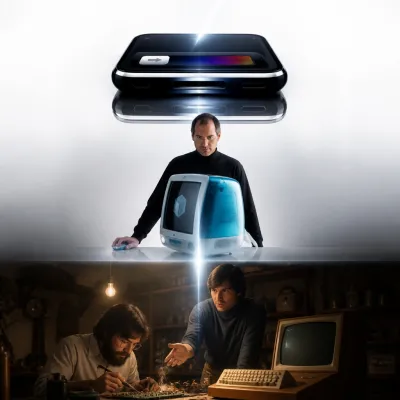
Apple Inc.'s history is a saga of visionary innovation, near-collapse, and unprecedented resurgence, evolving from a garage startup founded by Steve Wozniak and Steve Jobs in 1976 into a global technology titan. The early success of the Apple II democratized personal computing, while the 1984 Macintosh revolutionized user interaction with its graphical interface. However, internal strife and competitive pressure from the "Wintel" duopoly led to Jobs's ouster in 1985 and a decade of declining relevance. The 1997 acquisition of NeXT brought Jobs back, triggering a remarkable turnaround defined by radical product simplification, the colorful iMac, and a pivotal partnership with Microsoft that stabilized the company's finances.
Jobs's second act redefined Apple as a consumer electronics powerhouse. The iPod and iTunes ecosystem transformed the music industry, proving Apple could dominate markets beyond computers. This expertise in hardware-software integration culminated in the 2007 iPhone, a device that revolutionized mobile communication and computing, followed by the App Store, which created a vibrant developer economy. The iPad subsequently defined the tablet category, while services like iCloud deepened ecosystem lock-in. Under Tim Cook's operational leadership since 2011, Apple expanded into wearables with the Apple Watch and AirPods, aggressively grew its high-margin Services division—including Apple Music, TV+, and Apple Pay—and achieved historic financial milestones, becoming the first company to reach $1, $2, and $3 trillion market capitalizations.
Throughout its journey, Apple has maintained a distinct competitive advantage through vertical integration, controlling custom silicon, operating systems, and hardware design to deliver seamless user experiences. Its design philosophy—emphasizing simplicity, premium materials, and the harmony of form and function—coupled with masterful branding and a unique retail strategy, cultivated intense brand loyalty. Simultaneously, the company navigated complex legal battles over intellectual property, antitrust scrutiny regarding the App Store, and increasing pressure to address environmental and labor standards within its vast supply chain.
Looking forward, Apple is pivoting toward spatial computing with the Vision Pro headset and embedding proprietary generative AI across its platforms to drive the next wave of innovation. The company continues to diversify its manufacturing footprint away from China while doubling down on its 2030 carbon neutrality pledge and privacy-centric branding. As the smartphone market matures, Apple's future growth hinges on establishing new computing paradigms, deepening its services revenue, and leveraging its integrated ecosystem to remain an indispensable part of daily life, ensuring its legacy as a perennial S&P 500 bellwether endures.
What You'll Find Inside:
- The complete evolution of Apple from a garage startup to a multi-trillion dollar S&P 500 giant, covering every major product era from the Apple I to the Vision Pro.
- Deep analysis of the symbiotic partnership between Steve Wozniak's engineering genius and Steve Jobs's visionary marketing, and how their dynamic shaped the company's DNA.
- Detailed breakdown of pivotal product launches (Macintosh, iPod, iPhone, iPad, Apple Watch) and the ecosystem strategy (iTunes, App Store, iCloud) that redefined industries.
- Examination of Tim Cook's operational mastery in supply chain, manufacturing, and services growth that sustained Apple's dominance in the post-Jobs era.
- Insight into Apple's enduring design philosophy, vertical integration model, retail innovation, and navigation of legal, environmental, and competitive challenges.
Who's It For:
This book is ideal for entrepreneurs, business strategists, and technology enthusiasts seeking a comprehensive case study on sustained corporate innovation and brand building. It appeals to investors and financial analysts interested in the economic drivers behind one of the world's most valuable companies. Designers and product managers will value the deep dives into Apple's user-centric philosophy and ecosystem integration. Ultimately, anyone curious about the intersection of technology, culture, and business history will find this narrative compelling.
Introduction
In the annals of corporate history, few companies cast a shadow as long and as influential as Apple Inc. From its humble beginnings in a garage to its current status as a global technology titan and perennial member of the S&P 500, Apple's journey is a captivating saga of innovation, ambition, near-catastrophe, and unparalleled resurgence. This book, A History of Apple Inc.: The Story of an S&P 500 Company, delves into the intricate narrative of a company that has not merely adapted to the technological landscape but has, time and again, redefined it.
Apple's trajectory is more than just a business case study; it is a testament to the power of vision, design, and relentless pursuit of user experience. It's a story interwoven with the lives of its charismatic co-founders, Steve Jobs and Steve Wozniak, whose early partnership ignited the personal computing revolution. It’s a narrative punctuated by iconic product launches that have fundamentally altered how we work, communicate, create, and entertain ourselves. From the groundbreaking Apple II and the revolutionary Macintosh to the game-changing iPod, iPhone, and iPad, Apple's products have consistently pushed the boundaries of what's possible, embedding themselves into the fabric of modern life.
This book aims to provide a comprehensive exploration of Apple's multifaceted history, tracing its evolution from a defiant startup to a corporate behemoth.
Enjoying it? The full book includes every chapter.
Table of Contents:
- Introduction Free
- Chapter 1: The Early Days: Wozniak, Jobs, and the Apple I Free
- Chapter 2: Apple II and the Dawn of the Personal Computer Era
- Chapter 3: The Macintosh Revolution: "Insanely Great"
- Chapter 4: The Sculley Years: Marketing Power and Internal Strife
- Chapter 5: NeXT and the Wilderness Years
- Chapter 6: The Return of Steve Jobs and the iMac Revival
- Chapter 7: The iPod: Redefining Portable Music
- Chapter 8: iTunes and the Digital Music Ecosystem
- Chapter 9: The iPhone: A Smartphone Revolution
- Chapter 10: The App Store and the Mobile Software Boom
- Chapter 11: The iPad: Tablet Computing Takes Off
- Chapter 12: iCloud and the Ecosystem's Expansion
- Chapter 13: The Retina Display and Technological Advancements
- Chapter 14: Apple Watch: Entering the Wearables Market
- Chapter 15: Apple Services: Growth Beyond Hardware
- Chapter 16: Tim Cook's Leadership and Post-Jobs Era
- Chapter 17: Design Philosophy: Form, Function, and Innovation
- Chapter 18: Manufacturing and Supply Chain Excellence
- Chapter 19: Marketing and Branding Strategies
- Chapter 20: Retail Experience: The Apple Store Phenomenon
- Chapter 21: Environmental Initiatives and Corporate Responsibility
- Chapter 22: Legal Battles and Intellectual Property
- Chapter 23: Competition and Market Position
- Chapter 24: Financial Performance and S&P 500 Legacy
- Chapter 25: The Future of Apple: Innovation and Beyond
Included when you buy the full book.
Author:
Published By:
Date Published:
August 31, 2026
Type:
Nonfiction
Language:
English
Word Count:
40,220 words
Reading Time:
2 hours 49 minutes
Sample:
Order:
Buy the A History of Apple Inc. ebook on MixCache.com:
Buy NowIncludes every chapter. Not sure yet? Read the opening free.
Full ebook will be available immediately
- read online or download as a PDF file.
$5 account credit for all new MixCache.com accounts, usable toward any ebook purchase!*
MixCache.com Total Access
Get unlimited access to this book + all books published by MixCache.com for $11.99/month
Subscribe to MTA





Ratings & Reviews
Ask Questions About This Book
Have a question about the content? Ask our AI assistant!
Start by asking a question about "A History of Apple Inc."
Example: "Does this book mention William Shakespeare?"
Thinking...