
Browse by Category
Fiction
- Action & Adventure
- African American
- Anthologies
- Children's Fiction
- Classics
- Comics & Graphic Novels
- Coming of Age
- Contemporary
- Cultural & Regional
- Drama
- Erotica
- Fantasy
- General
- Historical Fiction
- Horror
- Humor & Satire
- Literary Fiction
- Mystery, Thriller & Suspense
- Poetry
- Religious & Inspirational
- Romance
- Science Fiction
- Short Stories
- War & Military
- Westerns
- Women's Fiction
- Young Adult
Non-Fiction
- Antiques & Collectibles
- Arts & Photography
- Biographies & Memoirs
- Business & Money
- Children's Non-Fiction
-
Computers & Technology
- Artificial Intelligence
- Computer Science
- Cybersecurity & Cryptography
- Data Science & Analytics
- Databases & Big Data
- Game Development & Design
- General
- Hardware & DIY
- Mobile App Development
- Networking & Cloud Computing
- Operating Systems
- Programming
- Robotics
- Software
- Software Engineering
- User Experience (UX) & Design
- Web Development & Design
- Cooking, Food & Wine
- Crafts, Hobbies & Home
- Education & Teaching
- Engineering
- General
- Health, Fitness & Dieting
-
History
- African History
- African History - North Africa
- African History - Sub-Saharan Africa
- American History
- American History - 20th Century
- American History - Civil War
- American History - Colonial Period
- Ancient History
- Asian History
- Asian History - China
- Asian History - India
- Asian History - Japan
- Asian History - Southeast Asia
- European History
- European History - Ancient Greece
- European History - Ancient Rome
- European History - Medieval
- European History - Modern
- European History - Renaissance
- General
- Middle Eastern History
- Military History
- Military History - Aviation
- Military History - Naval
- Social & Cultural History
- World History
- Humor & Entertainment
- Industrial Technology
- Language Learning
- Law
- LGBTQ+ Non-Fiction
- Literary Criticism
- Medical Books
- Parenting & Relationships
- Philosophy
- Politics & Social Sciences
- Reference
- Religion & Spirituality
-
Science & Math
- Agricultural Sciences
- Astronomy & Space Science
- Behavioral Sciences
- Biological Sciences
- Botany & Plant Science
- Chemistry
- Earth Sciences
- Engineering - Chemical
- Engineering - Civil
- Engineering - Electrical
- Engineering - Mechanical
- Environment
- General
- Geology
- Mathematics
- Nature & Ecology
- Oceanography
- Paleontology
- Physics
- Statistics
- Self-Help
- Sports & Outdoors
- Study Aids
- Sustainability & Green Living
- Textbooks
- Transportation
- Travel
- True Crime
- Urban Planning & Development
- Veterinary Medicine
- Writing & Publishing
Jump to Section
MixCache.com Total Access
Unlimited reading and audiobooks for every book published by MixCache.com.
Included titles carry the MTA badge.
Learn more →
A History of Fiserv
MTA
The Story of an S&P 500 Company
About this book:
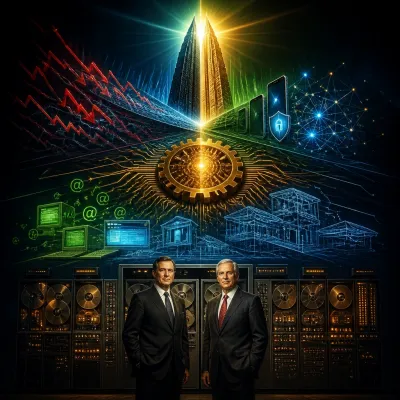
From its founding in 1984 by Leslie Muma and George Dalton, Fiserv emerged as a pioneering service bureau offering outsourced data processing to community banks and credit unions. Through an aggressive, disciplined acquisition strategy—integrating over 100 companies by 2001—the firm rapidly expanded its geographic footprint, service portfolio, and client base, going public in 1986 and joining the S&P 500 in 2001. Leadership navigated the technological shifts of the 1990s and the dot-com era by deepening core processing capabilities and investing early in internet banking, while the 2000s saw a decisive pivot toward digital payments and regulatory compliance solutions, anchored by the transformative $4.4 billion acquisition of CheckFree in 2007. The company’s resilient, recurring-revenue model allowed it to weather the Great Recession and continue investing in mobile, analytics, and cybersecurity innovations throughout the 2010s.
The 2019 merger with First Data Corporation, a $22 billion all-stock transaction, marked the most significant strategic leap in Fiserv’s history, uniting issuer-side banking technology with merchant acquiring to create a global fintech leader spanning the entire commerce lifecycle. Under CEO Frank Bisignano, the integration unlocked substantial cost and revenue synergies, modernized platforms like the Clover point-of-sale system, and established a unified commerce ecosystem serving millions of merchants and thousands of financial institutions across over 100 countries. This combination solidified Fiserv’s position as an indispensable backbone of the global financial infrastructure, processing billions of transactions annually across core banking, digital payments, merchant solutions, and data analytics.
Throughout its evolution, Fiserv maintained a culture rooted in client partnership, operational excellence, and proactive innovation. The company fostered deep, collaborative relationships with clients, driving co-creation of solutions and ensuring seamless integration across complex technology stacks. Internally, a commitment to talent development, diversity, and a "fail-fast" innovation ethos—supplemented by significant R&D investment in AI, blockchain, and real-time payments—ensured the workforce could anticipate and shape industry trends. Corporate social responsibility initiatives focused on financial literacy, environmental sustainability, and ethical governance further embedded the firm within the communities it serves.
Looking ahead, Fiserv’s vision for the next decade centers on the democratization of financial services through embedded finance, the globalization of real-time payments, and the infusion of generative AI into every layer of its platform. The firm aims to lead the transition to cloud-native, modular core banking and quantum-resistant security while expanding its global footprint with localized relevance. Ultimately, Fiserv’s legacy is defined by its role in democratizing financial technology, building the rails for the digital payments revolution, and transforming fragmented financial operations into a seamless, intelligent, and secure global commerce network.
What You'll Find Inside:
- The founding story of Fiserv in 1984 and its early growth strategy through 16 strategic acquisitions in its first five years, establishing a national data processing network for community financial institutions.
- How Fiserv navigated major industry shifts including the digital transformation of the 2000s, the Great Recession, and the mobile payments revolution while maintaining its recurring revenue model and client-centric approach.
- Deep analysis of two transformative acquisitions: CheckFree in 2007 ($4.4 billion) which established digital payments leadership, and First Data in 2019 ($22 billion) which created an end-to-end commerce and payments powerhouse.
- The evolution of Fiserv's technology portfolio from core account processing to comprehensive solutions spanning real-time payments, AI-driven analytics, cybersecurity, cloud-native platforms, and the Clover merchant ecosystem.
- Fiserv's vision for the next decade including embedded finance, quantum-resistant cryptography, AI-powered hyper-personalization, CBDC integration, and the democratization of financial services through API-first architectures.
Who's It For:
This book is ideal for fintech professionals, financial services executives, and business strategists seeking to understand how a company achieves sustained market leadership through strategic acquisitions and technological innovation. Investors and analysts will value the detailed examination of Fiserv's path to S&P 500 inclusion and its resilience through economic cycles. Students of corporate history and technology management will find a comprehensive case study in scaling a service bureau into a global financial infrastructure provider.
Table of Contents:
- Introduction
- Chapter 1 The Early Days: Founding and Vision
- Chapter 2 Building the Foundation: Initial Growth and Acquisitions
- Chapter 3 Navigating the 1980s: Technology Shifts and Market Expansion
- Chapter 4 The Nineties Boom: Innovation and Industry Leadership
- Chapter 5 Entering the New Millennium: Digital Transformation Begins
- Chapter 6 Strategic Moves: Key Acquisitions of the Early 2000s
- Chapter 7 Adapting to Change: Regulatory Landscape and Financial Services Evolution
- Chapter 8 Global Ambitions: Expanding Beyond North America
- Chapter 9 The Great Recession: Navigating Economic Headwinds
- Chapter 10 Reimagining Financial Technology: Product Development in the 2010s
- Chapter 11 The Power of Partnership: Client Relationships and Collaboration
- Chapter 12 Digital Payments Revolution: Fiserv's Role in a Changing World
- Chapter 13 Data and Analytics: Unlocking Insights for Clients
- Chapter 14 Cybersecurity and Trust: Protecting Financial Data
- Chapter 15 A Culture of Innovation: Fostering Creativity and Growth
- Chapter 16 The Road to the S&P 500: A Milestone Achieved
- Chapter 17 Leading with Purpose: Corporate Social Responsibility
- Chapter 18 Mergers that Matter: The First Data Acquisition
- Chapter 19 Integration and Synergy: Combining Strengths for the Future
- Chapter 20 Fiserv Today: A Global Fintech Leader
- Chapter 21 The Future of Financial Services: Trends and Predictions
- Chapter 22 Preparing for Tomorrow: Research and Development Initiatives
- Chapter 23 The Human Element: Talent, Diversity, and Inclusion
- Chapter 24 Looking Ahead: Fiserv's Vision for the Next Decade
- Chapter 25 Legacy and Impact: Fiserv's Enduring Influence on Finance
Author:
Published By:
Date Published:
August 19, 2026
Type:
Nonfiction
Language:
English
Word Count:
38,882 words
Reading Time:
2 hours 43 minutes
Sample:
MixCache.com Total Access
Get unlimited access to this book + all books published by MixCache.com for $11.99/month
Subscribe to MTAOr purchase this book individually below
Order:
Buy the A History of Fiserv ebook on MixCache.com:
Buy Now
Full ebook will be available immediately
- read online or download as a PDF file.
$5 account credit for all new MixCache.com accounts, usable toward any ebook purchase!*




Ratings & Reviews
Ask Questions About This Book
Have a question about the content? Ask our AI assistant!
Start by asking a question about "A History of Fiserv"
Example: "Does this book mention William Shakespeare?"
Thinking...