
Browse by Category
Fiction
- Action & Adventure
- African American
- Anthologies
- Children's Fiction
- Classics
- Comics & Graphic Novels
- Coming of Age
- Contemporary
- Cultural & Regional
- Drama
- Erotica
- Fantasy
- General
- Historical Fiction
- Horror
- Humor & Satire
- Literary Fiction
- Mystery, Thriller & Suspense
- Poetry
- Religious & Inspirational
- Romance
- Science Fiction
- Short Stories
- War & Military
- Westerns
- Women's Fiction
- Young Adult
Non-Fiction
- Antiques & Collectibles
- Arts & Photography
- Biographies & Memoirs
- Business & Money
- Children's Non-Fiction
-
Computers & Technology
- Artificial Intelligence
- Computer Science
- Cybersecurity & Cryptography
- Data Science & Analytics
- Databases & Big Data
- Game Development & Design
- General
- Hardware & DIY
- Mobile App Development
- Networking & Cloud Computing
- Operating Systems
- Programming
- Robotics
- Software
- Software Engineering
- User Experience (UX) & Design
- Web Development & Design
- Cooking, Food & Wine
- Crafts, Hobbies & Home
- Education & Teaching
- Engineering
- General
- Health, Fitness & Dieting
-
History
- African History
- African History - North Africa
- African History - Sub-Saharan Africa
- American History
- American History - 20th Century
- American History - Civil War
- American History - Colonial Period
- Ancient History
- Asian History
- Asian History - China
- Asian History - India
- Asian History - Japan
- Asian History - Southeast Asia
- European History
- European History - Ancient Greece
- European History - Ancient Rome
- European History - Medieval
- European History - Modern
- European History - Renaissance
- General
- Middle Eastern History
- Military History
- Military History - Aviation
- Military History - Naval
- Social & Cultural History
- World History
- Humor & Entertainment
- Industrial Technology
- Language Learning
- Law
- LGBTQ+ Non-Fiction
- Literary Criticism
- Medical Books
- Parenting & Relationships
- Philosophy
- Politics & Social Sciences
- Reference
- Religion & Spirituality
-
Science & Math
- Agricultural Sciences
- Astronomy & Space Science
- Behavioral Sciences
- Biological Sciences
- Botany & Plant Science
- Chemistry
- Earth Sciences
- Engineering - Chemical
- Engineering - Civil
- Engineering - Electrical
- Engineering - Mechanical
- Environment
- General
- Geology
- Mathematics
- Nature & Ecology
- Oceanography
- Paleontology
- Physics
- Statistics
- Self-Help
- Sports & Outdoors
- Study Aids
- Sustainability & Green Living
- Textbooks
- Transportation
- Travel
- True Crime
- Urban Planning & Development
- Veterinary Medicine
- Writing & Publishing
Jump to Section
MixCache.com Total Access
Unlimited reading and audiobooks for every book published by MixCache.com.
Included titles carry the MTA badge.
Learn more →
A History of Edwards Lifesciences
MTA
The Story of an S&P 500 Company
About this book:
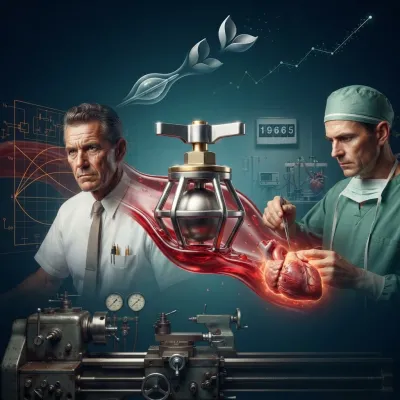
Edwards Lifesciences traces its origins to engineer Miles Lowell Edwards, who, drawing on his expertise in industrial hydraulics and personal experience with rheumatic fever, partnered with surgeon Dr. Albert Starr in 1958 to develop the world's first successful artificial heart valve. Their Starr-Edwards caged-ball valve, first implanted in 1960, revolutionized the treatment of valvular heart disease, transforming a fatal diagnosis into a manageable condition. The company, initially Edwards Laboratories, established foundational principles of rigorous engineering, uncompromising quality, and close clinical collaboration. It expanded its portfolio to include tissue valves and critical care monitoring technologies, such as the Swan-Ganz catheter, while navigating early challenges like material durability and thromboembolism. Growth was fueled by becoming a public company in 1966 and subsequent acquisitions, though it later operated as a division within American Hospital Supply and Baxter International.
A pivotal moment arrived in 2000 when Edwards spun off from Baxter to become an independent, publicly traded entity: Edwards Lifesciences. This autonomy allowed the company to concentrate fully on structural heart disease, leading to its most transformative achievement: the development of transcatheter aortic valve replacement (TAVR). Through a partnership with Dr. Alain Cribier, Edwards launched the SAPIEN valve, gaining European approval in 2007 and FDA approval in 2011. TAVR offered a less invasive, life-saving alternative for high-risk surgical patients, fundamentally shifting the treatment paradigm and establishing Edwards as the global leader in structural heart innovation. This success propelled the company into the S&P 500 in 2012, validating its financial strength and market dominance.
Building on the TAVR platform, Edwards aggressively expanded into adjacent therapeutic areas, pioneering transcatheter therapies for mitral and tricuspid valve diseases (TMTT) with devices like the EVOQUE and SAPIEN M3 systems, while advancing critical care monitoring into integrated, data-driven platforms like HemoSphere. The company's strategy evolved toward "lifetime management" of structural heart disease, incorporating implantable sensors for heart failure and exploring aortic regurgitation treatments. Underpinning this innovation is a culture defined by a "patients first" philosophy, interdisciplinary collaboration, and resilience, sustained by heavy, consistent investment in R&D and a disciplined innovation process that blends internal expertise with external partnerships.
Edwards Lifesciences' legacy extends beyond technology to profound global impact. Through the Edwards Lifesciences Foundation and the "Every Heartbeat Matters" initiative, the company has reached millions of underserved patients worldwide with education, screening, and treatment. As it faces the future, Edwards is focused on precision medicine, artificial intelligence, further minimally invasive advancements, and the "holy grail" of indefinite tissue valve durability. Guided by a leadership lineage that values ethical stewardship and visionary risk-taking, the company aims to balance sustainable growth with corporate responsibility, ensuring its pioneering spirit continues to redefine cardiovascular care for generations to come.
What You'll Find Inside:
- The pioneering journey of engineer Miles Lowell Edwards, who applied hydraulic principles to develop the world's first successful artificial heart valve in collaboration with surgeon Dr. Albert Starr, launching a medical revolution in 1960.
- The company's strategic evolution through corporate structures—from startup to division of American Hospital Supply and Baxter International—to its 2000 spin-off as an independent, purely focused cardiovascular entity.
- The revolutionary development and global adoption of transcatheter aortic valve replacement (TAVR) through the Edwards SAPIEN platform, transforming treatment for high-risk patients and establishing a new standard of care.
- The expansion beyond aortic valves into transcatheter mitral and tricuspid therapies (TMTT), critical care monitoring technologies, and structural heart failure management, creating a comprehensive structural heart portfolio.
- A dual commitment to innovation and global health equity, demonstrated through substantial R&D investment, the S&P 500 milestone, and the "Every Heartbeat Matters" initiative reaching millions of underserved patients worldwide.
Who's It For:
This book is ideal for medical device industry professionals, healthcare executives, and business strategists seeking insights into building a sustainable innovation-driven company. It will particularly benefit those interested in cardiovascular technology history, corporate spin-off strategy, and the intersection of engineering innovation with clinical medicine. Investors analyzing medtech companies and students of biomedical engineering or healthcare management will also find the detailed evolution from workshop prototype to S&P 500 leader highly instructive.
Table of Contents:
- Introduction
- Chapter 1: The Early Vision: Miles Lowell Edwards and the Origins of a Medical Revolution
- Chapter 2: From humble beginnings: Early Ventures and the Development of the First Artificial Heart Valve
- Chapter 3: Pioneering Spirit: Establishing the Company and its Foundational Principles
- Chapter 4: Innovation and Growth: Expanding Product Lines in the Mid-20th Century
- Chapter 5: Navigating Challenges: Overcoming Early Obstacles and Setbacks
- Chapter 6: A New Era: Becoming a Publicly Traded Company
- Chapter 7: Focus on the Heart: Refining and Advancing Heart Valve Technology
- Chapter 8: Global Ambitions: Expanding Reach and International Markets
- Chapter 9: Technological Leaps: The Introduction of groundbreaking Cardiovascular Solutions
- Chapter 10: Defining Moments: Key Acquisitions and Strategic Partnerships
- Chapter 11: The Turn of the Millennium: Adapting to a Changing Healthcare Landscape
- Chapter 12: A Separate Path: The Spin-off from Baxter International
- Chapter 13: Independent Spirit: Establishing Edwards Lifesciences as a Standalone Entity
- Chapter 14: Transcatheter Innovations: Revolutionizing Valve Replacement Procedures
- Chapter 15: Data and Diagnostics: Integrating Advanced Monitoring Technologies
- Chapter 16: Expanding Horizons: Exploring New Therapeutic Areas
- Chapter 17: The S&P 500 Journey: Milestones and Market Recognition
- Chapter 18: Corporate Culture and Values: The People Behind the Innovation
- Chapter 19: Research and Development: The Engine of Continued Progress
- Chapter 20: Global Impact: Improving Patient Lives Worldwide
- Chapter 21: Facing the Future: Addressing Emerging Healthcare Needs
- Chapter 22: Sustainable Growth: Balancing Innovation with Corporate Responsibility
- Chapter 23: Leadership and Vision: Shaping the Company's Trajectory
- Chapter 24: The Edwards Lifesciences Legacy: A Commitment to Innovation
- Chapter 25: Beyond the Horizon: The Future of Cardiovascular Care and Edwards Lifesciences
Author:
Published By:
Date Published:
August 18, 2026
Type:
Nonfiction
Language:
English
Word Count:
38,112 words
Reading Time:
2 hours 40 minutes
Sample:
MixCache.com Total Access
Get unlimited access to this book + all books published by MixCache.com for $11.99/month
Subscribe to MTAOr purchase this book individually below
Order:
Buy the A History of Edwards Lifesciences ebook on MixCache.com:
Buy Now
Full ebook will be available immediately
- read online or download as a PDF file.
$5 account credit for all new MixCache.com accounts, usable toward any ebook purchase!*






Ratings & Reviews
Ask Questions About This Book
Have a question about the content? Ask our AI assistant!
Start by asking a question about "A History of Edwards Lifesciences"
Example: "Does this book mention William Shakespeare?"
Thinking...