
Browse by Category
Fiction
- Action & Adventure
- African American
- Anthologies
- Children's Fiction
- Classics
- Comics & Graphic Novels
- Coming of Age
- Contemporary
- Cultural & Regional
- Drama
- Erotica
- Fantasy
- General
- Historical Fiction
- Horror
- Humor & Satire
- Literary Fiction
- Mystery, Thriller & Suspense
- Poetry
- Religious & Inspirational
- Romance
- Science Fiction
- Short Stories
- War & Military
- Westerns
- Women's Fiction
- Young Adult
Non-Fiction
- Antiques & Collectibles
- Arts & Photography
- Biographies & Memoirs
- Business & Money
- Children's Non-Fiction
-
Computers & Technology
- Artificial Intelligence
- Computer Science
- Cybersecurity & Cryptography
- Data Science & Analytics
- Databases & Big Data
- Game Development & Design
- General
- Hardware & DIY
- Mobile App Development
- Networking & Cloud Computing
- Operating Systems
- Programming
- Robotics
- Software
- Software Engineering
- User Experience (UX) & Design
- Web Development & Design
- Cooking, Food & Wine
- Crafts, Hobbies & Home
- Education & Teaching
- Engineering
- General
- Health, Fitness & Dieting
-
History
- African History
- African History - North Africa
- African History - Sub-Saharan Africa
- American History
- American History - 20th Century
- American History - Civil War
- American History - Colonial Period
- Ancient History
- Asian History
- Asian History - China
- Asian History - India
- Asian History - Japan
- Asian History - Southeast Asia
- European History
- European History - Ancient Greece
- European History - Ancient Rome
- European History - Medieval
- European History - Modern
- European History - Renaissance
- General
- Middle Eastern History
- Military History
- Military History - Aviation
- Military History - Naval
- Social & Cultural History
- World History
- Humor & Entertainment
- Industrial Technology
- Language Learning
- Law
- LGBTQ+ Non-Fiction
- Literary Criticism
- Medical Books
- Parenting & Relationships
- Philosophy
- Politics & Social Sciences
- Reference
- Religion & Spirituality
-
Science & Math
- Agricultural Sciences
- Astronomy & Space Science
- Behavioral Sciences
- Biological Sciences
- Botany & Plant Science
- Chemistry
- Earth Sciences
- Engineering - Chemical
- Engineering - Civil
- Engineering - Electrical
- Engineering - Mechanical
- Environment
- General
- Geology
- Mathematics
- Nature & Ecology
- Oceanography
- Paleontology
- Physics
- Statistics
- Self-Help
- Sports & Outdoors
- Study Aids
- Sustainability & Green Living
- Textbooks
- Transportation
- Travel
- True Crime
- Urban Planning & Development
- Veterinary Medicine
- Writing & Publishing
Jump to Section
MixCache.com Total Access
Unlimited reading and audiobooks for every book published by MixCache.com.
Included titles carry the MTA badge.
Learn more →
The Science of Fermented Foods
MTA
How Microbes Transform What We Eat
About this book:
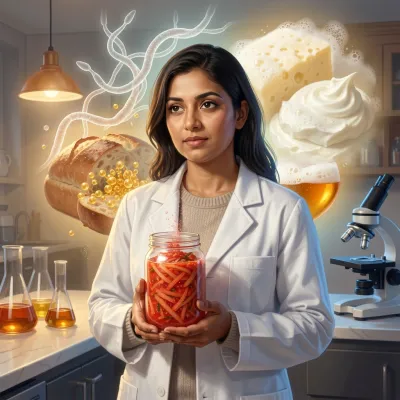
"The Science of Fermented Foods" offers a comprehensive exploration of how microorganisms transform raw ingredients into the diverse array of fermented foods enjoyed worldwide. Beginning with an overview of fermentation as a microbial symbiosis, the book details the biochemical pathways—such as lactic acid, alcoholic, and acetic acid fermentations—that drive these transformations, while also examining lesser‑known routes like alkaline and propionic acid fermentations. It explains the pivotal roles of enzymes, environmental controls (temperature, pH, oxygen), and starter cultures in guiding microbial activity, and it distinguishes desirable fermentation from spoilage by highlighting the metabolic byproducts and conditions that ensure safety and quality.
The text then surveys major fermented food categories, describing the microbial ecology and sensory development of vegetables (sauerkraut, kimchi, pickles), dairy (yogurt, kefir, cheese), grains (sourdough, beer, koji‑based products), legumes and soy (tempeh, miso, natto), beverages (kombucha, kvass, ciders), and meat and fish products (sausages, fish sauce). For each, it discusses flavor formation, nutritional enhancements—such as increased vitamin bioavailability, antioxidant production, and probiotic effects—and preservation mechanisms like acidification, alcohol production, reduced water activity, and competitive exclusion. Subsequent chapters address scaling fermentation from kitchen to industrial practice, the interaction of fermented foods with the human gut microbiome, emerging trends including plant‑based alternatives and waste valorization, and the artistic dimension of blending scientific understanding with creative experimentation.
Ultimately, the book presents fermentation as a dynamic interplay between microbial biochemistry and human ingenuity, illustrating how controlled microbial activity not only preserves food and enriches its taste and nutrition but also fosters a symbiotic relationship with our own microbiology. It equips readers with the knowledge to appreciate traditional ferments, troubleshoot processes, and innovate safely, affirming fermentation as both an ancient craft and a cutting‑edge science poised to shape future food systems.
What You'll Find Inside:
- The fundamental biochemical pathways of fermentation—including lactic acid, alcoholic, and acetic acid fermentation—and how microorganisms transform sugars into acids, alcohols, gases, and flavor compounds
- The diverse roles of bacteria, yeasts, and molds as 'unseen chefs' that create flavor, texture, and preservation through enzymatic activity and metabolic byproducts
- How fermentation enhances nutritional value by increasing bioavailability of nutrients, synthesizing vitamins, breaking down anti-nutrients, and creating bioactive compounds
- Preservation principles and safety mechanisms in fermentation, including acidification, alcohol production, reduced water activity, and competitive exclusion to inhibit pathogens
- The symbiotic relationship between fermented foods and the gut microbiome, including probiotic delivery, postbiotic benefits, and modulation of intestinal health
Who's It For:
This book is designed for home cooks eager to master fermentation techniques like sourdough bread making, food professionals seeking deeper scientific understanding of their craft, health enthusiasts interested in the nutritional and probiotic benefits of fermented foods, and anyone fascinated by the microbial world that transforms what we eat. It bridges rigorous scientific principles with accessible explanations for readers of all backgrounds.
Table of Contents:
- Introduction: The Ancient Art and Modern Science of Fermentation
- Chapter 1: What is Fermentation? A Microbial Symphony
- Chapter 2: The Unseen Chefs: Exploring the World of Microbes
- Chapter 3: The Basic Biochemistry of Fermentation: Fueling Microbial Transformations
- Chapter 4: Lactic Acid Fermentation: The Powerhouse Behind Pickles and Yogurt
- Chapter 5: Alcoholic Fermentation: From Grapes to Grains
- Chapter 6: Acetic Acid Fermentation: The Tang of Vinegar
- Chapter 7: Other Fermentation Pathways: Beyond the Big Three
- Chapter 8: The Role of Enzymes in Fermentation: Catalyzing Change
- Chapter 9: Flavor Formation: How Microbes Create Culinary Magic
- Chapter 10: Nutritional Enhancement: Boosting Bioavailability and Creating New Compounds
- Chapter 11: Preservation Principles: Extending Shelf Life Naturally
- Chapter 12: Starting Cultures and Starters: Guiding the Fermentation Process
- Chapter 13: Controlling the Fermentation Environment: Temperature, pH, and Oxygen
- Chapter 14: Fermented Vegetables: A World of Pickles, Kimchi, and Sauerkraut
- Chapter 15: Fermented Dairy: Yogurt, Kefir, and Artisan Cheeses
- Chapter 16: Fermented Grains: Sourdough, Beer, and Beyond
- Chapter 17: Fermented Legumes and Soy Products: Tempeh, Miso, and Natto
- Chapter 18: Fermented Beverages: Kombucha, Kvass, and Ciders
- Chapter 19: Meat and Fish Fermentation: Curing, Smoking, and Beyond
- Chapter 20: The Science of Spoilage vs. Desired Fermentation: Telling the Difference
- Chapter 21: Safety in Fermentation: Preventing Unwanted Microbes
- Chapter 22: Scaling Up Fermentation: From Kitchen to Industrial Production
- Chapter 23: The Gut Microbiome and Fermented Foods: A Symbiotic Relationship
- Chapter 24: Emerging Trends in Fermentation: New Foods and Future Directions
- Chapter 25: The Art of Fermentation: Combining Science with Creativity
Author:
Published By:
Date Published:
August 15, 2026
Type:
Nonfiction
Language:
English
Word Count:
53,610 words
Reading Time:
3 hours 45 minutes
Sample:
MixCache.com Total Access
Get unlimited access to this book + all books published by MixCache.com for $11.99/month
Subscribe to MTAOr purchase this book individually below
Order:
Buy the The Science of Fermented Foods ebook on MixCache.com:
Buy Now
Full ebook will be available immediately
- read online or download as a PDF file.
$5 account credit for all new MixCache.com accounts, usable toward any ebook purchase!*


Ratings & Reviews
Ask Questions About This Book
Have a question about the content? Ask our AI assistant!
Start by asking a question about "The Science of Fermented Foods"
Example: "Does this book mention William Shakespeare?"
Thinking...