Browse by Category
Fiction
- Action & Adventure
- African American
- Anthologies
- Children's Fiction
- Classics
- Comics & Graphic Novels
- Coming of Age
- Contemporary
- Cultural & Regional
- Drama
- Erotica
- Fantasy
- General
- Historical Fiction
- Horror
- Humor & Satire
- Literary Fiction
- Mystery, Thriller & Suspense
- Poetry
- Religious & Inspirational
- Romance
- Science Fiction
- Short Stories
- War & Military
- Westerns
- Women's Fiction
- Young Adult
Non-Fiction
- Antiques & Collectibles
- Arts & Photography
- Biographies & Memoirs
- Business & Money
- Children's Non-Fiction
-
Computers & Technology
- Artificial Intelligence
- Computer Science
- Cybersecurity & Cryptography
- Data Science & Analytics
- Databases & Big Data
- Game Development & Design
- General
- Hardware & DIY
- Mobile App Development
- Networking & Cloud Computing
- Operating Systems
- Programming
- Robotics
- Software
- Software Engineering
- User Experience (UX) & Design
- Web Development & Design
- Cooking, Food & Wine
- Crafts, Hobbies & Home
- Education & Teaching
- Engineering
- General
- Health, Fitness & Dieting
-
History
- African History
- African History - North Africa
- African History - Sub-Saharan Africa
- American History
- American History - 20th Century
- American History - Civil War
- American History - Colonial Period
- Ancient History
- Asian History
- Asian History - China
- Asian History - India
- Asian History - Japan
- Asian History - Southeast Asia
- European History
- European History - Ancient Greece
- European History - Ancient Rome
- European History - Medieval
- European History - Modern
- European History - Renaissance
- General
- Middle Eastern History
- Military History
- Military History - Aviation
- Military History - Naval
- Social & Cultural History
- World History
- Humor & Entertainment
- Industrial Technology
- Language Learning
- Law
- LGBTQ+ Non-Fiction
- Literary Criticism
- Medical Books
- Parenting & Relationships
- Philosophy
- Politics & Social Sciences
- Reference
- Religion & Spirituality
-
Science & Math
- Agricultural Sciences
- Astronomy & Space Science
- Behavioral Sciences
- Biological Sciences
- Botany & Plant Science
- Chemistry
- Earth Sciences
- Engineering - Chemical
- Engineering - Civil
- Engineering - Electrical
- Engineering - Mechanical
- Environment
- General
- Geology
- Mathematics
- Nature & Ecology
- Oceanography
- Paleontology
- Physics
- Statistics
- Self-Help
- Sports & Outdoors
- Study Aids
- Sustainability & Green Living
- Textbooks
- Transportation
- Travel
- True Crime
- Urban Planning & Development
- Veterinary Medicine
- Writing & Publishing
Jump to Section
MixCache.com Total Access
Unlimited reading and audiobooks for every book published by MixCache.com.
Included titles carry the MTA badge.
Learn more →
The Secret Life of Coral Reefs
MTA
How Underwater Ecosystems Shape Our Planet
About this book:
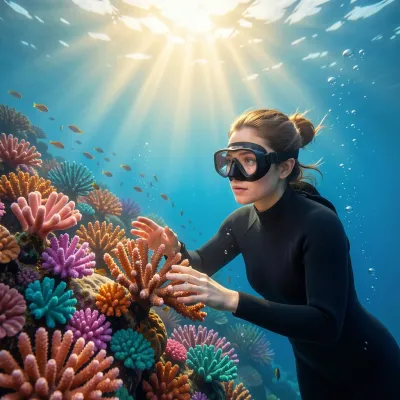
Coral reefs are vast underwater structures built by colonies of tiny coral polyps that secrete calcium carbonate skeletons, a process amplified by their symbiotic relationship with photosynthetic algae called zooxanthellae. This partnership fuels reef growth, supplies up to 90 % of the coral’s energy, and drives the production of oxygen and the sequestration of carbon in limestone frameworks. Over millennia, these slow‑growing builders create complex, three‑dimensional habitats that support more than a quarter of all marine species despite covering less than one percent of the ocean floor. Reefs act as natural breakwaters that dissipate wave energy, serve as critical nursery grounds for countless fish and invertebrates, and contribute to global oxygen levels and climate regulation by locking away atmospheric carbon dioxide.
The secret life of reefs reveals a delicate balance of symbiosis, competition, and communication. Chemical signals, sounds, and visual displays coordinate spawning, settlement, predator‑prey interactions, and social organization, while diverse feeding strategies and reproductive tactics—from mass broadcast spawning to brooding and parental care—ensure population replenishment. However, this intricate system is highly vulnerable. Rising sea temperatures trigger coral bleaching, expelling zooxanthellae and starving the corals; ocean acidification reduces carbonate ion availability, slowing calcification and even dissolving existing skeletons. Nutrient runoff, sedimentation, plastic debris, chemical pollutants, overfishing (especially of herbivores and apex predators), destructive fishing practices, and invasive species such as the lionfish further degrade reef health, often acting synergistically to push ecosystems toward algal‑dominated phase shifts.
Despite these threats, reefs exhibit considerable resilience through genetic and symbiotic diversity, larval connectivity, rapid growth of certain species, herbivore grazing, and structural complexity. Conservation efforts—including marine protected areas, sustainable fisheries management, pollution reduction, invasive‑species control, and active restoration via coral nurseries and larval seeding—have demonstrated recovery potential when local stressors are alleviated. Ultimately, the future of coral reefs hinges on a collective responsibility to curb greenhouse‑gas emissions, mitigate local impacts, protect and restore habitats, and foster stewardship through education, sustainable tourism, and informed consumer choices. Their survival is intertwined with human food security, coastal protection, medical discovery, and the very air we breathe, making reef conservation not an environmental luxury but a fundamental necessity for planetary health and human prosperity.
What You'll Find Inside:
- Coral reefs are built by tiny coral polyps through calcification, creating massive underwater structures that support 25% of marine species despite covering less than 1% of the ocean floor.
- Reefs provide essential ecosystem services including coastal protection from storms, oxygen production via symbiotic algae, carbon sequestration, and serving as critical nursery grounds for marine life.
- The symbiotic relationship between coral polyps and zooxanthellae algae is fundamental to reef health, providing corals with energy while contributing to oxygen production and calcification.
- Major threats to coral reefs include climate change-driven bleaching and ocean acidification, pollution, overfishing, and invasive species, which disrupt the delicate ecological balance.
- Conservation efforts such as marine protected areas, active restoration projects, and reducing greenhouse gas emissions offer hope for reef resilience and recovery.
Who's It For:
This book is ideal for general readers interested in marine biology, environmental science, or conservation, including students, educators, divers, coastal community members, and anyone concerned about ocean health. It presents complex scientific concepts in an accessible manner while providing sufficient depth for those with some background knowledge, making it valuable for both newcomers to the subject and those seeking a comprehensive understanding of coral reef ecosystems and their global significance.
Table of Contents:
- Introduction: The Unseen Architects of Our Oceans
- Chapter 1: A Kaleidoscope Beneath the Waves: What Are Coral Reefs?
- Chapter 2: The Builders: Understanding Coral Polyps
- Chapter 3: Symbiosis: The Algae Within
- Chapter 4: Reef Formation: A Slow and Steady Ascent
- Chapter 5: Biodiversity Hotspots: A Home for Millions
- Chapter 6: The Great Barrier: Different Types of Reefs
- Chapter 7: Nursery Grounds: Where Life Begins
- Chapter 8: Natural Breakwaters: Protecting Our Coasts
- Chapter 9: The Ocean's Lungs: Reefs and Oxygen Production
- Chapter 10: Carbon Sinks: Reefs and Climate Regulation
- Chapter 11: Underwater Cities: Social Structures on the Reef
- Chapter 12: Communication Beneath the Surface: Sounds and Signals
- Chapter 13: Predators and Prey: The Delicate Balance
- Chapter 14: Reproduction Strategies: Spawning Events and Beyond
- Chapter 15: The Threat of Bleaching: A Warming World
- Chapter 16: Ocean Acidification: The Silent Killer
- Chapter 17: Pollution's Pervasive Reach: Toxins and Trash
- Chapter 18: Overfishing: Emptying the Reef's Pantry
- Chapter 19: Invasive Species: Disrupting the Ecosystem
- Chapter 20: Resilience of Reefs: Hope in the Face of Adversity
- Chapter 21: Conservation Efforts: Protecting Our Underwater Treasures
- Chapter 22: Restoring Reefs: Active Interventions and Success Stories
- Chapter 23: The Human Connection: How Our Lives Depend on Reefs
- Chapter 24: New Discoveries: Unveiling More Reef Secrets
- Chapter 25: A Future for Coral Reefs: Our Collective Responsibility
Author:
Published By:
Date Published:
August 14, 2026
Type:
Nonfiction
Language:
English
Word Count:
41,612 words
Reading Time:
2 hours 55 minutes
Sample:
Order:
Order The Secret Life of Coral Reefs (Paperback) on MixCache.com:
Buy NowPrint copy is made to order and ships worldwide. Includes the ebook free, ready to read instantly.
$5 account credit for all new MixCache.com accounts, usable toward any ebook purchase!*