
Browse by Category
Fiction
- Action & Adventure
- African American
- Anthologies
- Children's Fiction
- Classics
- Comics & Graphic Novels
- Coming of Age
- Contemporary
- Cultural & Regional
- Drama
- Erotica
- Fantasy
- General
- Historical Fiction
- Horror
- Humor & Satire
- Literary Fiction
- Mystery, Thriller & Suspense
- Poetry
- Religious & Inspirational
- Romance
- Science Fiction
- Short Stories
- War & Military
- Westerns
- Women's Fiction
- Young Adult
Non-Fiction
- Antiques & Collectibles
- Arts & Photography
- Biographies & Memoirs
- Business & Money
- Children's Non-Fiction
-
Computers & Technology
- Artificial Intelligence
- Computer Science
- Cybersecurity & Cryptography
- Data Science & Analytics
- Databases & Big Data
- Game Development & Design
- General
- Hardware & DIY
- Mobile App Development
- Networking & Cloud Computing
- Operating Systems
- Programming
- Robotics
- Software
- Software Engineering
- User Experience (UX) & Design
- Web Development & Design
- Cooking, Food & Wine
- Crafts, Hobbies & Home
- Education & Teaching
- Engineering
- General
- Health, Fitness & Dieting
-
History
- African History
- African History - North Africa
- African History - Sub-Saharan Africa
- American History
- American History - 20th Century
- American History - Civil War
- American History - Colonial Period
- Ancient History
- Asian History
- Asian History - China
- Asian History - India
- Asian History - Japan
- Asian History - Southeast Asia
- European History
- European History - Ancient Greece
- European History - Ancient Rome
- European History - Medieval
- European History - Modern
- European History - Renaissance
- General
- Middle Eastern History
- Military History
- Military History - Aviation
- Military History - Naval
- Social & Cultural History
- World History
- Humor & Entertainment
- Industrial Technology
- Language Learning
- Law
- LGBTQ+ Non-Fiction
- Literary Criticism
- Medical Books
- Parenting & Relationships
- Philosophy
- Politics & Social Sciences
- Reference
- Religion & Spirituality
-
Science & Math
- Agricultural Sciences
- Astronomy & Space Science
- Behavioral Sciences
- Biological Sciences
- Botany & Plant Science
- Chemistry
- Earth Sciences
- Engineering - Chemical
- Engineering - Civil
- Engineering - Electrical
- Engineering - Mechanical
- Environment
- General
- Geology
- Mathematics
- Nature & Ecology
- Oceanography
- Paleontology
- Physics
- Statistics
- Self-Help
- Sports & Outdoors
- Study Aids
- Sustainability & Green Living
- Textbooks
- Transportation
- Travel
- True Crime
- Urban Planning & Development
- Veterinary Medicine
- Writing & Publishing
Jump to Section
MixCache.com Total Access
Unlimited reading and audiobooks for every book published by MixCache.com.
Included titles carry the MTA badge.
Learn more →
Crime and Media: Representation, Influence, and Public Perception
MTA
News Coverage, True Crime, and Social Media
About this book:
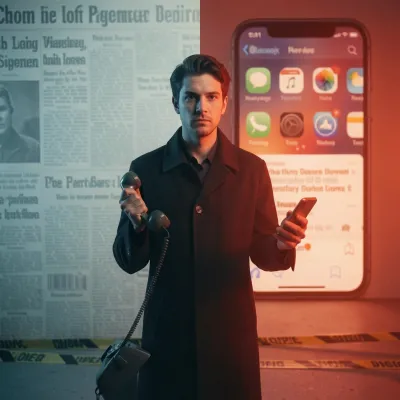
*Crime and Media: Representation, Influence, and Public Perception* traces the evolving interplay between crime and media from early print journalism to the digital age, showing how news coverage, true crime narratives, and social media actively shape public understanding rather than merely reflecting reality. The book details historical shifts—from penny presses and yellow journalism to radio, television, and 24‑hour news cycles—and explains how technological advances have intensified the speed, reach, and sensationalism of crime reporting. Core concepts such as framing (episodic vs. thematic, gain vs. loss), the CSI effect, moral panics, and cultivation theory illustrate how media narratives influence fear, stereotypes, policy attitudes, and judicial expectations, often amplifying perceived threats and reinforcing biases related to race, class, and gender.
The work examines specific genres and platforms, noting the popularity and perils of true crime, the dual role of social media as both a tool for citizen journalism and a vector for misinformation, and the profound impact of visual media—ranging from surveillance footage to VR reenactments—on empathy, desensitization, and courtroom dynamics. It highlights disparities in coverage, such as the “missing white woman syndrome” and the overrepresentation of minorities as perpetrators, showing how these portrayals feed stereotypes, affect public sympathy, and drive punitive versus rehabilitative policy preferences. Chapters on policing and the media, media trials, and disinformation reveal the symbiotic yet tense relationship between law enforcement and journalists, the dangers of prejudicial publicity, and the corrosive effect of false narratives on fair trials and public trust.
Throughout, the book stresses ethical responsibilities for journalists, advocating accuracy, verification, contextualization, harm minimization, and resistance to sensationalism. It calls for enhanced media literacy among audiences, collaborative efforts between media, law enforcement, and communities, and proactive governance of emerging technologies like AI and immersive media to prevent exploitation and bias. Ultimately, the volume argues for a more informed, ethical crime journalism that balances the public’s right to know with dignity, fairness, and the pursuit of justice, urging continuous critical engagement to counteract fear‑driven narratives and promote evidence‑based understanding of crime and its societal responses.
What You'll Find Inside:
- How media framing techniques (episodic/thematic, gain/loss, individual/systemic) actively shape public understanding of crime rather than merely reflecting reality
- The impact of sensationalism in crime reporting on public perception, fear, and ethical journalism standards
- The CSI effect and how media portrayals of forensic science influence jury expectations and courtroom dynamics
- The true crime genre's evolution, popularity, and ethical challenges including re-traumatization and misinformation
- Social media's role as a catalyst in crime narratives, enabling citizen journalism while amplifying misinformation and bias
Who's It For:
This book is essential reading for students and scholars of media studies, criminology, sociology, and journalism who seek to understand the complex relationship between crime representations and public perception. It also serves media professionals, journalists, and criminal justice practitioners looking to improve ethical reporting practices and understand media's influence on policy and public opinion. Additionally, informed members of the public interested in critically evaluating crime news and true crime content will benefit from its media literacy frameworks and analysis of contemporary issues like disinformation and moral panics.
Table of Contents:
- Introduction
- Chapter 1: The Evolving Landscape of Crime and Media
- Chapter 2: Framing Crime: How Media Shapes Public Understanding
- Chapter 3: Sensationalism in Crime Reporting: Impact and Ethics
- Chapter 4: The CSI Effect: Media's Influence on Jury Expectations
- Chapter 5: True Crime Genre: Popularity, Portrayal, and Peril
- Chapter 6: Social Media as a Catalyst in Crime Narratives
- Chapter 7: News Coverage of Crime: From Print to Digital
- Chapter 8: The Role of Journalists in Constructing Crime Realities
- Chapter 9: Public Perception of Crime: A Media-Driven Construct
- Chapter 10: Media Influence on Criminal Justice Policy
- Chapter 11: Ethical Guidelines for Responsible Crime Reporting
- Chapter 12: Victims and Perpetrators: Media Representation and Its Consequences
- Chapter 13: Race, Class, and Crime: Disparities in Media Coverage
- Chapter 14: Gender and Crime: Analyzing Media Portrayals
- Chapter 15: The Impact of Visual Media on Crime Perception
- Chapter 16: From Local Beat to Global News: The Reach of Crime Stories
- Chapter 17: The Digital Age of Crime: Cybercrime and Media Responses
- Chapter 18: Media Hysteria and Moral Panics: Case Studies in Crime
- Chapter 19: Policing and the Media: A Symbiotic Relationship
- Chapter 20: The Court of Public Opinion: Media Trials and Their Effects
- Chapter 21: Fact vs. Fiction: Disinformation in Crime Reporting
- Chapter 22: Audience Engagement and the Consumption of Crime Media
- Chapter 23: Media Literacy for a Critical Understanding of Crime News
- Chapter 24: Future Trends in Crime and Media Representation
- Chapter 25: Towards a More Ethical and Informative Crime Journalism
Author:
Published By:
Date Published:
August 12, 2026
Type:
Nonfiction
Language:
English
Word Count:
87,460 words
Reading Time:
6 hours 7 minutes
Sample:
MixCache.com Total Access
Get unlimited access to this book + all books published by MixCache.com for $11.99/month
Subscribe to MTAOr purchase this book individually below
Order:
Buy the Crime and Media: Representation, Influence, and Public Perception ebook on MixCache.com:
Buy Now
Full ebook will be available immediately
- read online or download as a PDF file.
$5 account credit for all new MixCache.com accounts, usable toward any ebook purchase!*





Ratings & Reviews
Ask Questions About This Book
Have a question about the content? Ask our AI assistant!
Start by asking a question about "Crime and Media: Representation, Influence, and Public Perception"
Example: "Does this book mention William Shakespeare?"
Thinking...