
Browse by Category
Fiction
- Action & Adventure
- African American
- Anthologies
- Children's Fiction
- Classics
- Comics & Graphic Novels
- Coming of Age
- Contemporary
- Cultural & Regional
- Drama
- Erotica
- Fantasy
- General
- Historical Fiction
- Horror
- Humor & Satire
- Literary Fiction
- Mystery, Thriller & Suspense
- Poetry
- Religious & Inspirational
- Romance
- Science Fiction
- Short Stories
- War & Military
- Westerns
- Women's Fiction
- Young Adult
Non-Fiction
- Antiques & Collectibles
- Arts & Photography
- Biographies & Memoirs
- Business & Money
- Children's Non-Fiction
-
Computers & Technology
- Artificial Intelligence
- Computer Science
- Cybersecurity & Cryptography
- Data Science & Analytics
- Databases & Big Data
- Game Development & Design
- General
- Hardware & DIY
- Mobile App Development
- Networking & Cloud Computing
- Operating Systems
- Programming
- Robotics
- Software
- Software Engineering
- User Experience (UX) & Design
- Web Development & Design
- Cooking, Food & Wine
- Crafts, Hobbies & Home
- Education & Teaching
- Engineering
- General
- Health, Fitness & Dieting
-
History
- African History
- African History - North Africa
- African History - Sub-Saharan Africa
- American History
- American History - 20th Century
- American History - Civil War
- American History - Colonial Period
- Ancient History
- Asian History
- Asian History - China
- Asian History - India
- Asian History - Japan
- Asian History - Southeast Asia
- European History
- European History - Ancient Greece
- European History - Ancient Rome
- European History - Medieval
- European History - Modern
- European History - Renaissance
- General
- Middle Eastern History
- Military History
- Military History - Aviation
- Military History - Naval
- Social & Cultural History
- World History
- Humor & Entertainment
- Industrial Technology
- Language Learning
- Law
- LGBTQ+ Non-Fiction
- Literary Criticism
- Medical Books
- Parenting & Relationships
- Philosophy
- Politics & Social Sciences
- Reference
- Religion & Spirituality
-
Science & Math
- Agricultural Sciences
- Astronomy & Space Science
- Behavioral Sciences
- Biological Sciences
- Botany & Plant Science
- Chemistry
- Earth Sciences
- Engineering - Chemical
- Engineering - Civil
- Engineering - Electrical
- Engineering - Mechanical
- Environment
- General
- Geology
- Mathematics
- Nature & Ecology
- Oceanography
- Paleontology
- Physics
- Statistics
- Self-Help
- Sports & Outdoors
- Study Aids
- Sustainability & Green Living
- Textbooks
- Transportation
- Travel
- True Crime
- Urban Planning & Development
- Veterinary Medicine
- Writing & Publishing
Jump to Section
MixCache.com Total Access
Unlimited reading and audiobooks for every book published by MixCache.com.
Included titles carry the MTA badge.
Learn more →
Rehabilitation Programs Inside Prisons: Cognitive‑Behavioral Therapy, Substance Abuse Treatment, and Peer Support
MTA
What Works and Why
About this book:
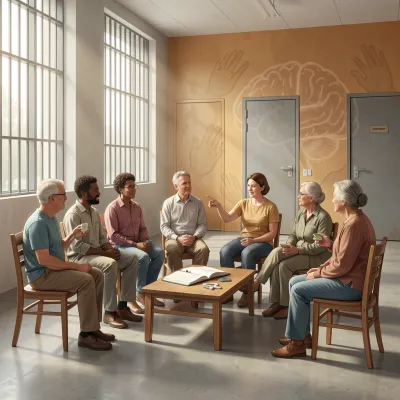
This book provides a comprehensive, evidence‑based guide to rehabilitation programming within correctional facilities, centering on three core interventions: Cognitive‑Behavioral Therapy (CBT), substance‑abuse treatment, and peer support. It begins by tracing the historical evolution of prison rehabilitation, outlines the multifaceted causes of recidivism, and establishes criminogenic needs as the focal point for effective intervention. Subsequent chapters detail the theoretical foundations and practical techniques of CBT—including criminal‑thinking restructuring, anger‑management strategies, and adaptations for diverse populations such as women, youths, and those with co‑occurring disorders—as well as the principles of substance‑abuse care ranging from therapeutic communities and motivational interviewing to medication‑assisted treatment and integrated approaches for dual diagnoses. The text then explores peer‑support programs, describing their mechanisms of shared identity, hope, and practical guidance, and offers step‑by‑step guidance on establishing, training, supervising, and evaluating such initiatives to ensure fidelity and impact.
Integrating these components into a holistic rehabilitation model is emphasized throughout, with chapters devoted to seamless program coordination, staff training and development, fidelity checklists, outcome‑tracking templates, and data‑driven program evaluation. The book also addresses the practical challenges of implementation in secure environments—including institutional culture, resource constraints, population transience, security demands, and staff burnout—and proposes strategies to overcome them. Ethical considerations such as voluntariness, confidentiality, dual relationships, and the duty of continuity of care are examined, underscoring the importance of aligning rehabilitative efforts with respect for individuals’ dignity and public safety. Finally, the work outlines policy implications for funding, equitable access, medication‑assisted treatment, staff development, community reintegration, and collateral‑consequence reform, concluding with a blueprint for success that stresses evidence‑based practice, program fidelity, competent staff, a rehabilitative institutional culture, individualized needs assessment, integrated programming, rigorous outcome monitoring, and a robust continuum of care extending into the community.
What You'll Find Inside:
- Evidence-based Cognitive-Behavioral Therapy techniques for addressing criminal thinking patterns, anger management, and impulse control in correctional settings
- Comprehensive substance abuse treatment approaches including motivational interviewing, 12-step program adaptations, and pharmacotherapy integration
- Theory and practice of peer support programs, including establishment, training, supervision, and measuring impact on inmate outcomes
- Strategies for holistic program integration, fidelity monitoring, outcome tracking, and overcoming implementation challenges in prison environments
- Critical focus on community reentry planning, continuity of care, and policy implications for sustaining rehabilitation gains post-release
Who's It For:
This book is designed for correctional administrators, program developers, line staff, and criminal justice professionals committed to implementing effective rehabilitation programs. It serves as an evidence-based resource for anyone seeking to understand and advance prison-based interventions that reduce recidivism through cognitive-behavioral therapy, substance abuse treatment, and peer support approaches.
Table of Contents:
- Introduction
- Chapter 1: The Landscape of Prison Rehabilitation: Historical Context and Current Challenges
- Chapter 2: Understanding Recidivism: Causes and Contributing Factors
- Chapter 3: Core Principles of Cognitive-Behavioral Therapy in Correctional Settings
- Chapter 4: CBT Techniques for Addressing Criminal Thinking Patterns
- Chapter 5: CBT for Anger Management and Impulse Control
- Chapter 6: Adapting CBT for Diverse Inmate Populations
- Chapter 7: Foundations of Substance Abuse Treatment in Prisons
- Chapter 8: Motivational Interviewing: Enhancing Readiness for Change
- Chapter 9: Twelve-Step Program Adaptations for Incarcerated Individuals
- Chapter 10: Pharmacotherapy in Conjunction with Behavioral Therapies
- Chapter 11: Addressing Co-Occurring Mental Health and Substance Use Disorders
- Chapter 12: The Power of Peer Support: Theory and Practice
- Chapter 13: Establishing and Maintaining Effective Peer Support Programs
- Chapter 14: Training and Supervising Peer Mentors in a Prison Environment
- Chapter 15: Measuring the Impact of Peer Support on Inmate Outcomes
- Chapter 16: Integrating Rehabilitation Programs: A Holistic Approach
- Chapter 17: Staff Training and Development for Program Fidelity
- Chapter 18: Fidelity Checklists: Ensuring Program Integrity
- Chapter 19: Outcome-Tracking Templates: Monitoring Progress and Effectiveness
- Chapter 20: Data Collection and Analysis for Program Evaluation
- Chapter 21: Overcoming Implementation Challenges in Prison Settings
- Chapter 22: Ethical Considerations in Prison Rehabilitation Programs
- Chapter 23: The Role of Community Reintegration in Sustained Recovery
- Chapter 24: Policy Implications and Future Directions in Correctional Rehabilitation
- Chapter 25: A Blueprint for Success: Key Factors Driving Program Effectiveness
Author:
Published By:
Date Published:
August 11, 2026
Type:
Nonfiction
Language:
English
Word Count:
44,424 words
Reading Time:
3 hours 7 minutes
Sample:
MixCache.com Total Access
Get unlimited access to this book + all books published by MixCache.com for $11.99/month
Subscribe to MTAOr purchase this book individually below
Order:
Buy the Rehabilitation Programs Inside Prisons: Cognitive‑Behavioral Therapy, Substance Abuse Treatment, and Peer Support ebook on MixCache.com:
Buy Now
Full ebook will be available immediately
- read online or download as a PDF file.
$5 account credit for all new MixCache.com accounts, usable toward any ebook purchase!*





Ratings & Reviews
Ask Questions About This Book
Have a question about the content? Ask our AI assistant!
Start by asking a question about "Rehabilitation Programs Inside Prisons: Cognitive‑Behavioral Therapy, Substance Abuse Treatment, and Peer Support"
Example: "Does this book mention William Shakespeare?"
Thinking...