
Browse by Category
Fiction
- Action & Adventure
- African American
- Anthologies
- Children's Fiction
- Classics
- Comics & Graphic Novels
- Coming of Age
- Contemporary
- Cultural & Regional
- Drama
- Erotica
- Fantasy
- General
- Historical Fiction
- Horror
- Humor & Satire
- Literary Fiction
- Mystery, Thriller & Suspense
- Poetry
- Religious & Inspirational
- Romance
- Science Fiction
- Short Stories
- War & Military
- Westerns
- Women's Fiction
- Young Adult
Non-Fiction
- Antiques & Collectibles
- Arts & Photography
- Biographies & Memoirs
- Business & Money
- Children's Non-Fiction
-
Computers & Technology
- Artificial Intelligence
- Computer Science
- Cybersecurity & Cryptography
- Data Science & Analytics
- Databases & Big Data
- Game Development & Design
- General
- Hardware & DIY
- Mobile App Development
- Networking & Cloud Computing
- Operating Systems
- Programming
- Robotics
- Software
- Software Engineering
- User Experience (UX) & Design
- Web Development & Design
- Cooking, Food & Wine
- Crafts, Hobbies & Home
- Education & Teaching
- Engineering
- General
- Health, Fitness & Dieting
-
History
- African History
- African History - North Africa
- African History - Sub-Saharan Africa
- American History
- American History - 20th Century
- American History - Civil War
- American History - Colonial Period
- Ancient History
- Asian History
- Asian History - China
- Asian History - India
- Asian History - Japan
- Asian History - Southeast Asia
- European History
- European History - Ancient Greece
- European History - Ancient Rome
- European History - Medieval
- European History - Modern
- European History - Renaissance
- General
- Middle Eastern History
- Military History
- Military History - Aviation
- Military History - Naval
- Social & Cultural History
- World History
- Humor & Entertainment
- Industrial Technology
- Language Learning
- Law
- LGBTQ+ Non-Fiction
- Literary Criticism
- Medical Books
- Parenting & Relationships
- Philosophy
- Politics & Social Sciences
- Reference
- Religion & Spirituality
-
Science & Math
- Agricultural Sciences
- Astronomy & Space Science
- Behavioral Sciences
- Biological Sciences
- Botany & Plant Science
- Chemistry
- Earth Sciences
- Engineering - Chemical
- Engineering - Civil
- Engineering - Electrical
- Engineering - Mechanical
- Environment
- General
- Geology
- Mathematics
- Nature & Ecology
- Oceanography
- Paleontology
- Physics
- Statistics
- Self-Help
- Sports & Outdoors
- Study Aids
- Sustainability & Green Living
- Textbooks
- Transportation
- Travel
- True Crime
- Urban Planning & Development
- Veterinary Medicine
- Writing & Publishing
Jump to Section

Want unlimited access to all books published by MixCache.com (plus their audiobooks)? Try MixCache.com Total Access. Look for the MTA badge on book covers to identify included titles.
Access to infinite ebooks: Don't see the book you want? Suggest it and we'll create it (free!) for you from scratch with our powerful AI book writer. Then read it with MTA - besides profiting from any sales it makes!
Organized Crime Networks: Structure, Operations, and Disruption Tactics
MTA
Analyzing Mafias, Gangs, and Transnational Syndicates
About this book:
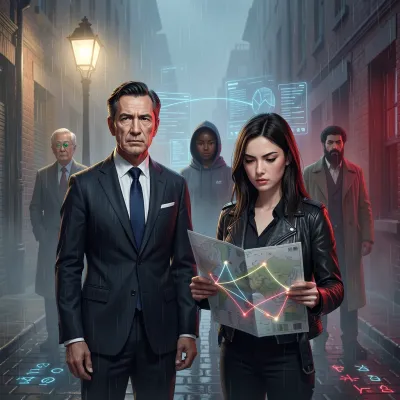
Organized crime networks are structured, persistent enterprises fundamentally driven by profit through illicit activities, distinguished from opportunistic crime by their internal governance, reliance on intimidation and corruption, and remarkable adaptability. These networks manifest across a spectrum from hierarchical Mafia-like organizations with strong ethnic ties and codes of silence, to fluid street gangs centered on territorial control and drug trafficking, to highly sophisticated transnational syndicates that exploit globalization, technology, and jurisdictional gaps to operate globally. Their structures range from rigid pyramids to decentralized cells, hub-and-spoke models, or free-form networks, often combining models for resilience, with core functions enforced through violence (internal discipline, territorial/market control, witness intimidation) and secrecy (omertà, compartmentalization, coded language) to maintain cohesion and evade detection.
The operational lifeblood of these networks is financial, necessitating sophisticated money laundering to transform illicit gains into legitimate wealth. This process involves placement (introducing dirty cash), layering (obscuring origins via complex transactions, shell companies, trade-based schemes, or cryptocurrency mixers), and integration (re-entering the legitimate economy). Law enforcement disruption hinges on "following the money" through financial forensics, network analysis of communications and transactions, and identifying vulnerabilities such as leadership nodes, financial brokers, communication channels, or specialized experts. Intelligence-led policing, leveraging intercepted communications, digital footprints, human sources (informants, undercover operators), and cross-border collaboration, enables proactive targeting of key players and critical infrastructure like Professional Money Laundering Organizations or corrupt facilitators, moving beyond reactive arrests to dismantle the economic and operational foundations.
Effective disruption requires a multi-pronged, intelligence-driven strategy combining targeted arrests (decapitation strikes), asset forfeiture and financial sanctions to starve networks of profit, dismantling money laundering pipelines, and disrupting communication channels. Equally vital are long-term approaches addressing root causes: prevention through youth interventions, education, and employment opportunities; rehabilitation via exit programs, mental health treatment, and restorative justice; and strengthening community resilience. Future challenges demand continuous adaptation to converging threats like cybercrime-organized crime hybrids, AI-powered offenses, decentralized finance exploitation, and environmental crime, necessitating advanced analytics, international regulatory harmonization, public-private partnerships, and whole-of-society responses to counter the ever-evolving, boundary-defying nature of modern criminal enterprises.
What You'll Find Inside:
- Understanding organized crime typologies and evolution – from traditional mafias and street gangs to sophisticated transnational syndicates and their adaptive structures
- Analyzing criminal network architectures – hierarchical, decentralized, and hybrid models – to identify vulnerabilities and power structures through communication and financial patterns
- Mastering financial disruption tactics – tracing illicit gains, dismantling money laundering operations, and leveraging asset forfeiture to attack criminal profitability
- Applying intelligence-led methodologies – intercepted communications, digital footprints, network analysis, and human sources to transform data into actionable disruption strategies
- Implementing multi-pronged disruption approaches – targeted leadership arrests, cross-border collaboration, informant management, and legal frameworks to dismantle networks systematically
Who's It For:
This book is specifically designed for law enforcement analysts, criminal investigators, intelligence professionals, and practitioners working on organized crime cases. It provides actionable disruption strategies and analytical techniques for those tasked with understanding, mapping, and dismantling criminal networks at local, national, and international levels, particularly professionals seeking to move beyond reactive policing toward proactive, intelligence-led operations against mafias, gangs, transnational syndicates, and emerging cyber-enabled threats.
Author:
Published By:
Date Published:
August 10, 2026
Type:
Nonfiction
Language:
English
Word Count:
46,271 words
Reading Time:
3 hours 14 minutes
Sample:
MixCache.com Total Access
Get unlimited access to this book + all books published by MixCache.com for $11.99/month
Subscribe to MTAOr purchase this book individually below
Order:
Buy the Organized Crime Networks: Structure, Operations, and Disruption Tactics ebook on MixCache.com:
Buy Now
Full ebook will be available immediately
- read online or download as a PDF file.
$5 account credit for all new MixCache.com accounts, usable toward any ebook purchase!*






Ratings & Reviews
Ask Questions About This Book
Have a question about the content? Ask our AI assistant!
Start by asking a question about "Organized Crime Networks: Structure, Operations, and Disruption Tactics"
Example: "Does this book mention William Shakespeare?"
Thinking...