
Browse by Category
Fiction
- Action & Adventure
- African American
- Anthologies
- Children's Fiction
- Classics
- Comics & Graphic Novels
- Coming of Age
- Contemporary
- Cultural & Regional
- Drama
- Erotica
- Fantasy
- General
- Historical Fiction
- Horror
- Humor & Satire
- Literary Fiction
- Mystery, Thriller & Suspense
- Poetry
- Religious & Inspirational
- Romance
- Science Fiction
- Short Stories
- War & Military
- Westerns
- Women's Fiction
- Young Adult
Non-Fiction
- Antiques & Collectibles
- Arts & Photography
- Biographies & Memoirs
- Business & Money
- Children's Non-Fiction
-
Computers & Technology
- Artificial Intelligence
- Computer Science
- Cybersecurity & Cryptography
- Data Science & Analytics
- Databases & Big Data
- Game Development & Design
- General
- Hardware & DIY
- Mobile App Development
- Networking & Cloud Computing
- Operating Systems
- Programming
- Robotics
- Software
- Software Engineering
- User Experience (UX) & Design
- Web Development & Design
- Cooking, Food & Wine
- Crafts, Hobbies & Home
- Education & Teaching
- Engineering
- General
- Health, Fitness & Dieting
-
History
- African History
- African History - North Africa
- African History - Sub-Saharan Africa
- American History
- American History - 20th Century
- American History - Civil War
- American History - Colonial Period
- Ancient History
- Asian History
- Asian History - China
- Asian History - India
- Asian History - Japan
- Asian History - Southeast Asia
- European History
- European History - Ancient Greece
- European History - Ancient Rome
- European History - Medieval
- European History - Modern
- European History - Renaissance
- General
- Middle Eastern History
- Military History
- Military History - Aviation
- Military History - Naval
- Social & Cultural History
- World History
- Humor & Entertainment
- Industrial Technology
- Language Learning
- Law
- LGBTQ+ Non-Fiction
- Literary Criticism
- Medical Books
- Parenting & Relationships
- Philosophy
- Politics & Social Sciences
- Reference
- Religion & Spirituality
-
Science & Math
- Agricultural Sciences
- Astronomy & Space Science
- Behavioral Sciences
- Biological Sciences
- Botany & Plant Science
- Chemistry
- Earth Sciences
- Engineering - Chemical
- Engineering - Civil
- Engineering - Electrical
- Engineering - Mechanical
- Environment
- General
- Geology
- Mathematics
- Nature & Ecology
- Oceanography
- Paleontology
- Physics
- Statistics
- Self-Help
- Sports & Outdoors
- Study Aids
- Sustainability & Green Living
- Textbooks
- Transportation
- Travel
- True Crime
- Urban Planning & Development
- Veterinary Medicine
- Writing & Publishing
Jump to Section

Want unlimited access to all books published by MixCache.com (plus their audiobooks)? Try MixCache.com Total Access. Look for the MTA badge on book covers to identify included titles.
Access to infinite ebooks: Don't see the book you want? Suggest it and we'll create it (free!) for you from scratch with our powerful AI book writer. Then read it with MTA - besides profiting from any sales it makes!
Denmark's Design Legacy
MTA
Functionality Minimalism and Global Influence
About this book:
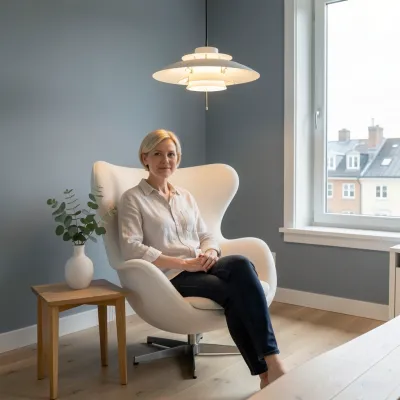
Denmark's design legacy emerged from a deep-rooted cultural appreciation for craftsmanship, functionality, and understated elegance, evolving from Viking shipbuilding and agricultural pragmatism into a modern ethos where form follows purpose. The early 20th‑century shift from bespoke craft to industrial art was guided by thinkers like Kaare Klint, who married rigorous ergonomic research with a respect for natural materials, establishing a philosophy that beauty arises from utility. This mindset was amplified by the Danish welfare state, which treated design as a public good, investing in education, public commissions, and democratic access to high‑quality objects, thereby fostering a national aesthetic grounded in honesty, simplicity, and social consciousness.
The legacy is most visible in Denmark’s iconic furniture—chairs, tables, and storage solutions that balance sculptural form with ergonomic comfort—and in its lighting, where pioneers such as Poul Henningsen created glare‑free, atmospherically rich luminaires. Everyday objects like ceramics, glassware, and textiles received the same meticulous attention, embodying minimalism and material warmth. These principles extended beyond the home to shape public spaces and urban planning, emphasizing pedestrian‑friendly streets, abundant green spaces, and human‑scaled architecture that prioritizes well‑being, accessibility, and sustainability. Throughout, designers celebrated wood, wool, and leather for their tactile qualities and ability to age gracefully, reinforcing a connection to nature and a commitment to enduring value.
Key figures defined distinct chapters of this story: Arne Jacobsen’s sleek, organic modernism; Hans J. Wegner’s masterful, expressive chaircraft; Verner Panton’s playful experimentation with color and plastic; and Poul Henningsen’s scientific approach to light. Their work, nurtured by institutions like the Danish Cabinetmakers’ Guild Exhibitions and design schools, propelled Danish Modern onto the global stage through postwar exhibitions, strategic marketing, and the universal appeal of functional, democratic design. The collaborative spirit of Scandinavian design—cross‑pollination with Sweden, Norway, and Finland—amplified this influence, creating a cohesive yet diverse movement recognized worldwide for its timeless quality and human‑centered sensibility.
Contemporary Danish design continues to evolve, integrating sustainability, circular economy principles, and digital innovation while retaining its core commitments to functionality, minimalism, and craftsmanship. Design education remains vital, fostering interdisciplinary collaboration and research‑driven practice, and a vibrant market for collecting vintage pieces attests to the enduring desire for objects that combine beauty, utility, and lasting value. Looking ahead, Danish designers are redefining purpose to include digital ergonomics, emotional durability, climate resilience, and inclusive design, ensuring that the legacy of thoughtful, purpose‑driven creation remains a guiding force for a more livable and equitable future.
What You'll Find Inside:
- The core philosophy of 'form follows purpose' that underpins Danish design, emphasizing functionality as the foundation for beauty and how this principle emerged from Denmark's pragmatic cultural values
- How the Danish welfare state uniquely supported design as a public good, making quality accessible to all citizens through democratic design principles and public-private partnerships
- The evolution of Danish design from craft to industrial art while maintaining human-centered values, material honesty, and a commitment to durability and timelessness
- The global influence of Danish design through iconic furniture, lighting, and everyday objects that embody Scandinavian minimalism and functional elegance
- The enduring relevance of Danish design principles in contemporary innovation, sustainability, and digital integration while honoring its heritage of functionality and human-centered design
Who's It For:
This book is ideal for design students, professionals, and enthusiasts seeking a comprehensive understanding of Danish design's historical roots, philosophical foundations, and global impact. It will particularly benefit those interested in the intersection of design, social policy, and cultural identity, as well as anyone looking to understand how functionality, minimalism, and human-centered approaches create timeless, universally appealing objects and spaces.
Author:
Published By:
Date Published:
August 9, 2026
Type:
Nonfiction
Language:
English
Word Count:
41,909 words
Reading Time:
2 hours 56 minutes
Sample:
MixCache.com Total Access
Get unlimited access to this book + all books published by MixCache.com for $11.99/month
Subscribe to MTAOr purchase this book individually below
Order:
Buy the Denmark's Design Legacy ebook on MixCache.com:
Buy Now
Full ebook will be available immediately
- read online or download as a PDF file.
$5 account credit for all new MixCache.com accounts, usable toward any ebook purchase!*




Ratings & Reviews
Ask Questions About This Book
Have a question about the content? Ask our AI assistant!
Start by asking a question about "Denmark's Design Legacy"
Example: "Does this book mention William Shakespeare?"
Thinking...