Browse by Category
Fiction
- Action & Adventure
- African American
- Anthologies
- Children's Fiction
- Classics
- Comics & Graphic Novels
- Coming of Age
- Contemporary
- Cultural & Regional
- Drama
- Erotica
- Fantasy
- General
- Historical Fiction
- Horror
- Humor & Satire
- Literary Fiction
- Mystery, Thriller & Suspense
- Poetry
- Religious & Inspirational
- Romance
- Science Fiction
- Short Stories
- War & Military
- Westerns
- Women's Fiction
- Young Adult
Non-Fiction
- Antiques & Collectibles
- Arts & Photography
- Biographies & Memoirs
- Business & Money
- Children's Non-Fiction
-
Computers & Technology
- Artificial Intelligence
- Computer Science
- Cybersecurity & Cryptography
- Data Science & Analytics
- Databases & Big Data
- Game Development & Design
- General
- Hardware & DIY
- Mobile App Development
- Networking & Cloud Computing
- Operating Systems
- Programming
- Robotics
- Software
- Software Engineering
- User Experience (UX) & Design
- Web Development & Design
- Cooking, Food & Wine
- Crafts, Hobbies & Home
- Education & Teaching
- Engineering
- General
- Health, Fitness & Dieting
-
History
- African History
- African History - North Africa
- African History - Sub-Saharan Africa
- American History
- American History - 20th Century
- American History - Civil War
- American History - Colonial Period
- Ancient History
- Asian History
- Asian History - China
- Asian History - India
- Asian History - Japan
- Asian History - Southeast Asia
- European History
- European History - Ancient Greece
- European History - Ancient Rome
- European History - Medieval
- European History - Modern
- European History - Renaissance
- General
- Middle Eastern History
- Military History
- Military History - Aviation
- Military History - Naval
- Social & Cultural History
- World History
- Humor & Entertainment
- Industrial Technology
- Language Learning
- Law
- LGBTQ+ Non-Fiction
- Literary Criticism
- Medical Books
- Parenting & Relationships
- Philosophy
- Politics & Social Sciences
- Reference
- Religion & Spirituality
-
Science & Math
- Agricultural Sciences
- Astronomy & Space Science
- Behavioral Sciences
- Biological Sciences
- Botany & Plant Science
- Chemistry
- Earth Sciences
- Engineering - Chemical
- Engineering - Civil
- Engineering - Electrical
- Engineering - Mechanical
- Environment
- General
- Geology
- Mathematics
- Nature & Ecology
- Oceanography
- Paleontology
- Physics
- Statistics
- Self-Help
- Sports & Outdoors
- Study Aids
- Sustainability & Green Living
- Textbooks
- Transportation
- Travel
- True Crime
- Urban Planning & Development
- Veterinary Medicine
- Writing & Publishing
Jump to Section

Want unlimited access to all books published by MixCache.com (plus their audiobooks)? Try MixCache.com Total Access. Look for the MTA badge on book covers to identify included titles.
Access to infinite ebooks: Don't see the book you want? Suggest it and we'll create it (free!) for you from scratch with our powerful AI book writer. Then read it with MTA - besides profiting from any sales it makes!
Portugal's Age of Exploration
MTA
Navigators Trade Routes and Global Encounters
About this book:
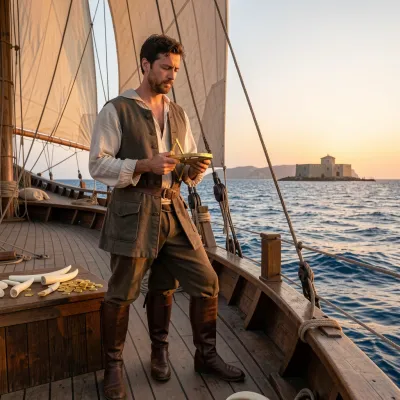
Portugal's Age of Exploration began as a small Iberian nation leveraged its maritime tradition, political stability after the Reconquista, and the patronage of Prince Henry the Navigator to systematically push south along the African coast. Technological breakthroughs—such as the caravel with its lateen sails, the carrack for long‑haul cargo, and improved navigational instruments like the astrolabe, quadrant, and magnetic compass—enabled Portuguese mariners to overcome psychological barriers like Cape Bojador and eventually to round the Cape of Good Hope (Bartolomeu Dias, 1488) and reach India by sea (Vasco da Gama, 1498). Economic motives—access to gold, spices, and new markets—combined with religious zeal to spread Christianity and forge alliances against Muslim powers drove these endeavors, while early voyages established trade in gold, ivory, and enslaved Africans along the West African coast and laid the groundwork for a global network of forts and feitorias.
Building on Da Gama’s success, Portugal seized key choke points: Afonso de Albuquerque captured Goa (1510), Malacca (1511), and Ormuz (1515), creating a fortified empire that controlled the spice trade from India through the Moluccas to China and Japan. The accidental discovery of Brazil by Pedro Álvares Cabral (1500) added a vast Atlantic colony, initially exploited for brazilwood and later for sugar plantations dependent on enslaved African labor. Portuguese influence extended to Macau as a trade gateway to China, to Nagasaki in Japan for silver and missionary activity, and across Southeast Asia for cloves and nutmeg. These outposts facilitated a tri‑contemporary exchange of goods, peoples, and ideas, but also entrenched brutal systems of slavery, forced conversion, and violent competition with local powers and rival European traders.
The Portuguese empire triggered the Columbian Exchange, moving American crops like maize, cassava, and chili peppers to Africa and Asia while introducing Old World livestock, sugar cane, and diseases to the Americas. Missionary orders, especially the Jesuits, spread Christianity across continents, establishing enduring communities in Goa, Brazil, and East Timor, though often through coercion and the Inquisition. Scientific advances in cartography, astronomy, and ethnography accompanied the expansion, yet the empire faced mounting challenges from the Dutch and English East India Companies, loss of Asian monopolies after the Iberian Union, and the overwhelming human cost of the transatlantic slave trade. Though Portugal’s political dominance waned, its legacy persists in the Portuguese language spoken by over 250 million people, in creole languages, in Catholic traditions, in global trade patterns, and in the interconnected world first forged by its fifteenth‑ and sixteenth‑century navigators.
What You'll Find Inside:
- Chronicles Portugal's development of revolutionary maritime technology including the caravel with lateen sails and navigational instruments like the astrolabe that enabled transoceanic voyages.
- Explores Prince Henry the Navigator's establishment of a maritime innovation hub at Sagres that systematized exploration through sponsorship of cartographers, astronomers, and shipbuilders.
- Details how the pursuit of spices, gold, and new trade routes combined with religious missionary zeal to drive Portugal's expansion across four continents.
- Documents the establishment of strategic Portuguese forts and trading posts from Goa to Macau that created the first global maritime trade network.
- Examines the lasting global impacts including the Columbian Exchange, transatlantic slave trade, and cultural legacies that continue to shape modern societies.
Who's It For:
This book is ideal for history enthusiasts, students, and general readers interested in the Age of Exploration and its global consequences. It will particularly appeal to those seeking to understand how a small European nation pioneered maritime exploration, established the first global trade empire, and whose legacy continues to influence language, culture, and economics worldwide. Readers interested in the interconnected histories of Europe, Africa, Asia, and the Americas will find valuable insights into the origins of modern globalization.
Author:
Published By:
Date Published:
August 8, 2026
Type:
Nonfiction
Language:
English
Word Count:
39,803 words
Reading Time:
2 hours 47 minutes
Sample:
Order:
Order Portugal's Age of Exploration (Hardcover) on MixCache.com:
Buy NowPrint copy is made to order and ships worldwide. Includes the ebook free, ready to read instantly.
$5 account credit for all new MixCache.com accounts, usable toward any ebook purchase!*