
Browse by Category
Fiction
- Action & Adventure
- African American
- Anthologies
- Children's Fiction
- Classics
- Comics & Graphic Novels
- Coming of Age
- Contemporary
- Cultural & Regional
- Drama
- Erotica
- Fantasy
- General
- Historical Fiction
- Horror
- Humor & Satire
- Literary Fiction
- Mystery, Thriller & Suspense
- Poetry
- Religious & Inspirational
- Romance
- Science Fiction
- Short Stories
- War & Military
- Westerns
- Women's Fiction
- Young Adult
Non-Fiction
- Antiques & Collectibles
- Arts & Photography
- Biographies & Memoirs
- Business & Money
- Children's Non-Fiction
-
Computers & Technology
- Artificial Intelligence
- Computer Science
- Cybersecurity & Cryptography
- Data Science & Analytics
- Databases & Big Data
- Game Development & Design
- General
- Hardware & DIY
- Mobile App Development
- Networking & Cloud Computing
- Operating Systems
- Programming
- Robotics
- Software
- Software Engineering
- User Experience (UX) & Design
- Web Development & Design
- Cooking, Food & Wine
- Crafts, Hobbies & Home
- Education & Teaching
- Engineering
- General
- Health, Fitness & Dieting
-
History
- African History
- African History - North Africa
- African History - Sub-Saharan Africa
- American History
- American History - 20th Century
- American History - Civil War
- American History - Colonial Period
- Ancient History
- Asian History
- Asian History - China
- Asian History - India
- Asian History - Japan
- Asian History - Southeast Asia
- European History
- European History - Ancient Greece
- European History - Ancient Rome
- European History - Medieval
- European History - Modern
- European History - Renaissance
- General
- Middle Eastern History
- Military History
- Military History - Aviation
- Military History - Naval
- Social & Cultural History
- World History
- Humor & Entertainment
- Industrial Technology
- Language Learning
- Law
- LGBTQ+ Non-Fiction
- Literary Criticism
- Medical Books
- Parenting & Relationships
- Philosophy
- Politics & Social Sciences
- Reference
- Religion & Spirituality
-
Science & Math
- Agricultural Sciences
- Astronomy & Space Science
- Behavioral Sciences
- Biological Sciences
- Botany & Plant Science
- Chemistry
- Earth Sciences
- Engineering - Chemical
- Engineering - Civil
- Engineering - Electrical
- Engineering - Mechanical
- Environment
- General
- Geology
- Mathematics
- Nature & Ecology
- Oceanography
- Paleontology
- Physics
- Statistics
- Self-Help
- Sports & Outdoors
- Study Aids
- Sustainability & Green Living
- Textbooks
- Transportation
- Travel
- True Crime
- Urban Planning & Development
- Veterinary Medicine
- Writing & Publishing
Jump to Section

Want unlimited access to all books published by MixCache.com (plus their audiobooks)? Try MixCache.com Total Access. Look for the MTA badge on book covers to identify included titles.
Access to infinite ebooks: Don't see the book you want? Suggest it and we'll create it (free!) for you from scratch with our powerful AI book writer. Then read it with MTA - besides profiting from any sales it makes!
Hungary's Turbulent Twentieth Century
MTA
Revolutions Wars and the Struggle for Sovereignty
About this book:
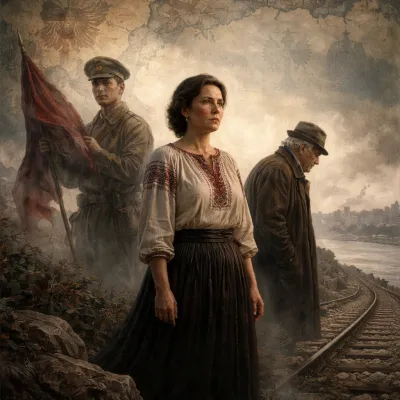
Hungary’s twentieth century began with the Austro‑Hungarian Compromise of 1867, which granted the kingdom considerable autonomy within a dual monarchy but also intensified Magyarization policies that alienated ethnic minorities. The empire’s collapse after World I led to the brief independent Károlyi government, the humiliating Treaty of Trianon (1920) that stripped Hungary of two‑thirds of its territory and population, and a short‑lived Hungarian Soviet Republic under Béla Kun. Conservative forces under Admiral Miklós Horthy then established an authoritarian regime obsessed with revising Trianon, aligning first with fascist Italy and later Nazi Germany to regain lost lands through the Vienna Awards while enacting anti‑Jewish laws and suppressing dissent.
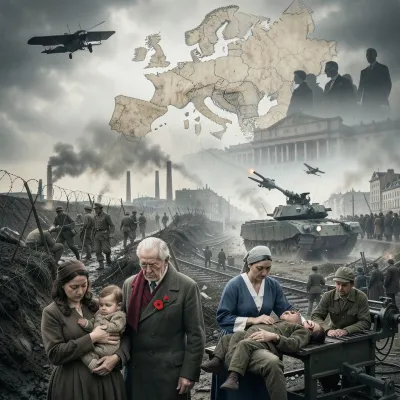
World II saw Hungary’s reluctant participation in the Axis, the disastrous loss of the Second Army on the Eastern Front, and the German occupation of March 1944 that enabled the rapid deportation and murder of over half a million Hungarian Jews in the Holocaust. After the war, Hungary fell under Soviet‑dominated Allied Control Commission oversight, endured severe reparations and hyperinflation, and witnessed the imposition of communist rule via salami tactics, the Stalinist repression of the Rákosi era, and the 1956 uprising—a nationwide revolt for independence crushed by Soviet invasion. János Kádár’s subsequent regime pursued “Goulash Communism,” offering limited economic reforms and modest liberalization in exchange for political quiescence, while maintaining Soviet allegiance and suppressing nationalist sentiment.
By the 1980s, mounting foreign debt, economic stagnation, and growing disillusionment undermined the Kádár system; the rise of Gorbachev’s reforms sparked internal debate, leading to Kádár’s removal, round‑table negotiations, the symbolic reburial of Imre Nagy, the opening of the Austrian border, and the peaceful collapse of communism in 1989–1990. Hungary transitioned to a multiparty democracy, embarked on painful market reforms and privatization, and secured integration into NATO (1999) and the European Union (2004). Post‑communist Hungary has grappled with the legacies of authoritarianism, corruption, economic inequality, and contested historical memory, while balancing national sovereignty with supranational commitments amid resurgent populist pressures and ongoing debates over the rule of law, minority rights, and Europe‑wide integration.
What You'll Find Inside:
- The Treaty of Trianon's catastrophic territorial losses and how it created enduring national trauma that fueled revisionist foreign policy for decades.
- Hungary's complex World War II experience, from initial Axis alliance through German occupation to the devastating implementation of the Holocaust that destroyed most of its Jewish population.
- The 1956 Hungarian Uprising as a spontaneous revolt for independence from Soviet domination that was brutally crushed, demonstrating Moscow's limits on tolerance for dissent in its satellite states.
- The János Kádár era's unique 'Goulash Communism' system that traded limited economic reforms and improved living standards for political obedience and continued Soviet loyalty.
- Hungary's peaceful transition from communist rule to democracy and subsequent integration into NATO and the European Union, fundamentally redefining its place in contemporary Europe.
Who's It For:
This book is ideal for historians, political scientists, and students seeking a comprehensive analysis of Hungary's tumultuous 20th century journey from empire to EU membership. Policymakers and government officials working on Central European affairs will find valuable context for understanding contemporary challenges rooted in historical events like the Treaty of Trianon and communist-era legacies. The work also appeals to general readers interested in European history, particularly those focused on the interplay of nationalism, sovereignty, and ideological struggle in the modern era. Anyone wishing to grasp how Hungary's past informs its present role within NATO and the European Union will benefit from this rigorously researched account.
Author:
Published By:
Date Published:
August 8, 2026
Type:
Nonfiction
Language:
English
Word Count:
40,731 words
Reading Time:
2 hours 51 minutes
Sample:
MixCache.com Total Access
Get unlimited access to this book + all books published by MixCache.com for $11.99/month
Subscribe to MTAOr purchase this book individually below
Order:
Buy the Hungary's Turbulent Twentieth Century ebook on MixCache.com:
Buy Now
Full ebook will be available immediately
- read online or download as a PDF file.
$5 account credit for all new MixCache.com accounts, usable toward any ebook purchase!*




Ratings & Reviews
Ask Questions About This Book
Have a question about the content? Ask our AI assistant!
Start by asking a question about "Hungary's Turbulent Twentieth Century"
Example: "Does this book mention William Shakespeare?"
Thinking...