
Browse by Category
Fiction
- Action & Adventure
- African American
- Anthologies
- Children's Fiction
- Classics
- Comics & Graphic Novels
- Coming of Age
- Contemporary
- Cultural & Regional
- Drama
- Erotica
- Fantasy
- General
- Historical Fiction
- Horror
- Humor & Satire
- Literary Fiction
- Mystery, Thriller & Suspense
- Poetry
- Religious & Inspirational
- Romance
- Science Fiction
- Short Stories
- War & Military
- Westerns
- Women's Fiction
- Young Adult
Non-Fiction
- Antiques & Collectibles
- Arts & Photography
- Biographies & Memoirs
- Business & Money
- Children's Non-Fiction
-
Computers & Technology
- Artificial Intelligence
- Computer Science
- Cybersecurity & Cryptography
- Data Science & Analytics
- Databases & Big Data
- Game Development & Design
- General
- Hardware & DIY
- Mobile App Development
- Networking & Cloud Computing
- Operating Systems
- Programming
- Robotics
- Software
- Software Engineering
- User Experience (UX) & Design
- Web Development & Design
- Cooking, Food & Wine
- Crafts, Hobbies & Home
- Education & Teaching
- Engineering
- General
- Health, Fitness & Dieting
-
History
- African History
- African History - North Africa
- African History - Sub-Saharan Africa
- American History
- American History - 20th Century
- American History - Civil War
- American History - Colonial Period
- Ancient History
- Asian History
- Asian History - China
- Asian History - India
- Asian History - Japan
- Asian History - Southeast Asia
- European History
- European History - Ancient Greece
- European History - Ancient Rome
- European History - Medieval
- European History - Modern
- European History - Renaissance
- General
- Middle Eastern History
- Military History
- Military History - Aviation
- Military History - Naval
- Social & Cultural History
- World History
- Humor & Entertainment
- Industrial Technology
- Language Learning
- Law
- LGBTQ+ Non-Fiction
- Literary Criticism
- Medical Books
- Parenting & Relationships
- Philosophy
- Politics & Social Sciences
- Reference
- Religion & Spirituality
-
Science & Math
- Agricultural Sciences
- Astronomy & Space Science
- Behavioral Sciences
- Biological Sciences
- Botany & Plant Science
- Chemistry
- Earth Sciences
- Engineering - Chemical
- Engineering - Civil
- Engineering - Electrical
- Engineering - Mechanical
- Environment
- General
- Geology
- Mathematics
- Nature & Ecology
- Oceanography
- Paleontology
- Physics
- Statistics
- Self-Help
- Sports & Outdoors
- Study Aids
- Sustainability & Green Living
- Textbooks
- Transportation
- Travel
- True Crime
- Urban Planning & Development
- Veterinary Medicine
- Writing & Publishing
Jump to Section

Want unlimited access to all books published by MixCache.com (plus their audiobooks)? Try MixCache.com Total Access. Look for the MTA badge on book covers to identify included titles.
Access to infinite ebooks: Don't see the book you want? Suggest it and we'll create it (free!) for you from scratch with our powerful AI book writer. Then read it with MTA - besides profiting from any sales it makes!
The Science of Sleep
MTA
Understanding Why We Need Rest
About this book:
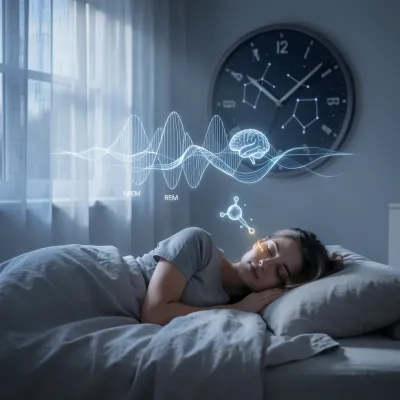
Sleep is a fundamental biological imperative as essential as food, water, and air, orchestrated by circadian rhythms governed by the suprachiasmatic nucleus and modulated by light‑driven melatonin release. The nightly progression through NREM stages—light N1, spindle‑rich N2, and restorative slow‑wave N3—and REM sleep provides distinct physiological and neurological functions, from tissue repair and growth hormone secretion to memory consolidation, emotional processing, and synaptic homeostasis. Evolutionary theories converge on sleep’s roles in energy conservation, waste clearance via the glymphatic system, brain plasticity, and niche adaptation, underscoring that its near‑universal presence across species reflects a survival advantage that outweighs the vulnerability of unconsciousness.
Sleep deprivation exacts a steep toll on cognition, impairing attention, reaction time, executive function, and memory while amplifying emotional reactivity through amygdala hyperactivity and weakened prefrontal regulation. It undermines immune competence by reducing cytokine and natural killer cell activity, disrupts metabolic balance by elevating ghrelin, lowering leptin, inducing insulin resistance, and promoting inflammation, and jeopardizes cardiovascular health by blunting nocturnal blood‑pressure dips, increasing sympathetic tone, and fostering endothelial dysfunction. Common disorders such as insomnia, obstructive sleep apnea, restless legs syndrome, and narcolepsy further illustrate how disrupted sleep architecture fragments rest and precipitates cascading health consequences, from hypertension and diabetes to mood disturbances and cognitive decline.
Optimizing sleep requires a holistic, personalized approach: aligning meal timing with circadian rhythms, limiting caffeine and alcohol, engaging in regular moderate‑intensity exercise (avoiding vigorous activity close to bedtime), cultivating a dark, cool, and quiet bedroom, and employing stress‑reduction techniques like diaphragmatic breathing, progressive muscle relaxation, mindfulness, and gratitude practices. Technology can aid sleep tracking and delivery of guided meditations but must be managed to avoid blue‑light intrusion and cognitive arousal. Consistent sleep‑wake schedules, morning light exposure, and a wind‑down routine that excludes screens form the cornerstone of healthy sleep hygiene. As sleep science advances—integrating genetics, individualized interventions, and deeper insights into glymphatic function—the path to vibrant well-being remains rooted in honoring the indispensable, restorative power of sleep.
What You'll Find Inside:
- Sleep is a biological imperative as essential as food and water, with profound evolutionary roots and serious health consequences when deprived.
- Our internal circadian rhythms regulate sleep-wake cycles through light exposure, hormone production (like melatonin), and consistent timing, which can be optimized for better rest.
- Sleep progresses through distinct stages (NREM 1-3 and REM), each serving unique restorative functions for brain and body, including memory consolidation, emotional processing, and physical repair.
- Quality sleep fundamentally impacts cognitive function, emotional regulation, immune response, metabolic health, and cardiovascular wellness, while deprivation poses significant health risks.
- Evidence-based strategies for better sleep include optimizing diet, exercise, bedroom environment, stress reduction techniques, mindfulness practices, and building a personalized sleep routine aligned with individual biology.
Who's It For:
This book is designed for adults who want to understand the science of sleep and apply that knowledge to improve their rest and overall well-being. It's particularly valuable for those struggling with sleep in our modern, always-on culture, offering both deep scientific insights and practical, actionable strategies. Whether you're a student, professional, parent, or older adult seeking better sleep, this guide provides the tools to build a personalized sleep routine that supports long-term health and vitality.
Author:
Published By:
Date Published:
August 7, 2026
Type:
Nonfiction
Language:
English
Word Count:
45,559 words
Reading Time:
3 hours 11 minutes
Sample:
MixCache.com Total Access
Get unlimited access to this book + all books published by MixCache.com for $11.99/month
Subscribe to MTAOr purchase this book individually below
Order:
Buy the The Science of Sleep ebook on MixCache.com:
Buy Now
Full ebook will be available immediately
- read online or download as a PDF file.
$5 account credit for all new MixCache.com accounts, usable toward any ebook purchase!*



Ratings & Reviews
Ask Questions About This Book
Have a question about the content? Ask our AI assistant!
Start by asking a question about "The Science of Sleep"
Example: "Does this book mention William Shakespeare?"
Thinking...