Browse by Category
Fiction
- Action & Adventure
- African American
- Anthologies
- Children's Fiction
- Classics
- Comics & Graphic Novels
- Coming of Age
- Contemporary
- Cultural & Regional
- Drama
- Erotica
- Fantasy
- General
- Historical Fiction
- Horror
- Humor & Satire
- Literary Fiction
- Mystery, Thriller & Suspense
- Poetry
- Religious & Inspirational
- Romance
- Science Fiction
- Short Stories
- War & Military
- Westerns
- Women's Fiction
- Young Adult
Non-Fiction
- Antiques & Collectibles
- Arts & Photography
- Biographies & Memoirs
- Business & Money
- Children's Non-Fiction
-
Computers & Technology
- Artificial Intelligence
- Computer Science
- Cybersecurity & Cryptography
- Data Science & Analytics
- Databases & Big Data
- Game Development & Design
- General
- Hardware & DIY
- Mobile App Development
- Networking & Cloud Computing
- Operating Systems
- Programming
- Robotics
- Software
- Software Engineering
- User Experience (UX) & Design
- Web Development & Design
- Cooking, Food & Wine
- Crafts, Hobbies & Home
- Education & Teaching
- Engineering
- General
- Health, Fitness & Dieting
-
History
- African History
- African History - North Africa
- African History - Sub-Saharan Africa
- American History
- American History - 20th Century
- American History - Civil War
- American History - Colonial Period
- Ancient History
- Asian History
- Asian History - China
- Asian History - India
- Asian History - Japan
- Asian History - Southeast Asia
- European History
- European History - Ancient Greece
- European History - Ancient Rome
- European History - Medieval
- European History - Modern
- European History - Renaissance
- General
- Middle Eastern History
- Military History
- Military History - Aviation
- Military History - Naval
- Social & Cultural History
- World History
- Humor & Entertainment
- Industrial Technology
- Language Learning
- Law
- LGBTQ+ Non-Fiction
- Literary Criticism
- Medical Books
- Parenting & Relationships
- Philosophy
- Politics & Social Sciences
- Reference
- Religion & Spirituality
-
Science & Math
- Agricultural Sciences
- Astronomy & Space Science
- Behavioral Sciences
- Biological Sciences
- Botany & Plant Science
- Chemistry
- Earth Sciences
- Engineering - Chemical
- Engineering - Civil
- Engineering - Electrical
- Engineering - Mechanical
- Environment
- General
- Geology
- Mathematics
- Nature & Ecology
- Oceanography
- Paleontology
- Physics
- Statistics
- Self-Help
- Sports & Outdoors
- Study Aids
- Sustainability & Green Living
- Textbooks
- Transportation
- Travel
- True Crime
- Urban Planning & Development
- Veterinary Medicine
- Writing & Publishing
Jump to Section

Want unlimited access to all books published by MixCache.com (plus their audiobooks)? Try MixCache.com Total Access. Look for the MTA badge on book covers to identify included titles.
Access to infinite ebooks: Don't see the book you want? Suggest it and we'll create it (free!) for you from scratch with our powerful AI book writer. Then read it with MTA - besides profiting from any sales it makes!
The Architecture of Desert Cities
MTA
How Ancient Peoples Built in Arid Lands
About this book:
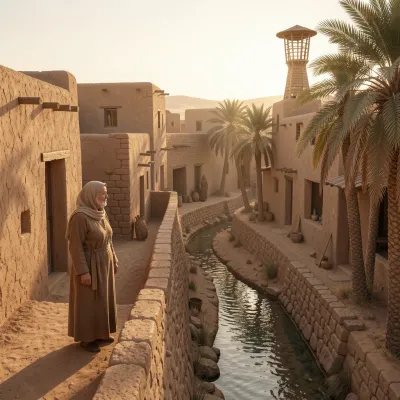
The architecture of ancient desert cities arose from a profound adaptation to extreme aridity, where water scarcity and intense heat shaped every design decision. Civilizations developed sophisticated water management systems—such as Persian qanats that transported groundwater underground to prevent evaporation, Mesopotamian canal networks controlling Tigris and Euphrates floods, Egyptian basin irrigation aligned with the Nile’s inundation, and Hohokam diversion channels in the Sonoran Desert—to transform barren landscapes into productive agricultural zones. Building primarily with locally available earth and stone, builders harnessed the thermal mass of mudbrick and rammed earth to absorb daytime heat and release it at night, while thick stone walls provided similar stability. These material choices were complemented by passive cooling strategies: inward-facing courtyards that shaded and cooled interior spaces, windcatchers that funneled prevailing breezes, narrow winding streets that created self-shading canyons, and small, recessed windows that minimized solar gain while allowing ventilation.
Urban planning in desert settlements was a holistic response to scarcity, integrating defense, food production, and social life within compact, often organically grown layouts. Cities frequently featured dense clusters of shared-wall dwellings, fortified perimeters, and agricultural plots woven into the urban fabric, reducing transportation needs and enhancing communal resilience. Oasis towns along trade routes became hubs of cultural exchange, distinguished by caravanserais, shaded markets, and sophisticated water distribution systems. Religious and communal spaces—such as Mesopotamian ziggurats, Egyptian temples, Indus Valley Great Baths, Puebloan kivas, and Nabataean rock-cut sanctuaries—served as focal points for ritual, governance, and social cohesion, often incorporating water features and courtyards that provided both spiritual refuge and microclimatic relief. Sanitation systems, notably the covered, household-connected drains of Mohenjo-Daro, demonstrated an early commitment to public health, while waste was frequently recycled as fertilizer, reflecting a cyclical approach to resource management in harsh environments.
The legacy of desert architecture offers enduring lessons for contemporary sustainable design, emphasizing climate-responsive strategies that work with, rather than against, the environment. Principles such as maximizing thermal mass, optimizing orientation and shading, utilizing local materials like rammed earth and stone, and integrating water harvesting and recycling remain critically relevant in an era of rising temperatures and water scarcity. The ancient models of dense, mixed-use, pedestrian-friendly urban forms contrast with modern sprawl, presenting a blueprint for reducing heat island effects and resource consumption. Furthermore, the emphasis on community spaces, adaptive reuse, and resilience to hazards like sandstorms underscores that long-term viability stems from social cohesion and a deep attunement to ecological limits—wisdom that continues to inspire resilient, livable cities in arid and increasingly arid regions worldwide.
What You'll Find Inside:
- Ingenious water management systems, from Mesopotamian canals and Egyptian basin irrigation to Persian qanats and Hohokam networks, enabled desert cities to thrive in arid environments.
- Passive cooling techniques such as thick thermal mass walls, internal courtyards, windcatchers, and strategic orientation created comfortable interiors without mechanical cooling.
- Builders mastered locally available materials—mudbrick, rammed earth, and stone—to create durable, thermally efficient structures blending with the landscape.
- Urban planning emphasized dense, shaded layouts, oasis towns along trade routes, and integrated agriculture to maximize scarce resources and foster community.
- The legacy of desert architecture offers timeless lessons for modern sustainable design, resilience to climate shifts, and resource-conscious urban development.
Who's It For:
This book is ideal for architects, urban planners, historians, and sustainability professionals seeking insights into ancient building practices that inform contemporary desert and climate‑resilient design. It will also appeal to students and general readers fascinated by how early civilizations overcame extreme environmental challenges through ingenuity and adaptation.
Author:
Published By:
Date Published:
August 6, 2026
Type:
Nonfiction
Language:
English
Word Count:
37,128 words
Reading Time:
2 hours 36 minutes
Sample:
Order:
Order The Architecture of Desert Cities (Paperback) on MixCache.com:
Buy NowPrint copy is made to order and ships worldwide. Includes the ebook free, ready to read instantly.
$5 account credit for all new MixCache.com accounts, usable toward any ebook purchase!*