
Browse by Category
Fiction
- Action & Adventure
- African American
- Anthologies
- Children's Fiction
- Classics
- Comics & Graphic Novels
- Coming of Age
- Contemporary
- Cultural & Regional
- Drama
- Erotica
- Fantasy
- General
- Historical Fiction
- Horror
- Humor & Satire
- Literary Fiction
- Mystery, Thriller & Suspense
- Poetry
- Religious & Inspirational
- Romance
- Science Fiction
- Short Stories
- War & Military
- Westerns
- Women's Fiction
- Young Adult
Non-Fiction
- Antiques & Collectibles
- Arts & Photography
- Biographies & Memoirs
- Business & Money
- Children's Non-Fiction
-
Computers & Technology
- Artificial Intelligence
- Computer Science
- Cybersecurity & Cryptography
- Data Science & Analytics
- Databases & Big Data
- Game Development & Design
- General
- Hardware & DIY
- Mobile App Development
- Networking & Cloud Computing
- Operating Systems
- Programming
- Robotics
- Software
- Software Engineering
- User Experience (UX) & Design
- Web Development & Design
- Cooking, Food & Wine
- Crafts, Hobbies & Home
- Education & Teaching
- Engineering
- General
- Health, Fitness & Dieting
-
History
- African History
- African History - North Africa
- African History - Sub-Saharan Africa
- American History
- American History - 20th Century
- American History - Civil War
- American History - Colonial Period
- Ancient History
- Asian History
- Asian History - China
- Asian History - India
- Asian History - Japan
- Asian History - Southeast Asia
- European History
- European History - Ancient Greece
- European History - Ancient Rome
- European History - Medieval
- European History - Modern
- European History - Renaissance
- General
- Middle Eastern History
- Military History
- Military History - Aviation
- Military History - Naval
- Social & Cultural History
- World History
- Humor & Entertainment
- Industrial Technology
- Language Learning
- Law
- LGBTQ+ Non-Fiction
- Literary Criticism
- Medical Books
- Parenting & Relationships
- Philosophy
- Politics & Social Sciences
- Reference
- Religion & Spirituality
-
Science & Math
- Agricultural Sciences
- Astronomy & Space Science
- Behavioral Sciences
- Biological Sciences
- Botany & Plant Science
- Chemistry
- Earth Sciences
- Engineering - Chemical
- Engineering - Civil
- Engineering - Electrical
- Engineering - Mechanical
- Environment
- General
- Geology
- Mathematics
- Nature & Ecology
- Oceanography
- Paleontology
- Physics
- Statistics
- Self-Help
- Sports & Outdoors
- Study Aids
- Sustainability & Green Living
- Textbooks
- Transportation
- Travel
- True Crime
- Urban Planning & Development
- Veterinary Medicine
- Writing & Publishing
Jump to Section

Want unlimited access to all books published by MixCache.com (plus their audiobooks)? Try MixCache.com Total Access. Look for the MTA badge on book covers to identify included titles.
Access to infinite ebooks: Don't see the book you want? Suggest it and we'll create it (free!) for you from scratch with our powerful AI book writer. Then read it with MTA - besides profiting from any sales it makes!
The Secret Life of Urban Bees
MTA
How City Bees Shape Our Environment
About this book:
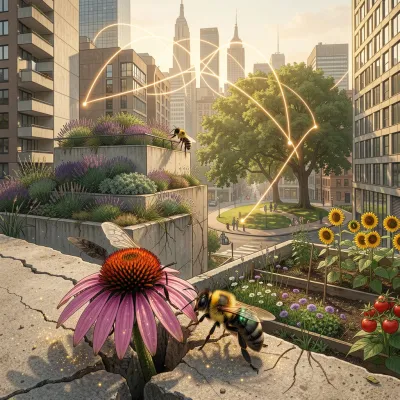
The Secret Life of Urban Bees reveals that cities, far from being ecological deserts, are vibrant sanctuaries where diverse bee populations often thrive better than in rural monocultures. Urban environments offer a mosaic of microhabitats—from rooftop gardens and street trees to vacant lots and community plots—providing continuous, diverse floral resources and varied nesting sites for both managed honeybees and hundreds of native solitary and bumblebee species. The urban heat island effect extends foraging seasons, while reduced agricultural pesticide pressure in many areas creates relative safe havens. Bees navigate this complex labyrinth using sophisticated sensory tools like the sun compass, spatial memory, and the waggle dance, turning fragmented green spaces into interconnected nectar corridors that sustain urban biodiversity.
Beyond their survival, bees act as silent architects fundamentally shaping the urban landscape. Their pollination services ensure the reproduction of street trees, park flora, community gardens, and spontaneous "weeds" like dandelions and clover, maintaining the genetic diversity and resilience of urban plant communities. This ecological engineering produces tangible human benefits, including unique, terroir-driven urban honeys and the pollination of food crops in local gardens. However, city bees face significant threats from habitat loss, climate change, the urban heat island's extremes, and pervasive pesticide use—particularly neonicotinoids and herbicides that destroy forage—alongside diseases like Varroa mites and foulbrood that spread rapidly in dense urban apiaries.
The book highlights a growing global movement to protect these pollinators through policy, design, and community engagement. Cities worldwide are adopting pollinator-friendly strategies: banning harmful pesticides on public land, mandating green roofs and diverse street tree plantings, and creating "pollinator pathways" to connect fragmented habitats. Innovations like smart hives, environmental DNA monitoring, and vertical pollinator gardens merge technology with ecology. Crucially, citizen scientists, urban beekeepers, and educators are transforming residents into active stewards, fostering a profound reconnection with nature. By debunking myths about bee aggression and the supremacy of honeybees, the narrative shifts toward valuing the "symphony of solitude" played by native bees, ultimately arguing that designing cities for bee diversity creates more resilient, beautiful, and livable environments for all inhabitants.
What You'll Find Inside:
- Discover why cities serve as thriving habitats for bees, from diverse floral resources and nesting opportunities to the urban heat island effect.
- Explore the remarkable diversity of urban bee species beyond honeybees, including solitary mason and leafcutter bees, bumblebees, and native pollinators.
- Learn how bees navigate the urban landscape using sun compasses, waggle dances, visual landmarks, and scent trails to find food and nests.
- Understand the challenges urban bees face—pesticides, climate change, disease—and the innovative conservation strategies being deployed worldwide.
- See how rooftop beekeeping, citizen science, pollinator-friendly garden design, and policy changes are creating bee-friendly cities across the globe.
Who's It For:
This book is ideal for urban residents, gardeners, and hobbyist beekeepers who want to support pollinators in their cities; city planners and landscape designers seeking to create bee-friendly green spaces; educators and students interested in urban ecology and environmental science; and anyone fascinated by the intersection of nature and urban life who wishes to understand the vital role bees play in shaping healthier, more biodiverse metropolises.
Author:
Published By:
Date Published:
August 4, 2026
Type:
Nonfiction
Language:
English
Word Count:
39,448 words
Reading Time:
2 hours 46 minutes
Sample:
MixCache.com Total Access
Get unlimited access to this book + all books published by MixCache.com for $11.99/month
Subscribe to MTAOr purchase this book individually below
Order:
Buy the The Secret Life of Urban Bees ebook on MixCache.com:
Buy Now
Full ebook will be available immediately
- read online or download as a PDF file.
$5 account credit for all new MixCache.com accounts, usable toward any ebook purchase!*


Ratings & Reviews
Ask Questions About This Book
Have a question about the content? Ask our AI assistant!
Start by asking a question about "The Secret Life of Urban Bees"
Example: "Does this book mention William Shakespeare?"
Thinking...