
Browse by Category
Fiction
- Action & Adventure
- African American
- Anthologies
- Children's Fiction
- Classics
- Comics & Graphic Novels
- Coming of Age
- Contemporary
- Cultural & Regional
- Drama
- Erotica
- Fantasy
- General
- Historical Fiction
- Horror
- Humor & Satire
- Literary Fiction
- Mystery, Thriller & Suspense
- Poetry
- Religious & Inspirational
- Romance
- Science Fiction
- Short Stories
- War & Military
- Westerns
- Women's Fiction
- Young Adult
Non-Fiction
- Antiques & Collectibles
- Arts & Photography
- Biographies & Memoirs
- Business & Money
- Children's Non-Fiction
-
Computers & Technology
- Artificial Intelligence
- Computer Science
- Cybersecurity & Cryptography
- Data Science & Analytics
- Databases & Big Data
- Game Development & Design
- General
- Hardware & DIY
- Mobile App Development
- Networking & Cloud Computing
- Operating Systems
- Programming
- Robotics
- Software
- Software Engineering
- User Experience (UX) & Design
- Web Development & Design
- Cooking, Food & Wine
- Crafts, Hobbies & Home
- Education & Teaching
- Engineering
- General
- Health, Fitness & Dieting
-
History
- African History
- African History - North Africa
- African History - Sub-Saharan Africa
- American History
- American History - 20th Century
- American History - Civil War
- American History - Colonial Period
- Ancient History
- Asian History
- Asian History - China
- Asian History - India
- Asian History - Japan
- Asian History - Southeast Asia
- European History
- European History - Ancient Greece
- European History - Ancient Rome
- European History - Medieval
- European History - Modern
- European History - Renaissance
- General
- Middle Eastern History
- Military History
- Military History - Aviation
- Military History - Naval
- Social & Cultural History
- World History
- Humor & Entertainment
- Industrial Technology
- Language Learning
- Law
- LGBTQ+ Non-Fiction
- Literary Criticism
- Medical Books
- Parenting & Relationships
- Philosophy
- Politics & Social Sciences
- Reference
- Religion & Spirituality
-
Science & Math
- Agricultural Sciences
- Astronomy & Space Science
- Behavioral Sciences
- Biological Sciences
- Botany & Plant Science
- Chemistry
- Earth Sciences
- Engineering - Chemical
- Engineering - Civil
- Engineering - Electrical
- Engineering - Mechanical
- Environment
- General
- Geology
- Mathematics
- Nature & Ecology
- Oceanography
- Paleontology
- Physics
- Statistics
- Self-Help
- Sports & Outdoors
- Study Aids
- Sustainability & Green Living
- Textbooks
- Transportation
- Travel
- True Crime
- Urban Planning & Development
- Veterinary Medicine
- Writing & Publishing
Jump to Section

Want unlimited access to all books published by MixCache.com (plus their audiobooks)? Try MixCache.com Total Access. Look for the MTA badge on book covers to identify included titles.
Access to infinite ebooks: Don't see the book you want? Suggest it and we'll create it (free!) for you from scratch with our powerful AI book writer. Then read it with MTA - besides profiting from any sales it makes!
The Art and Science of Fermentation
MTA
How Microbes Transform Food and Flavor
About this book:
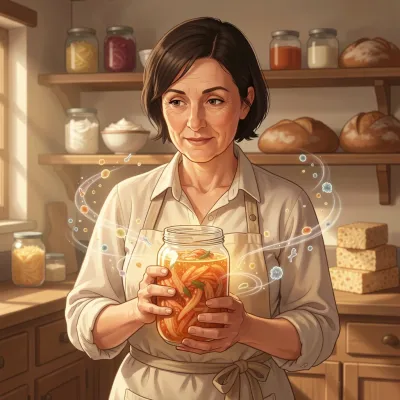
Fermentation represents one of humanity's oldest and most profound partnerships with the microbial world, transforming simple ingredients into foods of remarkable complexity, flavor, and nutritional value through the controlled activity of yeasts, bacteria, and molds. This ancient practice, predating refrigeration and pasteurization, emerged as a vital preservation technique that inadvertently unlocked enhanced digestibility, novel flavors, and increased nutrient bioavailability. Far from mere spoilage prevention, fermentation harnesses microbial metabolism to produce alcohols, acids, gases, and aromatic compounds that fundamentally alter food structure—turning milk into yogurt and kefir, cabbage into sauerkraut and kimchi, grains into sourdough bread, and legumes into miso and tempeh—while creating self-preserving environments inhibitory to pathogens through acidification, alcohol production, or salt concentration.
At its core, fermentation drives intricate biochemical transformations where microbes break down carbohydrates, proteins, and fats via enzymatic pathways. Yeasts primarily conduct alcoholic fermentation, producing carbon dioxide for leavening and ethanol for flavor, while lactic acid bacteria generate tangy sourness through lactate production, simultaneously lowering pH to preserve food and inhibit spoilage. Molds like *Aspergillus oryzae* (koji) release powerful enzymes that break down starches and proteins, unlocking umami-rich flavors in soy-based ferments. These processes not only create distinctive sensory profiles—balancing sourness, umami, sweetness, and complex aromas—but also enhance nutritional value by synthesizing B vitamins, reducing antinutrients like phytic acid, and predigesting nutrients for easier absorption. Crucially, the live cultures in many fermented foods act as probiotics, supporting gut microbiome diversity, strengthening intestinal barriers, modulating immune function, and producing beneficial metabolites like short-chain fatty acids that influence digestion, metabolism, and even brain health via the gut-brain axis.
Successful fermentation relies on mastering key environmental controls: temperature, salt concentration, oxygen exposure, pH, and hygiene, ensuring beneficial microbes dominate while preventing spoilage or pathogenic growth. The book details practical techniques for home fermenters across diverse food groups—from vegetable lacto-fermentation and dairy culturing to beverage production (kombucha, kefir, vinegar), meat charcuterie, grain fermentation, and advanced methods like koji cultivation and mold-ripened cheeses—emphasizing safety through proper submersion, salt ratios, starter cultures, and monitoring for signs of healthy activity versus contamination. These practices connect to a rich global tapestry of fermentation traditions, from Korean kimchi and Japanese miso to European cheeses and charcuterie, West African ogi and injera, Andean chicha, and countless regional specialties, each reflecting local ingredients, microbial ecosystems, and cultural ingenuity in transforming staples into nourishing, flavor-dense foods.
Beyond technique, fermentation thrives as a dynamic, creative lifestyle practice that integrates living foods into daily meals, sustains microbial cultures through attentive care, and fosters community through sharing, gifting, and collaborative projects. It encourages observation, intuition, and experimentation—allowing individuals to adapt recipes based on sensory feedback, seasonal availability, and personal taste—while promoting sustainability by reducing food waste through preservation of seasonal gluts and upcycling of scraps. Ultimately, fermentation embodies a harmonious blend of art and science, where patience, microbial partnership, and culinary curiosity transform humble ingredients into enduring sources of flavor, nutrition, and connection, offering a pathway to deeper engagement with food, health, and the invisible living world that sustains us.
What You'll Find Inside:
- Explore the science behind fermentation, including microbial biochemistry and how yeasts, bacteria, and molds transform food to create unique flavors, textures, and nutritional benefits.
- Learn practical techniques for making a wide variety of fermented foods at home, from sourdough bread and yogurt to kimchi, kombucha, miso, and fermented vegetables.
- Discover global fermentation traditions and how different cultures have harnessed microbial processes to create distinctive culinary treasures that reflect their local ingredients and heritage.
- Understand the health benefits of fermented foods, particularly their role in supporting gut health through probiotics, microbiome balance, and enhanced nutrient bioavailability.
- Master essential safety protocols, troubleshooting common challenges, and advanced techniques like koji cultivation and mold-ripened cheeses to ferment with confidence and creativity.
Who's It For:
This book is ideal for curious home cooks, health-conscious individuals, and culinary hobbyists who want to understand both the science and art of fermentation. It serves as a comprehensive guide for beginners seeking safe, practical techniques while also offering valuable insights for experienced fermenters looking to expand their skills with advanced methods and global traditions. Anyone interested in improving gut health, exploring food preservation, or engaging in a creative, hands-on culinary hobby will find this book both informative and inspiring.
Author:
Published By:
Date Published:
August 2, 2026
Type:
Nonfiction
Language:
English
Word Count:
63,560 words
Reading Time:
4 hours 27 minutes
Sample:
Order:
Order The Art and Science of Fermentation (Paperback) on MixCache.com:
Buy NowPrint copy is made to order and ships worldwide. Includes the ebook free, ready to read instantly.
$5 account credit for all new MixCache.com accounts, usable toward any ebook purchase!*


