Browse by Category
Fiction
- Action & Adventure
- African American
- Anthologies
- Children's Fiction
- Classics
- Comics & Graphic Novels
- Coming of Age
- Contemporary
- Cultural & Regional
- Drama
- Erotica
- Fantasy
- General
- Historical Fiction
- Horror
- Humor & Satire
- Literary Fiction
- Mystery, Thriller & Suspense
- Poetry
- Religious & Inspirational
- Romance
- Science Fiction
- Short Stories
- War & Military
- Westerns
- Women's Fiction
- Young Adult
Non-Fiction
- Antiques & Collectibles
- Arts & Photography
- Biographies & Memoirs
- Business & Money
- Children's Non-Fiction
-
Computers & Technology
- Artificial Intelligence
- Computer Science
- Cybersecurity & Cryptography
- Data Science & Analytics
- Databases & Big Data
- Game Development & Design
- General
- Hardware & DIY
- Mobile App Development
- Networking & Cloud Computing
- Operating Systems
- Programming
- Robotics
- Software
- Software Engineering
- User Experience (UX) & Design
- Web Development & Design
- Cooking, Food & Wine
- Crafts, Hobbies & Home
- Education & Teaching
- Engineering
- General
- Health, Fitness & Dieting
-
History
- African History
- African History - North Africa
- African History - Sub-Saharan Africa
- American History
- American History - 20th Century
- American History - Civil War
- American History - Colonial Period
- Ancient History
- Asian History
- Asian History - China
- Asian History - India
- Asian History - Japan
- Asian History - Southeast Asia
- European History
- European History - Ancient Greece
- European History - Ancient Rome
- European History - Medieval
- European History - Modern
- European History - Renaissance
- General
- Middle Eastern History
- Military History
- Military History - Aviation
- Military History - Naval
- Social & Cultural History
- World History
- Humor & Entertainment
- Industrial Technology
- Language Learning
- Law
- LGBTQ+ Non-Fiction
- Literary Criticism
- Medical Books
- Parenting & Relationships
- Philosophy
- Politics & Social Sciences
- Reference
- Religion & Spirituality
-
Science & Math
- Agricultural Sciences
- Astronomy & Space Science
- Behavioral Sciences
- Biological Sciences
- Botany & Plant Science
- Chemistry
- Earth Sciences
- Engineering - Chemical
- Engineering - Civil
- Engineering - Electrical
- Engineering - Mechanical
- Environment
- General
- Geology
- Mathematics
- Nature & Ecology
- Oceanography
- Paleontology
- Physics
- Statistics
- Self-Help
- Sports & Outdoors
- Study Aids
- Sustainability & Green Living
- Textbooks
- Transportation
- Travel
- True Crime
- Urban Planning & Development
- Veterinary Medicine
- Writing & Publishing
Jump to Section

Want unlimited access to all books published by MixCache.com (plus their audiobooks)? Try MixCache.com Total Access. Look for the MTA badge on book covers to identify included titles.
Access to infinite ebooks: Don't see the book you want? Suggest it and we'll create it (free!) for you from scratch with our powerful AI book writer. Then read it with MTA - besides profiting from any sales it makes!
The Hidden World of Lichens
MTA
Nature's Tiny Architects
About this book:
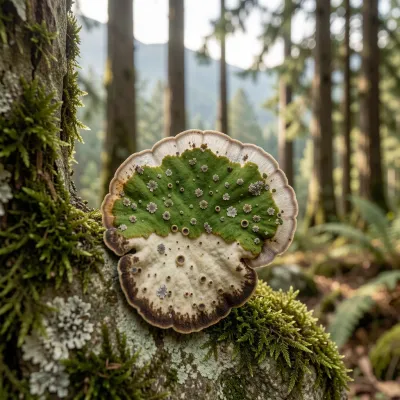
Lichens are symbiotic partnerships between a fungal mycobiont and a photosynthetic photobiont (green alga or cyanobacterium), forming a composite organism that functions as a miniature, self‑supporting ecosystem. This integration creates a highly organized thallus with distinct layers—an upper cortex for protection, a photobiont layer for photosynthesis, a medulla for storage and gas exchange, and a lower cortex for anchorage—allowing lichens to thrive in virtually every terrestrial habitat, from deserts and tundras to forests and urban surfaces. Their growth forms—crustose, foliose, fruticose, and various intermediate types—are adaptations that balance protection, resource acquisition, and reproduction under specific environmental conditions.
Reproduction occurs both sexually, via fungal spores released from apothecia or perithecia that must re‑encounter a compatible photobiont, and asexually, through soredia and isidia that package both partners for dispersal. Lichens play pivotal ecological roles as pioneers in primary succession, weathering rock and fixing nitrogen to initiate soil formation; as key components of biological soil crusts in deserts and as dominant vegetation in tundras; as nutrient cyclers and habitat providers in forests; and as sensitive bioindicators of air quality, absorbing pollutants directly from the atmosphere. Their secondary metabolites—unique lichen substances—offer UV protection, deter herbivores, inhibit microbes, and hold promise for pharmaceuticals, dyes, and other biotechnological applications.
Human cultures have long exploited lichens for dyes (e.g., Orchil, cudbear), pigments, food (e.g., reindeer lichens for caribou, Iceland moss for humans), medicine (e.g., usnic acid for antimicrobial use), and artistic inspiration, while their slow growth and longevity enable lichenometry to date rock surfaces and glacial retreats. Despite their resilience, lichens face threats from habitat loss, air pollution (especially nitrogen deposition), heavy metals, climate change, and over‑harvesting, making conservation of their diversity essential for ecosystem health. Ongoing research into their genomics, microbiome, physiology, and biotechnological potential continues to reveal the profound significance of these tiny architects of nature.
What You'll Find Inside:
- Lichens are symbiotic partnerships between fungi and photosynthetic partners (algae or cyanobacteria) that enable survival in extreme environments from deserts to tundras
- Diverse growth forms (crustose, foliose, fruticose) represent evolutionary adaptations to specific habitats and environmental conditions
- Lichens serve as ecological pioneers in primary succession, sensitive bioindicators of air quality, and crucial food sources for wildlife including caribou and invertebrates
- Historical and modern human uses span textile dyes (like Orchil), traditional medicines, edible species, and emerging pharmaceutical applications from unique secondary metabolites
- Scientific applications include lichenometry for dating geological events, environmental monitoring, and study of lichen chemistry with potential in medicine and biotechnology
Who's It For:
This book is ideal for curious general readers, nature enthusiasts, and amateur naturalists who appreciate the miniature wonders of the natural world. It will particularly benefit those interested in ecology, biology, or environmental science who want to understand lichens' profound ecological roles and surprising connections to human culture and technology. No specialized scientific background is required.
Author:
Published By:
Date Published:
August 2, 2026
Type:
Nonfiction
Language:
English
Word Count:
42,982 words
Reading Time:
3 hours 1 minutes
Sample:
Order:
Order The Hidden World of Lichens (Paperback) on MixCache.com:
Buy NowPrint copy is made to order and ships worldwide. Includes the ebook free, ready to read instantly.
$5 account credit for all new MixCache.com accounts, usable toward any ebook purchase!*