
Browse by Category
Fiction
- Action & Adventure
- African American
- Anthologies
- Children's Fiction
- Classics
- Comics & Graphic Novels
- Coming of Age
- Contemporary
- Cultural & Regional
- Drama
- Erotica
- Fantasy
- General
- Historical Fiction
- Horror
- Humor & Satire
- Literary Fiction
- Mystery, Thriller & Suspense
- Poetry
- Religious & Inspirational
- Romance
- Science Fiction
- Short Stories
- War & Military
- Westerns
- Women's Fiction
- Young Adult
Non-Fiction
- Antiques & Collectibles
- Arts & Photography
- Biographies & Memoirs
- Business & Money
- Children's Non-Fiction
-
Computers & Technology
- Artificial Intelligence
- Computer Science
- Cybersecurity & Cryptography
- Data Science & Analytics
- Databases & Big Data
- Game Development & Design
- General
- Hardware & DIY
- Mobile App Development
- Networking & Cloud Computing
- Operating Systems
- Programming
- Robotics
- Software
- Software Engineering
- User Experience (UX) & Design
- Web Development & Design
- Cooking, Food & Wine
- Crafts, Hobbies & Home
- Education & Teaching
- Engineering
- General
- Health, Fitness & Dieting
-
History
- African History
- African History - North Africa
- African History - Sub-Saharan Africa
- American History
- American History - 20th Century
- American History - Civil War
- American History - Colonial Period
- Ancient History
- Asian History
- Asian History - China
- Asian History - India
- Asian History - Japan
- Asian History - Southeast Asia
- European History
- European History - Ancient Greece
- European History - Ancient Rome
- European History - Medieval
- European History - Modern
- European History - Renaissance
- General
- Middle Eastern History
- Military History
- Military History - Aviation
- Military History - Naval
- Social & Cultural History
- World History
- Humor & Entertainment
- Industrial Technology
- Language Learning
- Law
- LGBTQ+ Non-Fiction
- Literary Criticism
- Medical Books
- Parenting & Relationships
- Philosophy
- Politics & Social Sciences
- Reference
- Religion & Spirituality
-
Science & Math
- Agricultural Sciences
- Astronomy & Space Science
- Behavioral Sciences
- Biological Sciences
- Botany & Plant Science
- Chemistry
- Earth Sciences
- Engineering - Chemical
- Engineering - Civil
- Engineering - Electrical
- Engineering - Mechanical
- Environment
- General
- Geology
- Mathematics
- Nature & Ecology
- Oceanography
- Paleontology
- Physics
- Statistics
- Self-Help
- Sports & Outdoors
- Study Aids
- Sustainability & Green Living
- Textbooks
- Transportation
- Travel
- True Crime
- Urban Planning & Development
- Veterinary Medicine
- Writing & Publishing
Jump to Section

Want unlimited access to all books published by MixCache.com (plus their audiobooks)? Try MixCache.com Total Access. Look for the MTA badge on book covers to identify included titles.
Access to infinite ebooks: Don't see the book you want? Suggest it and we'll create it (free!) for you from scratch with our powerful AI book writer. Then read it with MTA - besides profiting from any sales it makes!
The Inflation Reduction Act: Climate Investments and Healthcare Costs in America
MTA
U.S. Green Energy Tax Credits and Medicare Pricing Reforms Explained
About this book:
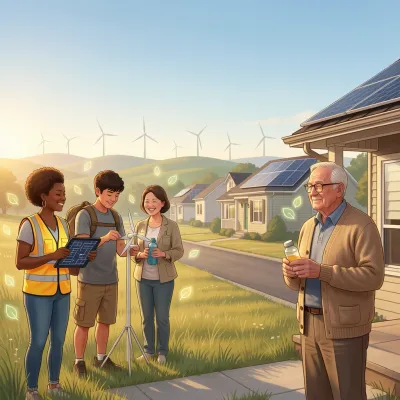
The Inflation Reduction Act of 2022 is a landmark federal law that couples unprecedented climate‑focused investments with sweeping reforms to lower prescription drug costs for Medicare beneficiaries. Enacted through budget reconciliation, the IRA earmarks roughly $369 billion for clean energy and climate security initiatives while also raising revenue via a corporate minimum tax, stock‑buyback excise tax, and enhanced IRS enforcement to achieve deficit reduction. Its climate strategy relies heavily on long‑term tax credits—such as the expanded Investment and Production Tax Credits, the Advanced Manufacturing Production Credit, and the revived Section 45Q carbon‑capture credit—paired with “direct pay” options, domestic‑content bonuses, and targeted grants to spur renewable energy deployment, electric‑vehicle adoption, methane‑emission cuts, energy‑efficiency upgrades, and equitable benefits for disadvantaged communities.
On the healthcare side, the IRA grants Medicare the authority to negotiate prices for high‑cost drugs, imposes inflation rebates on price increases, caps insulin out‑of‑pocket costs at $35 per month, eliminates the Part D coverage gap, and establishes a $2,000 annual out‑of‑pocket spending limit starting in 2025. It also expands vaccine coverage under Part D with no cost‑sharing and extends premium‑stabilization measures. These provisions are projected to save hundreds of billions in federal drug spending, delivering immediate financial relief to millions of seniors while improving access to preventive care.
Economic analyses forecast that the IRA will drive substantial job creation in solar, wind, battery manufacturing, energy efficiency, and related sectors, stimulate private investment, and enhance domestic supply‑chain resilience, though it faces challenges related to workforce development, permitting bottlenecks, and international trade tensions over its domestic‑content requirements. The law’s environmental‑justice components aim to direct at least 60 % of the Greenhouse Gas Reduction Fund’s $27 billion to low‑income and disadvantaged communities, addressing historic pollution burdens. While praised for advancing climate goals and healthcare affordability, the IRA remains subject to legal challenges, political debate over its inflationary impact, and questions about the balance between cost containment and pharmaceutical innovation, with its long‑term success hinging on continued implementation, state‑level execution, and potential future amendments.
What You'll Find Inside:
- The IRA allocates approximately $369 billion for climate investments, including expanded tax credits for solar power, electric vehicles, and domestic clean energy manufacturing to accelerate the renewable energy transition.
- Historic Medicare drug pricing reforms empower federal price negotiation, cap insulin costs at $35/month for beneficiaries, and establish a $2,000 annual out-of-pocket spending limit on prescription drugs.
- Nearly $60 billion is dedicated to environmental justice initiatives, directing clean energy investments and pollution reduction benefits to disadvantaged communities historically burdened by environmental harm.
- The Act is projected to create millions of green jobs across sectors like renewable energy installation, advanced manufacturing of clean tech components, and energy efficiency upgrades for homes and businesses.
- Economic analysis shows the IRA reduces the federal deficit through corporate tax reforms and enhanced IRS enforcement, offsetting climate and healthcare investments while stimulating private sector growth in the green economy.
Who's It For:
This book is essential for policymakers implementing the IRA's provisions, industry professionals in clean energy, manufacturing, and healthcare sectors navigating new incentives and regulations, students of public policy or environmental science seeking comprehensive legislative analysis, and informed citizens wanting to understand how the legislation affects healthcare costs, job opportunities, and community-level clean energy transitions.
Author:
Published By:
Date Published:
July 31, 2026
Type:
Nonfiction
Language:
English
Word Count:
41,124 words
Reading Time:
2 hours 53 minutes
Sample:
MixCache.com Total Access
Get unlimited access to this book + all books published by MixCache.com for $11.99/month
Subscribe to MTAOr purchase this book individually below
Order:
Buy the The Inflation Reduction Act: Climate Investments and Healthcare Costs in America ebook on MixCache.com:
Buy Now
Full ebook will be available immediately
- read online or download as a PDF file.
$5 account credit for all new MixCache.com accounts, usable toward any ebook purchase!*


Ratings & Reviews
Ask Questions About This Book
Have a question about the content? Ask our AI assistant!
Start by asking a question about "The Inflation Reduction Act: Climate Investments and Healthcare Costs in America"
Example: "Does this book mention William Shakespeare?"
Thinking...