Browse by Category
Fiction
- Action & Adventure
- African American
- Anthologies
- Children's Fiction
- Classics
- Comics & Graphic Novels
- Coming of Age
- Contemporary
- Cultural & Regional
- Drama
- Erotica
- Fantasy
- General
- Historical Fiction
- Horror
- Humor & Satire
- Literary Fiction
- Mystery, Thriller & Suspense
- Poetry
- Religious & Inspirational
- Romance
- Science Fiction
- Short Stories
- War & Military
- Westerns
- Women's Fiction
- Young Adult
Non-Fiction
- Antiques & Collectibles
- Arts & Photography
- Biographies & Memoirs
- Business & Money
- Children's Non-Fiction
-
Computers & Technology
- Artificial Intelligence
- Computer Science
- Cybersecurity & Cryptography
- Data Science & Analytics
- Databases & Big Data
- Game Development & Design
- General
- Hardware & DIY
- Mobile App Development
- Networking & Cloud Computing
- Operating Systems
- Programming
- Robotics
- Software
- Software Engineering
- User Experience (UX) & Design
- Web Development & Design
- Cooking, Food & Wine
- Crafts, Hobbies & Home
- Education & Teaching
- Engineering
- General
- Health, Fitness & Dieting
-
History
- African History
- African History - North Africa
- African History - Sub-Saharan Africa
- American History
- American History - 20th Century
- American History - Civil War
- American History - Colonial Period
- Ancient History
- Asian History
- Asian History - China
- Asian History - India
- Asian History - Japan
- Asian History - Southeast Asia
- European History
- European History - Ancient Greece
- European History - Ancient Rome
- European History - Medieval
- European History - Modern
- European History - Renaissance
- General
- Middle Eastern History
- Military History
- Military History - Aviation
- Military History - Naval
- Social & Cultural History
- World History
- Humor & Entertainment
- Industrial Technology
- Language Learning
- Law
- LGBTQ+ Non-Fiction
- Literary Criticism
- Medical Books
- Parenting & Relationships
- Philosophy
- Politics & Social Sciences
- Reference
- Religion & Spirituality
-
Science & Math
- Agricultural Sciences
- Astronomy & Space Science
- Behavioral Sciences
- Biological Sciences
- Botany & Plant Science
- Chemistry
- Earth Sciences
- Engineering - Chemical
- Engineering - Civil
- Engineering - Electrical
- Engineering - Mechanical
- Environment
- General
- Geology
- Mathematics
- Nature & Ecology
- Oceanography
- Paleontology
- Physics
- Statistics
- Self-Help
- Sports & Outdoors
- Study Aids
- Sustainability & Green Living
- Textbooks
- Transportation
- Travel
- True Crime
- Urban Planning & Development
- Veterinary Medicine
- Writing & Publishing
Jump to Section

Want unlimited access to all books published by MixCache.com (plus their audiobooks)? Try MixCache.com Total Access. Look for the MTA badge on book covers to identify included titles.
Access to infinite ebooks: Don't see the book you want? Suggest it and we'll create it (free!) for you from scratch with our powerful AI book writer. Then read it with MTA - besides profiting from any sales it makes!
A History of L'Oréal
MTA
The Story of a Global Company
About this book:
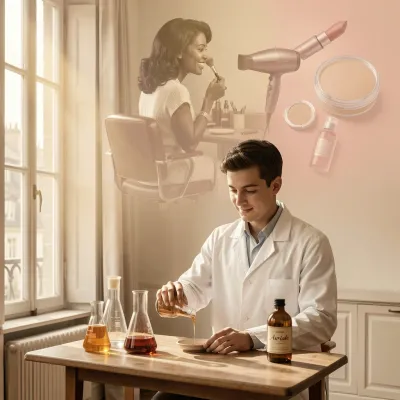
L'Oréal began in 1907 when chemist Eugène Schueller created the synthetic hair dye Auréale in his Paris apartment, founding the Société Française de Teintures Inoffensives pour Cheveux. Emphasizing scientific rigor and safety, Schueller built a professional‑salon business that survived World War I and expanded into hair care, permanent waves, and early skincare. The 1920s‑1930s saw diversification into shampoos, conditioners, and consumer‑friendly products, while the post‑war boom under François Dalle spurred international growth, first in Europe and then the United States, where the iconic “Because I’m Worth It” slogan launched in 1971 empowered consumers and cemented L'Oréal’s mass‑market appeal. Strategic acquisitions—Lancôme (1964), Garnier (1965), Maybelline (1996), Kiehl's (2000), The Body Shop (2006), Yves Saint Laurent Beauté (2008), CeraVe (2017), NYX (2014), IT Cosmetics (2016), and Aesop (2023)—transformed the company from a hair‑dye specialist into a multi‑brand luxury‑to‑mass‑market powerhouse.
Central to L'Oréal’s rise has been its relentless investment in research and development, which has produced breakthroughs in hair chemistry, skincare actives, delivery systems, and, more recently, AI‑driven diagnostics, augmented‑reality try‑ons, biotechnology, and microbiome‑based ingredients. Parallel to scientific innovation, L'Oréal mastered global marketing and advertising, employing celebrity endorsements, localized campaigns, and a multi‑brand strategy that allowed distinct identities—L'Oréal Paris, Lancôme, Maybelline, La Roche‑Posay, Kiehl's, and others—to serve luxury, mass‑market, professional, and dermocosmetic segments without cannibalizing each other. The company’s expansion into Asia, Latin America, and Africa required deep cultural adaptation, local R&D, and digital engagement, while its partnerships (e.g., with Nestlé since 1974) provided financial stability and defensive ownership structures that preserved family influence under Liliane Bettencourt and later Françoise Bettencourt Meyers.
In the 21st century, L'Oréal confronts fierce competition from P&G, Unilever, Estée Lauder, Shiseido, and agile digital‑native brands, yet maintains leadership through a diversified portfolio, unparalleled R&D, sophisticated global distribution, and a commitment to sustainability (“L'Oréal for the Future”), personalization, inclusivity, and beauty‑tech innovation. Philanthropic initiatives such as the L'Oréal‑UNESCO For Women in Science program and vocational‑training schemes underscore its broader social impact. Today, operating in over 150 countries with more than 90,000 employees, L'Oréal remains a global institution that continuously redefines beauty by integrating scientific excellence, aspirational marketing, digital transformation, and ethical responsibility.
What You'll Find Inside:
- L'Oréal's journey from Eugène Schueller's innovative hair dye in 1909 to today's global beauty powerhouse spanning luxury to mass-market brands
- How relentless scientific R&D has been the foundation of L'Oréal's innovation, from early hair chemistry to AI-powered beauty tech
- The strategic acquisition strategy that built L'Oréal's diverse portfolio including Lancôme, Maybelline, Garnier, and recent additions like Aesop
- L'Oréal's global expansion approach balancing worldwide brand consistency with local market adaptation across Europe, Americas, Asia, and Africa
- The company's evolution in marketing, sustainability, and responding to modern consumer demands for personalization and inclusivity
Who's It For:
This book is ideal for business students, marketing professionals, and entrepreneurs seeking to understand how a company builds and sustains global leadership through innovation, strategic acquisitions, and adaptive marketing. Beauty industry professionals will gain valuable insights into the evolution of the sector and L'Oréal's role in shaping beauty trends. General readers interested in corporate history, brand building, or the intersection of science and commerce will find this comprehensive narrative both informative and inspiring.
Author:
Published By:
Date Published:
July 29, 2026
Type:
Nonfiction
Language:
English
Word Count:
40,711 words
Reading Time:
2 hours 51 minutes
Sample:
Order:
Order A History of L'Oréal (Paperback) on MixCache.com:
Buy NowPrint copy is made to order and ships worldwide. Includes the ebook free, ready to read instantly.
$5 account credit for all new MixCache.com accounts, usable toward any ebook purchase!*