
Browse by Category
Fiction
- Action & Adventure
- African American
- Anthologies
- Children's Fiction
- Classics
- Comics & Graphic Novels
- Coming of Age
- Contemporary
- Cultural & Regional
- Drama
- Erotica
- Fantasy
- General
- Historical Fiction
- Horror
- Humor & Satire
- Literary Fiction
- Mystery, Thriller & Suspense
- Poetry
- Religious & Inspirational
- Romance
- Science Fiction
- Short Stories
- War & Military
- Westerns
- Women's Fiction
- Young Adult
Non-Fiction
- Antiques & Collectibles
- Arts & Photography
- Biographies & Memoirs
- Business & Money
- Children's Non-Fiction
-
Computers & Technology
- Artificial Intelligence
- Computer Science
- Cybersecurity & Cryptography
- Data Science & Analytics
- Databases & Big Data
- Game Development & Design
- General
- Hardware & DIY
- Mobile App Development
- Networking & Cloud Computing
- Operating Systems
- Programming
- Robotics
- Software
- Software Engineering
- User Experience (UX) & Design
- Web Development & Design
- Cooking, Food & Wine
- Crafts, Hobbies & Home
- Education & Teaching
- Engineering
- General
- Health, Fitness & Dieting
-
History
- African History
- African History - North Africa
- African History - Sub-Saharan Africa
- American History
- American History - 20th Century
- American History - Civil War
- American History - Colonial Period
- Ancient History
- Asian History
- Asian History - China
- Asian History - India
- Asian History - Japan
- Asian History - Southeast Asia
- European History
- European History - Ancient Greece
- European History - Ancient Rome
- European History - Medieval
- European History - Modern
- European History - Renaissance
- General
- Middle Eastern History
- Military History
- Military History - Aviation
- Military History - Naval
- Social & Cultural History
- World History
- Humor & Entertainment
- Industrial Technology
- Language Learning
- Law
- LGBTQ+ Non-Fiction
- Literary Criticism
- Medical Books
- Parenting & Relationships
- Philosophy
- Politics & Social Sciences
- Reference
- Religion & Spirituality
-
Science & Math
- Agricultural Sciences
- Astronomy & Space Science
- Behavioral Sciences
- Biological Sciences
- Botany & Plant Science
- Chemistry
- Earth Sciences
- Engineering - Chemical
- Engineering - Civil
- Engineering - Electrical
- Engineering - Mechanical
- Environment
- General
- Geology
- Mathematics
- Nature & Ecology
- Oceanography
- Paleontology
- Physics
- Statistics
- Self-Help
- Sports & Outdoors
- Study Aids
- Sustainability & Green Living
- Textbooks
- Transportation
- Travel
- True Crime
- Urban Planning & Development
- Veterinary Medicine
- Writing & Publishing
Jump to Section

Want unlimited access to all books published by MixCache.com (plus their audiobooks)? Try MixCache.com Total Access. Look for the MTA badge on book covers to identify included titles.
Access to infinite ebooks: Don't see the book you want? Suggest it and we'll create it (free!) for you from scratch with our powerful AI book writer. Then read it with MTA - besides profiting from any sales it makes!
A History of Life Insurance Corp. of India
MTA
The Story of a Global Company
About this book:
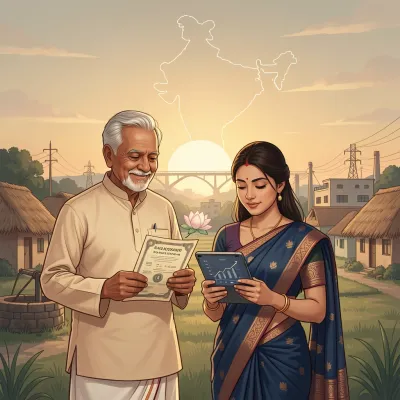
The Life Insurance Corporation of India (LIC) was born in 1956 from the nationalization of over 240 fragmented insurers, a bold post‑independence move aimed at spreading life insurance to the masses and channeling savings into nation‑building. In its early years LIC faced the monumental tasks of integrating disparate companies, building trust among a skeptical populace, and extending its agency force into rural and semi‑urban areas. Through aggressive recruitment, localized product design, and grassroots education, it rapidly expanded its reach, turning life insurance from an urban privilege into a widespread social security instrument while simultaneously mobilizing premiums to fund infrastructure, housing, power, and irrigation projects aligned with India’s Five‑Year Plans.
As LIC consolidated its domestic dominance, it began to diversify its offerings beyond traditional endowment plans, introducing pension schemes, unit‑linked products, group insurance, and microinsurance, and cautiously venturing into allied financial services such as asset management and housing finance. Simultaneously, LIC laid the groundwork for a global presence, establishing offices in the UK, GCC nations, Mauritius, and Fiji to serve the Indian diaspora and adapt to varied regulatory environments. Its international arm grew through localized talent, tailored products, and careful navigation of foreign exchange and compliance challenges, while the corporation continued to act as a major institutional investor, stabilizing India’s capital markets and supporting industrial growth.
The liberalization of the Indian insurance sector in the early 2000s ended LIC’s monopoly, prompting it to modernize aggressively: upgrading IT infrastructure, embracing digital premium payments and online customer portals, revitalizing its agency force with digital tools, and innovating competitive products to meet the demands of a choice‑rich market. Throughout this period saw its governance, risk management, and ethical practices strengthen under the IRDAI framework, maintained robust solvency margins, and deepened its social responsibility through rural outreach, disaster relief, education and health initiatives, and environmentally conscious investments. LIC’s human capital—hundreds of thousands of agents and employees—remained its core asset, sustained by continuous training, leadership development, and a culture of public service.
In the 21st century, LIC has embraced AI, machine learning, data analytics, and cloud computing to streamline underwriting, claims settlement, and customer engagement, while exploring InsurTech partnerships and ESG‑aligned investments. It continues to navigate global economic shifts, cybersecurity risks, and evolving customer expectations, balancing its traditional trust and vast reach with agile, customer‑centric innovation. Looking ahead, LIC aims to leverage emerging technologies such as IoT and blockchain, expand personalized and embedded insurance models, deepen its proactive wellness and financial literacy programs, and sustain its legacy as a trusted, socially responsible global giant that transforms collective savings into individual security and national progress.
What You'll Find Inside:
- The nationalization of India's life insurance sector in 1956 and the creation of LIC as a vehicle for widespread financial inclusion and nation-building.
- LIC's pivotal role in mobilizing domestic savings and channeling them into infrastructure, housing, and industrial projects that fueled India's economic development.
- The corporation's adaptation to market liberalization, technological disruption, and global competition while maintaining its dominant position through innovation and strategic reforms.
- LIC's evolution into a global enterprise, establishing operations in key international markets and serving the Indian diaspora while navigating diverse regulatory environments.
- The enduring legacy of trust, ethical governance, social responsibility, and human capital that has cemented LIC's status as a pillar of financial security and stability in India and beyond.
Who's It For:
This book is ideal for students and scholars of business history, insurance professionals, policymakers, and anyone interested in understanding how a public sector enterprise can drive economic development and social welfare. It offers valuable insights for global insurers seeking lessons in scalability, resilience, and adaptation, as well as general readers fascinated by India's post-independence journey and the rise of a financial giant.
Author:
Published By:
Date Published:
July 28, 2026
Type:
Nonfiction
Language:
English
Word Count:
43,213 words
Reading Time:
3 hours 2 minutes
Sample:
MixCache.com Total Access
Get unlimited access to this book + all books published by MixCache.com for $11.99/month
Subscribe to MTAOr purchase this book individually below
Order:
Buy the A History of Life Insurance Corp. of India ebook on MixCache.com:
Buy Now
Full ebook will be available immediately
- read online or download as a PDF file.
$5 account credit for all new MixCache.com accounts, usable toward any ebook purchase!*






Ratings & Reviews
Ask Questions About This Book
Have a question about the content? Ask our AI assistant!
Start by asking a question about "A History of Life Insurance Corp. of India"
Example: "Does this book mention William Shakespeare?"
Thinking...