
Browse by Category
Fiction
- Action & Adventure
- African American
- Anthologies
- Children's Fiction
- Classics
- Comics & Graphic Novels
- Coming of Age
- Contemporary
- Cultural & Regional
- Drama
- Erotica
- Fantasy
- General
- Historical Fiction
- Horror
- Humor & Satire
- Literary Fiction
- Mystery, Thriller & Suspense
- Poetry
- Religious & Inspirational
- Romance
- Science Fiction
- Short Stories
- War & Military
- Westerns
- Women's Fiction
- Young Adult
Non-Fiction
- Antiques & Collectibles
- Arts & Photography
- Biographies & Memoirs
- Business & Money
- Children's Non-Fiction
-
Computers & Technology
- Artificial Intelligence
- Computer Science
- Cybersecurity & Cryptography
- Data Science & Analytics
- Databases & Big Data
- Game Development & Design
- General
- Hardware & DIY
- Mobile App Development
- Networking & Cloud Computing
- Operating Systems
- Programming
- Robotics
- Software
- Software Engineering
- User Experience (UX) & Design
- Web Development & Design
- Cooking, Food & Wine
- Crafts, Hobbies & Home
- Education & Teaching
- Engineering
- General
- Health, Fitness & Dieting
-
History
- African History
- African History - North Africa
- African History - Sub-Saharan Africa
- American History
- American History - 20th Century
- American History - Civil War
- American History - Colonial Period
- Ancient History
- Asian History
- Asian History - China
- Asian History - India
- Asian History - Japan
- Asian History - Southeast Asia
- European History
- European History - Ancient Greece
- European History - Ancient Rome
- European History - Medieval
- European History - Modern
- European History - Renaissance
- General
- Middle Eastern History
- Military History
- Military History - Aviation
- Military History - Naval
- Social & Cultural History
- World History
- Humor & Entertainment
- Industrial Technology
- Language Learning
- Law
- LGBTQ+ Non-Fiction
- Literary Criticism
- Medical Books
- Parenting & Relationships
- Philosophy
- Politics & Social Sciences
- Reference
- Religion & Spirituality
-
Science & Math
- Agricultural Sciences
- Astronomy & Space Science
- Behavioral Sciences
- Biological Sciences
- Botany & Plant Science
- Chemistry
- Earth Sciences
- Engineering - Chemical
- Engineering - Civil
- Engineering - Electrical
- Engineering - Mechanical
- Environment
- General
- Geology
- Mathematics
- Nature & Ecology
- Oceanography
- Paleontology
- Physics
- Statistics
- Self-Help
- Sports & Outdoors
- Study Aids
- Sustainability & Green Living
- Textbooks
- Transportation
- Travel
- True Crime
- Urban Planning & Development
- Veterinary Medicine
- Writing & Publishing
Jump to Section

Want unlimited access to all books published by MixCache.com (plus their audiobooks)? Try MixCache.com Total Access. Look for the MTA badge on book covers to identify included titles.
Access to infinite ebooks: Don't see the book you want? Suggest it and we'll create it (free!) for you from scratch with our powerful AI book writer. Then read it with MTA - besides profiting from any sales it makes!
A History of Coca-Cola
MTA
The Story of a Global Company
About this book:
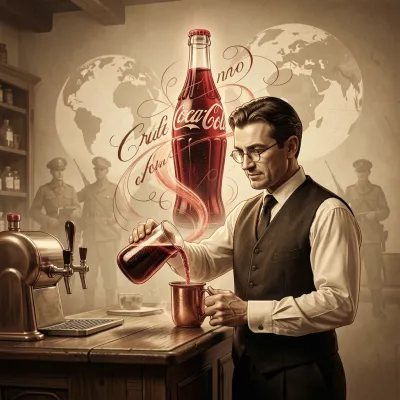
The Coca-Cola Company began in 1886 when pharmacist John Stith Pemberton created a non‑alcoholic tonic in Atlanta, which Frank M. Robinson named and branded with the Spencerian script. Asa G. Candler acquired the formula in the early 1890s, standardized production, launched aggressive marketing, and, through the “one‑dollar contract” with Benjamin F. Thomas and Joseph B. Whitehead, established a franchised bottling model that enabled rapid national distribution. The 1915 contour bottle—inspired by the cacao pod—provided a distinctive, legally protectable package that became a global symbol of authenticity.
During the World Wars, Coca-Cola leveraged military demand to plant bottling operations overseas, turning wartime logistics into a springboard for post‑war international dominance. Under Robert Woodruff’s leadership, the company emphasized consistency, global availability, and memorable campaigns such as “The Pause That Refreshes” and “Things Go Better with Coke,” embedding the brand in American culture via radio, television, and sponsorships. The mid‑century saw the introduction of new packaging (cans, king‑size bottles) and diversification efforts with Sprite, Minute Maid, and TAB, while the 1970s “Coke Adds Life” and the 1971 “Hilltop” commercial reinforced Coca‑Cola’s image as a unifying, uplifting beverage despite economic headwinds and rising competition from Pepsi.
The 1980s brought the disastrous “New Coke” reformulation, a costly misreading of consumer loyalty that prompted a swift return to Coca‑Cola Classic and underscored the power of brand heritage. Subsequent decades featured aggressive global expansion into emerging markets, the launch of Diet Coke and Coca‑Cola Zero/Sugar to address health concerns, and significant investments in sustainability—water stewardship, PlantBottle, recycling, and community empowerment through The Coca‑Cola Foundation. In the digital age, Coca‑Cola embraced social media, personalized campaigns like “Share a Coke,” and data‑driven marketing while continuing to navigate public scrutiny over sugar, plastic waste, and labor practices. Today, the company positions itself as a total beverage company, balancing its iconic core product with a diversified portfolio, sustainable packaging, and digital engagement as it pursues growth in emerging economies and adapts to evolving consumer preferences.
What You'll Find Inside:
- The complete evolution of Coca-Cola from an 1886 Atlanta pharmacy tonic to a global cultural icon, including the creation of its secret formula, iconic contour bottle, and Spencerian script logo.
- How World Wars I and II inadvertently catalyzed Coca-Cola's global expansion through military supply chains, establishing bottling operations worldwide that became commercial footholds.
- The company's resilience through crises like the Great Depression and the "New Coke" debacle, revealing lessons in brand loyalty, crisis management, and the power of emotional connection over taste alone.
- Strategic diversification beyond cola—acquiring Minute Maid, launching Sprite, Diet Coke, and Coca-Cola Zero Sugar—transforming into a "total beverage company" amid rising health concerns and changing consumer tastes.
- Deep analysis of Coca-Cola's cultural footprint across art (Warhol), music ("I'd Like to Teach the World to Sing"), advertising (Santa Claus, polar bears), and its navigation of sustainability, water stewardship, and digital-age marketing challenges.
Who's It For:
This book is ideal for business historians, marketing professionals, and brand strategists seeking a comprehensive case study in global brand building, crisis management, and century-long adaptation. It also appeals to general readers fascinated by American cultural history and the intersection of commerce, war, and pop culture, as well as students of international business and supply chain management interested in the franchising model that powered Coca-Cola's worldwide reach.
Author:
Published By:
Date Published:
July 27, 2026
Type:
Nonfiction
Language:
English
Word Count:
38,578 words
Reading Time:
2 hours 42 minutes
Sample:
Order:
Order A History of Coca-Cola (Hardcover) on MixCache.com:
Buy NowPrint copy is made to order and ships worldwide. Includes the ebook free, ready to read instantly.
$5 account credit for all new MixCache.com accounts, usable toward any ebook purchase!*


