Browse by Category
Fiction
- Action & Adventure
- African American
- Anthologies
- Children's Fiction
- Classics
- Comics & Graphic Novels
- Coming of Age
- Contemporary
- Cultural & Regional
- Drama
- Erotica
- Fantasy
- General
- Historical Fiction
- Horror
- Humor & Satire
- Literary Fiction
- Mystery, Thriller & Suspense
- Poetry
- Religious & Inspirational
- Romance
- Science Fiction
- Short Stories
- War & Military
- Westerns
- Women's Fiction
- Young Adult
Non-Fiction
- Antiques & Collectibles
- Arts & Photography
- Biographies & Memoirs
- Business & Money
- Children's Non-Fiction
-
Computers & Technology
- Artificial Intelligence
- Computer Science
- Cybersecurity & Cryptography
- Data Science & Analytics
- Databases & Big Data
- Game Development & Design
- General
- Hardware & DIY
- Mobile App Development
- Networking & Cloud Computing
- Operating Systems
- Programming
- Robotics
- Software
- Software Engineering
- User Experience (UX) & Design
- Web Development & Design
- Cooking, Food & Wine
- Crafts, Hobbies & Home
- Education & Teaching
- Engineering
- General
- Health, Fitness & Dieting
-
History
- African History
- African History - North Africa
- African History - Sub-Saharan Africa
- American History
- American History - 20th Century
- American History - Civil War
- American History - Colonial Period
- Ancient History
- Asian History
- Asian History - China
- Asian History - India
- Asian History - Japan
- Asian History - Southeast Asia
- European History
- European History - Ancient Greece
- European History - Ancient Rome
- European History - Medieval
- European History - Modern
- European History - Renaissance
- General
- Middle Eastern History
- Military History
- Military History - Aviation
- Military History - Naval
- Social & Cultural History
- World History
- Humor & Entertainment
- Industrial Technology
- Language Learning
- Law
- LGBTQ+ Non-Fiction
- Literary Criticism
- Medical Books
- Parenting & Relationships
- Philosophy
- Politics & Social Sciences
- Reference
- Religion & Spirituality
-
Science & Math
- Agricultural Sciences
- Astronomy & Space Science
- Behavioral Sciences
- Biological Sciences
- Botany & Plant Science
- Chemistry
- Earth Sciences
- Engineering - Chemical
- Engineering - Civil
- Engineering - Electrical
- Engineering - Mechanical
- Environment
- General
- Geology
- Mathematics
- Nature & Ecology
- Oceanography
- Paleontology
- Physics
- Statistics
- Self-Help
- Sports & Outdoors
- Study Aids
- Sustainability & Green Living
- Textbooks
- Transportation
- Travel
- True Crime
- Urban Planning & Development
- Veterinary Medicine
- Writing & Publishing
Jump to Section
MixCache.com Total Access
Unlimited reading and audiobooks for every book published by MixCache.com.
Included titles carry the MTA badge.
Learn more →
A History of Unilever
MTA
The Story of a Global Company
About this book:
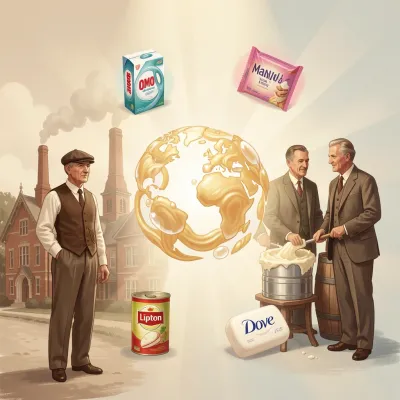
Unilever traces its roots to the late‑19th‑century ventures of William Hesketh Lever’s Lever Brothers, which launched Sunlight Soap and pioneered modern branding and worker welfare at Port Sunlight, and to the Dutch margarine producers Jurgens and Van den Bergh, whose rivalry culminated in the 1927 formation of Margarine Unie. In 1929 these two forces merged to create Unilever, structured as the Anglo‑Dutch parent companies Unilever NV (Rotterdam) and Unilever PLC (London), instantly establishing a global consumer‑goods giant built on complementary strengths in soap, edible fats, and raw‑material sourcing.
The post‑war era saw Unilever aggressively diversify beyond its core soap and margarine businesses, expanding into detergents (Omo, Persil), packaged foods (Birds Eye, Lipton, Knorr, Hellmann’s), ice cream (Walls/Magnum), and personal care (Dove, Lifebuoy, Sunsilk, Rexona). Strategic acquisitions and a “think global, act local” approach enabled the company to enter emerging markets across Africa, Asia, and Latin America, adapting products to local tastes and incomes while building powerful global brands such as Lux, Dove, and Lipton. Throughout the 20th century Unilever navigated the Great Depression, two World Wars, oil crises, geopolitical shifts, and intense rivalry with competitors like Procter & Gamble, continually refining its portfolio through divestments of non‑core brands and acquisitions that reinforced its focus on home care, personal care, foods, and refreshments.
Innovation and research remained central, driving breakthroughs in synthetic detergents, fortified foods, and advanced personal‑care formulations, while sophisticated marketing and advertising—from Lever’s early stunts to television giants and digital‑age personalization—shaped consumer desires worldwide. Responding to mounting environmental and social pressures, Unilever launched the Sustainable Living Plan in 2010, committing to halve its ecological footprint, improve health and well‑being for a billion people, and enhance livelihoods across its value chain. Subsequent restructurings streamlined operations, centralized global brand management, and ultimately unified the dual legal structure under a single PLC entity in 2020. Today Unilever operates in over 190 countries, emphasizing sustainability, digital transformation, purpose‑driven branding, and a focused portfolio of “power” brands, positioning itself as a resilient, innovative global powerhouse in the 21st century.
What You'll Find Inside:
- The founding story of Unilever through the 1929 merger of Lever Brothers (soap) and Margarine Unie (margarine), creating a global consumer goods powerhouse
- How Unilever navigated major historical challenges including the Great Depression, World Wars, oil crises, and financial downturns through adaptation and strategic resilience
- The company's diversification strategy across product categories from household staples to detergents, processed foods, personal care, and premium beauty brands
- Unilever's evolution in global branding, marketing innovation, and the development of iconic global brands like Dove, Lux, Lipton, and Knorr
- The company's commitment to sustainability, social responsibility, and adapting to emerging markets through initiatives like the Sustainable Living Plan
Who's It For:
This book is ideal for business students, professionals, and anyone interested in corporate history, multinational history. It will be studied the consumer industry, as it provides a comprehensive case study of how a global company evolved over nearly a century. It will particularly benefit readers interested in business strategy, corporate culture, sustainability practices, and the evolution of consumer goods industries. The detailed exploration of Unilever's responses to historical challenges, diversification strategies, and leadership transitions offers valuable insights for understanding long-term business success in a changing global landscape.
Table of Contents:
- Introduction
- Chapter 1: The Dawn of an Empire: Early Origins and Mergers
- Chapter 2: Soap and Margarine: The Formative Years of Lever Brothers and Margarine Unie
- Chapter 3: The Great Depression and Wartime Challenges
- Chapter 4: Post-War Boom and Diversification
- Chapter 5: Expanding Horizons: Entering New Markets and Continents
- Chapter 6: A Taste for Growth: Acquisitions in Food and Beverages
- Chapter 7: From Household Staples to Personal Care
- Chapter 8: The Rise of Global Brands
- Chapter 9: Navigating Economic Shifts and Geopolitical Changes
- Chapter 10: Innovation and Research: Fueling Future Growth
- Chapter 11: Marketing and Advertising: Shaping Consumer Desires
- Chapter 12: Corporate Culture and Leadership Through the Decades
- Chapter 13: Facing Competition in a Globalized World
- Chapter 14: Environmental Responsibility and Sustainability Initiatives
- Chapter 15: Social Impact and Community Engagement
- Chapter 16: Restructuring and Reorganization: Adapting to Change
- Chapter 17: Divestments and Acquisitions: Shaping the Portfolio
- Chapter 18: The Digital Age: E-commerce and New Technologies
- Chapter 19: Supply Chain and Logistics in a Complex World
- Chapter 20: Financial Performance and Shareholder Value
- Chapter 21: Emerging Markets: Opportunities and Challenges
- Chapter 22: Consumer Trends and Future Directions
- Chapter 23: Leadership in a Modern Era: Vision and Strategy
- Chapter 24: The Enduring Legacy of Unilever
- Chapter 25: Unilever Today: A Global Powerhouse in the 21st Century
Author:
Published By:
Date Published:
July 21, 2026
Type:
Nonfiction
Language:
English
Word Count:
39,872 words
Reading Time:
2 hours 48 minutes
Sample:
Order:
Order A History of Unilever (Paperback) on MixCache.com:
Buy NowPrint copy is made to order and ships worldwide. Includes the ebook free, ready to read instantly.
$5 account credit for all new MixCache.com accounts, usable toward any ebook purchase!*