
Browse by Category
Fiction
- Action & Adventure
- African American
- Anthologies
- Children's Fiction
- Classics
- Comics & Graphic Novels
- Coming of Age
- Contemporary
- Cultural & Regional
- Drama
- Erotica
- Fantasy
- General
- Historical Fiction
- Horror
- Humor & Satire
- Literary Fiction
- Mystery, Thriller & Suspense
- Poetry
- Religious & Inspirational
- Romance
- Science Fiction
- Short Stories
- War & Military
- Westerns
- Women's Fiction
- Young Adult
Non-Fiction
- Antiques & Collectibles
- Arts & Photography
- Biographies & Memoirs
- Business & Money
- Children's Non-Fiction
-
Computers & Technology
- Artificial Intelligence
- Computer Science
- Cybersecurity & Cryptography
- Data Science & Analytics
- Databases & Big Data
- Game Development & Design
- General
- Hardware & DIY
- Mobile App Development
- Networking & Cloud Computing
- Operating Systems
- Programming
- Robotics
- Software
- Software Engineering
- User Experience (UX) & Design
- Web Development & Design
- Cooking, Food & Wine
- Crafts, Hobbies & Home
- Education & Teaching
- Engineering
- General
- Health, Fitness & Dieting
-
History
- African History
- African History - North Africa
- African History - Sub-Saharan Africa
- American History
- American History - 20th Century
- American History - Civil War
- American History - Colonial Period
- Ancient History
- Asian History
- Asian History - China
- Asian History - India
- Asian History - Japan
- Asian History - Southeast Asia
- European History
- European History - Ancient Greece
- European History - Ancient Rome
- European History - Medieval
- European History - Modern
- European History - Renaissance
- General
- Middle Eastern History
- Military History
- Military History - Aviation
- Military History - Naval
- Social & Cultural History
- World History
- Humor & Entertainment
- Industrial Technology
- Language Learning
- Law
- LGBTQ+ Non-Fiction
- Literary Criticism
- Medical Books
- Parenting & Relationships
- Philosophy
- Politics & Social Sciences
- Reference
- Religion & Spirituality
-
Science & Math
- Agricultural Sciences
- Astronomy & Space Science
- Behavioral Sciences
- Biological Sciences
- Botany & Plant Science
- Chemistry
- Earth Sciences
- Engineering - Chemical
- Engineering - Civil
- Engineering - Electrical
- Engineering - Mechanical
- Environment
- General
- Geology
- Mathematics
- Nature & Ecology
- Oceanography
- Paleontology
- Physics
- Statistics
- Self-Help
- Sports & Outdoors
- Study Aids
- Sustainability & Green Living
- Textbooks
- Transportation
- Travel
- True Crime
- Urban Planning & Development
- Veterinary Medicine
- Writing & Publishing
Jump to Section
MixCache.com Total Access
Unlimited reading and audiobooks for every book published by MixCache.com.
Included titles carry the MTA badge.
Learn more →
A History of Caterpillar
MTA
The Story of a Global Company
About this book:
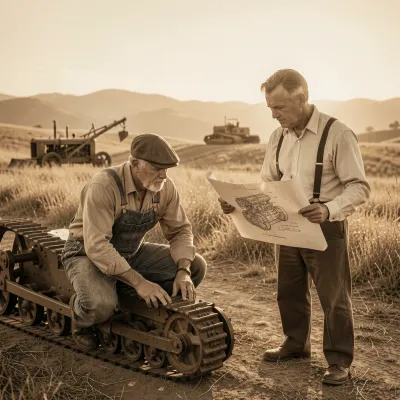
The story of Caterpillar begins in the early 20th century with the independent innovations of Benjamin Holt and Daniel Best, who each sought solutions to the traction problems of heavy soil in California. Holt’s experimentation with track‑laying machinery in 1904 led to the iconic “Caterpillar” name, while Best’s focus on gasoline and later diesel engines produced efficient tractors. Their companies, Holt Manufacturing and C. L. Best Gas Traction, merged in 1925 to form Caterpillar Tractor Co., combining Holt’s track expertise with Best’s engine strength and establishing a dominant force in track‑type tractors.
Through the Roaring Twenties the new company expanded its product line, introduced diesel power, and added motor graders via acquisition. The Great Depression tested Caterpillar’s resilience, but its commitment to diesel efficiency, diversified offerings, and government public‑works projects kept it afloat. World War II transformed Caterpillar into a major wartime producer, supplying bulldozers, engines, and power systems that proved essential to Allied logistics and reconstruction. After the war, the company leveraged its wartime experience to fuel a global boom, exporting machinery for the Marshall Plan, establishing overseas manufacturing plants, and broadening its lineup with wheel loaders, larger bulldozers, and specialized mining equipment.
In the latter half of the century Caterpillar navigated oil crises, intensifying global competition, and economic volatility by modernizing manufacturing, investing in fuel‑efficient and cleaner diesel engines, and diversifying beyond earthmoving into power generation, marine and industrial engines, and forestry and material‑handling equipment. Strategic acquisitions—notably Perkins Engines in 1998—expanded its power‑systems portfolio and reinforced its global dealer network, which remained a cornerstone of localized sales, service, and customer loyalty. The company also began early steps toward environmental responsibility, addressing emissions and waste long before sustainability became a corporate imperative.
Entering the 21st century, Caterpillar embraced digital transformation, integrating telematics, GPS‑guided machine control, and eventually autonomous haulage systems, while advancing hybrid, battery‑electric, and hydrogen power solutions to meet stricter emissions rules and customer demand for sustainable equipment. Its machines continue to shape global infrastructure, mining, and quarrying, supported by a worldwide manufacturing footprint and a commitment to safety, operator comfort, and corporate social responsibility. Today Caterpillar stands as a global technology leader, balancing continuous innovation, operational efficiency, and a deep‑rooted dedication to building and powering the world in a smarter, safer, and more sustainable manner.
What You'll Find Inside:
- The book traces Caterpillar's origins from the pioneering track-type tractor innovations of Benjamin Holt and Daniel Best, culminating in their 1925 merger that created the Caterpillar Tractor Co.
- It details how Caterpillar played crucial roles in major historical events, including powering the WWII effort, enabling post-war reconstruction through the Marshall Plan, and driving global infrastructure development.
- The narrative highlights Caterpillar's technological evolution from steam and gasoline engines to diesel power, and later to digital integration, automation, and emerging energy solutions like electric and hybrid systems.
- It explains the company's strategic diversification beyond earthmoving into power systems, engines for various applications, and its development of a global manufacturing and dealer network that became a competitive advantage.
- The book examines how Caterpillar navigated economic challenges (Great Depression, oil crises, global competition) while maintaining commitments to innovation, quality, and corporate social responsibility.
Who's It For:
This book is ideal for business historians, industrial technology enthusiasts, and professionals in construction, mining, or heavy equipment sectors who seek a comprehensive understanding of how one of the world's most influential corporations evolved from regional innovators to a global leader. It will particularly benefit readers interested in corporate strategy, technological adaptation, and the interplay between industry and historical events. Caterpillar employees, dealers, customers, and anyone studying how companies successfully navigate economic shifts, technological change, and globalization over a century of operation will find valuable insights in this detailed corporate history.
Table of Contents:
- Introduction
- Chapter 1 The Roots of a Giant: Early Innovators and the Dawn of Track-Type Tractors
- Chapter 2 Forging the Brand: The Merger of Holt and Best
- Chapter 3 The Roaring Twenties and Early Growth: Expanding Product Lines and Markets
- Chapter 4 Surviving the Storm: Caterpillar Through the Great Depression
- Chapter 5 Powering the War Effort: Caterpillar's Contribution to World War II
- Chapter 6 Post-War Boom: Reconstruction and Global Expansion
- Chapter 7 Innovation in the Mid-Century: New Machines and Technologies
- Chapter 8 Diversification and New Ventures: Beyond Earthmoving
- Chapter 9 Navigating Economic Shifts: Challenges and Adaptations in the Later 20th Century
- Chapter 10 The Rise of Global Manufacturing: Establishing a Worldwide Presence
- Chapter 11 Engine of Progress: The Evolution of Caterpillar Power Systems
- Chapter 12 Technology Takes Hold: From Manual Controls to Digital Integration
- Chapter 13 The Human Element: Building a Global Workforce and Culture
- Chapter 14 Facing Environmental Concerns: Early Steps Towards Sustainability
- Chapter 15 Acquisition and Growth: Expanding the Caterpillar Family
- Chapter 16 Caterpillar in the New Millennium: A Shifting Landscape
- Chapter 17 The Digital Transformation: Connectivity, Automation, and Autonomy
- Chapter 18 Powering the Future: Advancements in Energy Solutions
- Chapter 19 Building the World: Caterpillar's Role in Infrastructure Development
- Chapter 20 From the Mine to the Quarry: Heavy Equipment in Resource Extraction
- Chapter 21 The Global Dealer Network: A Pillar of Caterpillar's Success
- Chapter 22 Corporate Social Responsibility: Giving Back to Communities
- Chapter 23 Strategic Challenges: Competition, Tariffs, and Global Trade
- Chapter 24 The Future of Construction and Mining: Emerging Technologies and Trends
- Chapter 25 Caterpillar Today: A Global Company in the 21st Century
Author:
Published By:
Date Published:
July 21, 2026
Type:
Nonfiction
Language:
English
Word Count:
37,893 words
Reading Time:
2 hours 39 minutes
Sample:
MixCache.com Total Access
Get unlimited access to this book + all books published by MixCache.com for $11.99/month
Subscribe to MTAOr purchase this book individually below
Order:
Buy the A History of Caterpillar ebook on MixCache.com:
Buy Now
Full ebook will be available immediately
- read online or download as a PDF file.
$5 account credit for all new MixCache.com accounts, usable toward any ebook purchase!*




Ratings & Reviews
Ask Questions About This Book
Have a question about the content? Ask our AI assistant!
Start by asking a question about "A History of Caterpillar"
Example: "Does this book mention William Shakespeare?"
Thinking...