
Browse by Category
Fiction
- Action & Adventure
- African American
- Anthologies
- Children's Fiction
- Classics
- Comics & Graphic Novels
- Coming of Age
- Contemporary
- Cultural & Regional
- Drama
- Erotica
- Fantasy
- General
- Historical Fiction
- Horror
- Humor & Satire
- Literary Fiction
- Mystery, Thriller & Suspense
- Poetry
- Religious & Inspirational
- Romance
- Science Fiction
- Short Stories
- War & Military
- Westerns
- Women's Fiction
- Young Adult
Non-Fiction
- Antiques & Collectibles
- Arts & Photography
- Biographies & Memoirs
- Business & Money
- Children's Non-Fiction
-
Computers & Technology
- Artificial Intelligence
- Computer Science
- Cybersecurity & Cryptography
- Data Science & Analytics
- Databases & Big Data
- Game Development & Design
- General
- Hardware & DIY
- Mobile App Development
- Networking & Cloud Computing
- Operating Systems
- Programming
- Robotics
- Software
- Software Engineering
- User Experience (UX) & Design
- Web Development & Design
- Cooking, Food & Wine
- Crafts, Hobbies & Home
- Education & Teaching
- Engineering
- General
- Health, Fitness & Dieting
-
History
- African History
- African History - North Africa
- African History - Sub-Saharan Africa
- American History
- American History - 20th Century
- American History - Civil War
- American History - Colonial Period
- Ancient History
- Asian History
- Asian History - China
- Asian History - India
- Asian History - Japan
- Asian History - Southeast Asia
- European History
- European History - Ancient Greece
- European History - Ancient Rome
- European History - Medieval
- European History - Modern
- European History - Renaissance
- General
- Middle Eastern History
- Military History
- Military History - Aviation
- Military History - Naval
- Social & Cultural History
- World History
- Humor & Entertainment
- Industrial Technology
- Language Learning
- Law
- LGBTQ+ Non-Fiction
- Literary Criticism
- Medical Books
- Parenting & Relationships
- Philosophy
- Politics & Social Sciences
- Reference
- Religion & Spirituality
-
Science & Math
- Agricultural Sciences
- Astronomy & Space Science
- Behavioral Sciences
- Biological Sciences
- Botany & Plant Science
- Chemistry
- Earth Sciences
- Engineering - Chemical
- Engineering - Civil
- Engineering - Electrical
- Engineering - Mechanical
- Environment
- General
- Geology
- Mathematics
- Nature & Ecology
- Oceanography
- Paleontology
- Physics
- Statistics
- Self-Help
- Sports & Outdoors
- Study Aids
- Sustainability & Green Living
- Textbooks
- Transportation
- Travel
- True Crime
- Urban Planning & Development
- Veterinary Medicine
- Writing & Publishing
Jump to Section
MixCache.com Total Access
Unlimited reading and audiobooks for every book published by MixCache.com.
Included titles carry the MTA badge.
Learn more →
A History of Rio Tinto
MTA
The Story of a Global Company
About this book:
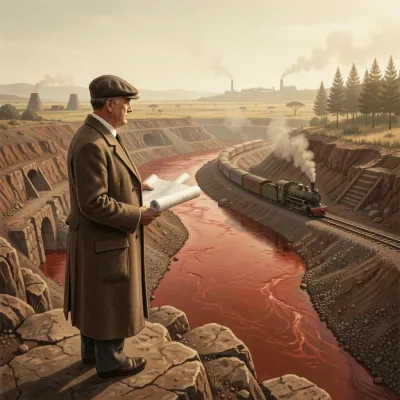
Rio Tinto traces its origins to 1873 when a British syndicate led by Hugh Matheson acquired the ancient Rio Tinto copper mines in southern Spain, transforming them into a modern industrial operation through railway construction, open‑pit mining, and calcination processes. Early success made the firm the world’s leading copper producer by the late 19th century, but environmental degradation and labor unrest—culminating in the 1888 massacre—highlighted the social costs of rapid expansion. The company’s early growth was bolstered by financial backing from the Rothschild family and a focus on technological innovation in extraction and processing.
In the 20th century, Rio Tinto pursued geographical diversification to mitigate risk: it entered Northern Rhodesia’s copper belt during the interwar years, invested in Canadian uranium at the dawn of the atomic age, and, after selling its Spanish holdings in 1954, rebranded as RTZ. The 1962 merger with Consolidated Zinc broadened its commodity base into zinc, lead, bauxite, and aluminum and gave it a foothold in Australia. Subsequent decades saw the development of the Pilbara iron ore mega‑project (Hamersley Iron), expansion into African bauxite and diamonds, North‑American ventures such as U.S. Borax and the 2007 Alcan acquisition, and strategic stakes in South American copper (Escondida) and Mongolian gold‑copper (Oyu Tolgoi). Throughout, the firm balanced market cycles, wartime demands, and commodity super‑cycles—particularly China‑driven demand for iron ore and aluminum—while adopting autonomous haulage, digital operations, and advanced processing technologies.
Rio Tinto’s modern era has been marked by both technological leadership and profound controversies. Environmental stewardship evolved from early sulfur‑dioxide emissions to water recycling, dry‑stack tailings, biodiversity offsets, and climate‑action initiatives such as the Elysis carbon‑free aluminum venture. Social responsibility programs progressed from paternalistic villages to Indigenous land‑use agreements, yet failures like the 2020 destruction of the Juukan Gorge rock shelters and the Simandou corruption scandal exposed governance gaps, prompting leadership overhauls and renewed commitments to ethical conduct, workforce inclusion, and sustainable practices. Today, Rio Tinto positions itself as a supplier of “green metals” for the energy transition, leveraging automation, AI, and renewable‑energy‑powered smelting while navigating complex geopolitical landscapes and striving to align profitability with environmental and social accountability.
What You'll Find Inside:
- The evolution of Rio Tinto from a 19th-century Spanish copper mine into a 21st-century global diversified mining conglomerate operating across six continents
- How the company navigated major historical events including two World Wars, colonial transitions, commodity super-cycles, and technological revolutions while maintaining growth
- Rio Tinto's strategic shift from copper-focused operations to a diversified portfolio encompassing iron ore, aluminum, copper, and emerging 'green metals' critical for the energy transition
- Critical examination of the company's environmental impact, social responsibility challenges, and governance controversies (including Juukan Gorge and Simandou) and the reforms that followed
- Insights into Rio Tinto's leadership evolution, technological innovation in mining, and vision for sustainable resource development in a decarbonizing global economy
Who's It For:
This book is ideal for business historians, corporate strategists, and mining industry professionals seeking to understand how a major global corporation evolved over 150 years. It will particularly benefit readers interested in corporate governance, sustainability practices, and the intersection of business with geopolitical forces, as well as students of economic history and globalization who want to comprehend how natural resource companies have shaped and been shaped by the modern industrial world.
Table of Contents:
- Introduction
- Chapter 1: The Genesis of a Mining Giant: Early Years and Foundations
- Chapter 2: Forging an Empire: Expansion in the Late 19th Century
- Chapter 3: Navigating Tumultuous Times: Rio Tinto Through Two World Wars
- Chapter 4: Post-War Reconstruction and Diversification
- Chapter 5: The Dawn of Globalization: Expanding Horizons in the Mid-20th Century
- Chapter 6: From Copper to Commodities: Shifting Focus and Strategic Moves
- Chapter 7: Australian Ambitions: Pilbara Iron Ore and Beyond
- Chapter 8: North American Ventures: Alcan and Other Key Acquisitions
- Chapter 9: African Footprints: Diamonds, Bauxite, and Complexities
- Chapter 10: South American Engagements: Copper, Iron, and Local Challenges
- Chapter 11: Asian Markets and Partnerships: Growth in the East
- Chapter 12: Technological Revolutions: Innovation in Mining and Processing
- Chapter 13: Environmental Stewardship: Addressing the Impact of Mining
- Chapter 14: Social Responsibility: Engaging with Communities and Indigenous Peoples
- Chapter 15: Corporate Governance and Ethical Dilemmas
- Chapter 16: Mergers, Acquisitions, and Divestments: Shaping the Portfolio
- Chapter 17: Leadership and Vision: The Architects of Rio Tinto's Success
- Chapter 18: Market Dynamics: Commodity Cycles and Economic Influence
- Chapter 19: Geopolitical Landscape: Operating in a Complex World
- Chapter 20: Innovation and Research: Pioneering Future Mining Practices
- Chapter 21: Sustainability in Practice: Towards a Greener Future
- Chapter 22: Workforce and Culture: People at the Heart of the Operation
- Chapter 23: Challenges and Controversies: Learning from the Past
- Chapter 24: The Modern Giant: Rio Tinto in the 21st Century
- Chapter 25: The Future of Mining: Rio Tinto's Role in a Changing World
Author:
Published By:
Date Published:
July 21, 2026
Type:
Nonfiction
Language:
English
Word Count:
40,300 words
Reading Time:
2 hours 49 minutes
Sample:
Order:
Order A History of Rio Tinto (Paperback) on MixCache.com:
Buy NowPrint copy is made to order and ships worldwide. Includes the ebook free, ready to read instantly.
$5 account credit for all new MixCache.com accounts, usable toward any ebook purchase!*


