Browse by Category
Fiction
- Action & Adventure
- African American
- Anthologies
- Children's Fiction
- Classics
- Comics & Graphic Novels
- Coming of Age
- Contemporary
- Cultural & Regional
- Drama
- Erotica
- Fantasy
- General
- Historical Fiction
- Horror
- Humor & Satire
- Literary Fiction
- Mystery, Thriller & Suspense
- Poetry
- Religious & Inspirational
- Romance
- Science Fiction
- Short Stories
- War & Military
- Westerns
- Women's Fiction
- Young Adult
Non-Fiction
- Antiques & Collectibles
- Arts & Photography
- Biographies & Memoirs
- Business & Money
- Children's Non-Fiction
-
Computers & Technology
- Artificial Intelligence
- Computer Science
- Cybersecurity & Cryptography
- Data Science & Analytics
- Databases & Big Data
- Game Development & Design
- General
- Hardware & DIY
- Mobile App Development
- Networking & Cloud Computing
- Operating Systems
- Programming
- Robotics
- Software
- Software Engineering
- User Experience (UX) & Design
- Web Development & Design
- Cooking, Food & Wine
- Crafts, Hobbies & Home
- Education & Teaching
- Engineering
- General
- Health, Fitness & Dieting
-
History
- African History
- African History - North Africa
- African History - Sub-Saharan Africa
- American History
- American History - 20th Century
- American History - Civil War
- American History - Colonial Period
- Ancient History
- Asian History
- Asian History - China
- Asian History - India
- Asian History - Japan
- Asian History - Southeast Asia
- European History
- European History - Ancient Greece
- European History - Ancient Rome
- European History - Medieval
- European History - Modern
- European History - Renaissance
- General
- Middle Eastern History
- Military History
- Military History - Aviation
- Military History - Naval
- Social & Cultural History
- World History
- Humor & Entertainment
- Industrial Technology
- Language Learning
- Law
- LGBTQ+ Non-Fiction
- Literary Criticism
- Medical Books
- Parenting & Relationships
- Philosophy
- Politics & Social Sciences
- Reference
- Religion & Spirituality
-
Science & Math
- Agricultural Sciences
- Astronomy & Space Science
- Behavioral Sciences
- Biological Sciences
- Botany & Plant Science
- Chemistry
- Earth Sciences
- Engineering - Chemical
- Engineering - Civil
- Engineering - Electrical
- Engineering - Mechanical
- Environment
- General
- Geology
- Mathematics
- Nature & Ecology
- Oceanography
- Paleontology
- Physics
- Statistics
- Self-Help
- Sports & Outdoors
- Study Aids
- Sustainability & Green Living
- Textbooks
- Transportation
- Travel
- True Crime
- Urban Planning & Development
- Veterinary Medicine
- Writing & Publishing
Jump to Section
MixCache.com Total Access
Unlimited reading and audiobooks for every book published by MixCache.com.
Included titles carry the MTA badge.
Learn more →
The Rise of Renewable Energy Worldwide
MTA
How Solar, Wind, and Water Power Are Changing the Planet
About this book:
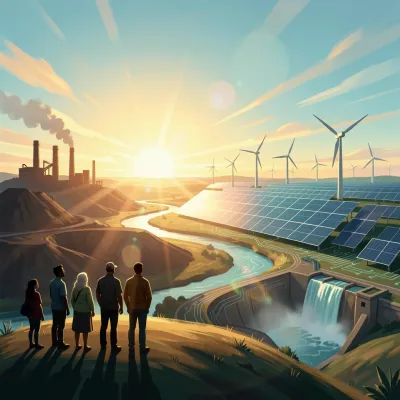
The book chronicles the global transition from fossil fuels to renewable energy, framing it as an urgent response to climate change, air pollution, energy insecurity, and the finite nature of coal, oil, and gas. It traces humanity’s energy history from wood and waterwheels through the Industrial Revolution’s reliance on coal and oil, highlighting the growing environmental and economic costs of greenhouse‑gas emissions, extreme weather, ocean acidification, and health impacts. The rise of renewables is presented not only as an ecological imperative but also as an economic opportunity offering price stability, job creation, and energy independence, with solar, wind, and water power identified as the cornerstone technologies due to their abundance, declining costs, and scalability.
Technical chapters dissect how solar photovoltaics and concentrated solar power convert sunlight into electricity, detailing semiconductor physics, cell types, tracking systems, and grid‑tied versus off‑grid configurations. Wind power is explained through the aerodynamics of turbine blades, pitch and yaw control, gearboxes, and the growth of onshore and offshore farms. Hydropower is covered from traditional dams with reservoirs to run‑of‑river, small hydro, and pumped storage, emphasizing its dispatchability and role as a grid‑scale battery. Geothermal, bioenergy, and emerging sources such as wave, tidal, and advanced hydrogen pathways are examined for their baseload potential, waste‑to‑energy benefits, and niche applications. Integration mechanisms—smart grids, demand response, virtual power plants, and various storage technologies (lithium‑ion batteries, flow batteries, compressed air, hydrogen, thermal storage)—are presented as essential tools to manage intermittency and ensure stability. The text further explores decarbonizing transportation via electric vehicles and renewable fuels, and greening industry through renewable electricity, green hydrogen, industrial heat pumps, and concentrated solar thermal.
Policy, economics, and social dimensions receive extensive treatment: renewable portfolio standards, feed‑in tariffs, tax incentives, carbon pricing, and international agreements drive market growth, while investment in manufacturing, installation, and maintenance creates millions of green jobs and stimulates local economies. The book stresses the need for a just transition, ensuring equitable access to clean energy, retraining fossil‑fuel workers, community ownership, and respect for Indigenous rights. Environmental benefits—cleaner air, reduced water use, lower greenhouse‑gas emissions, and ecosystem protection—are quantified alongside challenges such as land use, wildlife impacts, material supply chains, and end‑of‑life recycling. Global case studies (Germany’s Energiewende, UK offshore wind, US regional diversity, Iceland’s geothermal, China’s scale, Brazil’s bioenergy, Denmark’s wind, Morocco’s CSP) illustrate successful pathways, and international cooperation via knowledge sharing, finance, grid interconnection, and technology transfer is highlighted as a catalyst. Finally, the work envisions a 100% renewable future supported by expanded storage, smart‑grid intelligence, intercontinental transmission, sector‑wide electrification, sustainable fuels, and emerging technologies, calling for sustained R&D, adaptive policies, broad public engagement, and individual actions—rooftop solar, EVs, energy efficiency, community solar, and advocacy—to maintain momentum toward a sustainable, prosperous, and clean energy world.
What You'll Find Inside:
- Detailed exploration of solar, wind, and hydropower technologies, including mechanics, innovations, and deployment scales.
- In-depth analysis of supporting systems like smart grids, energy storage (batteries, hydrogen), and their role in managing renewable intermittency.
- Coverage of economic impacts, policy frameworks, and social equity considerations driving the renewable transition globally.
- Examination of emerging technologies (wave, tidal, advanced renewables) and future scenarios for a 100% renewable energy world.
- Global case studies and practical guidance on individual actions to support and participate in the renewable energy revolution.
Who's It For:
This book is designed for students, educators, and professionals in energy, environmental science, and sustainability who need a thorough grounding in renewable energy technologies and systems. It also serves policymakers, industry leaders, and investors seeking to understand the economic, regulatory, and social dimensions of the global energy transition. Additionally, environmentally conscious citizens and advocates will find valuable insights into how they can contribute to and benefit from the renewable revolution.
Table of Contents:
- Introduction: The Dawn of a New Energy Era
- Chapter 1: The Urgent Need for Change: Why Renewables?
- Chapter 2: A Brief History of Energy: From Fossil Fuels to the Future
- Chapter 3: Solar Power: Harnessing the Sun's Abundance
- Chapter 4: The Mechanics of Solar: Photovoltaics and Concentrated Solar Power
- Chapter 5: Wind Power: Capturing the Invisible Force
- Chapter 6: Wind Turbine Technology: Innovations and Efficiency
- Chapter 7: Hydropower: The Enduring Giant of Renewables
- Chapter 8: Beyond Large Dams: Small Hydro and Pumped Storage
- Chapter 9: Geothermal Energy: Tapping into Earth's Inner Heat
- Chapter 10: Bioenergy: Sustainable Solutions from Organic Matter
- Chapter 11: The Smart Grid: Integrating Diverse Renewable Sources
- Chapter 12: Energy Storage Solutions: Batteries, Hydrogen, and Beyond
- Chapter 13: Decarbonizing Transportation: EVs and Renewable Fuels
- Chapter 14: Renewable Energy in Industry: A Green Revolution
- Chapter 15: Policy and Politics: Driving the Renewable Transition
- Chapter 16: Economic Impacts: New Jobs and Green Growth
- Chapter 17: Social Equity and Renewable Energy: Ensuring a Just Transition
- Chapter 18: Environmental Benefits: Cleaner Air, Water, and Climate
- Chapter 19: Overcoming Challenges: Intermittency, Grid Stability, and Land Use
- Chapter 20: Emerging Technologies: Wave, Tidal, and Advanced Renewables
- Chapter 21: Global Case Studies: Success Stories in Renewable Adoption
- Chapter 22: The Role of International Cooperation in Energy Transition
- Chapter 23: Future Scenarios: A World Powered by 100% Renewables
- Chapter 24: Individual Action: Empowering the Green Energy Consumer
- Chapter 25: The Path Forward: Sustaining the Renewable Revolution
Author:
Published By:
Date Published:
July 14, 2026
Type:
Nonfiction
Language:
English
Word Count:
46,901 words
Reading Time:
3 hours 17 minutes
Sample:
Order:
Order The Rise of Renewable Energy Worldwide (Paperback) on MixCache.com:
Buy NowPrint copy is made to order and ships worldwide. Includes the ebook free, ready to read instantly.
$5 account credit for all new MixCache.com accounts, usable toward any ebook purchase!*