
Browse by Category
Fiction
- Action & Adventure
- African American
- Anthologies
- Children's Fiction
- Classics
- Comics & Graphic Novels
- Coming of Age
- Contemporary
- Cultural & Regional
- Drama
- Erotica
- Fantasy
- General
- Historical Fiction
- Horror
- Humor & Satire
- Literary Fiction
- Mystery, Thriller & Suspense
- Poetry
- Religious & Inspirational
- Romance
- Science Fiction
- Short Stories
- War & Military
- Westerns
- Women's Fiction
- Young Adult
Non-Fiction
- Antiques & Collectibles
- Arts & Photography
- Biographies & Memoirs
- Business & Money
- Children's Non-Fiction
-
Computers & Technology
- Artificial Intelligence
- Computer Science
- Cybersecurity & Cryptography
- Data Science & Analytics
- Databases & Big Data
- Game Development & Design
- General
- Hardware & DIY
- Mobile App Development
- Networking & Cloud Computing
- Operating Systems
- Programming
- Robotics
- Software
- Software Engineering
- User Experience (UX) & Design
- Web Development & Design
- Cooking, Food & Wine
- Crafts, Hobbies & Home
- Education & Teaching
- Engineering
- General
- Health, Fitness & Dieting
-
History
- African History
- African History - North Africa
- African History - Sub-Saharan Africa
- American History
- American History - 20th Century
- American History - Civil War
- American History - Colonial Period
- Ancient History
- Asian History
- Asian History - China
- Asian History - India
- Asian History - Japan
- Asian History - Southeast Asia
- European History
- European History - Ancient Greece
- European History - Ancient Rome
- European History - Medieval
- European History - Modern
- European History - Renaissance
- General
- Middle Eastern History
- Military History
- Military History - Aviation
- Military History - Naval
- Social & Cultural History
- World History
- Humor & Entertainment
- Industrial Technology
- Language Learning
- Law
- LGBTQ+ Non-Fiction
- Literary Criticism
- Medical Books
- Parenting & Relationships
- Philosophy
- Politics & Social Sciences
- Reference
- Religion & Spirituality
-
Science & Math
- Agricultural Sciences
- Astronomy & Space Science
- Behavioral Sciences
- Biological Sciences
- Botany & Plant Science
- Chemistry
- Earth Sciences
- Engineering - Chemical
- Engineering - Civil
- Engineering - Electrical
- Engineering - Mechanical
- Environment
- General
- Geology
- Mathematics
- Nature & Ecology
- Oceanography
- Paleontology
- Physics
- Statistics
- Self-Help
- Sports & Outdoors
- Study Aids
- Sustainability & Green Living
- Textbooks
- Transportation
- Travel
- True Crime
- Urban Planning & Development
- Veterinary Medicine
- Writing & Publishing
Jump to Section
MixCache.com Total Access
Unlimited reading and audiobooks for every book published by MixCache.com.
Included titles carry the MTA badge.
Learn more →
Education In Turkmenistan
MTA
A Comprehensive Overview from Early Childhood to Higher Education
About this book:
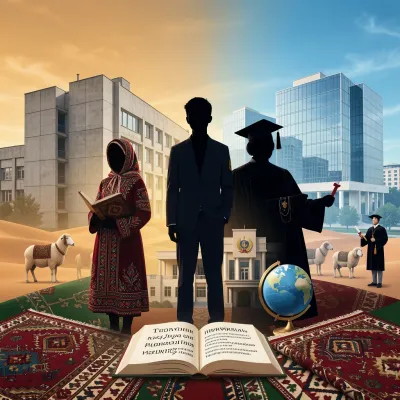
Education in Turkmenistan traces its evolution from informal nomadic traditions and Islamic madrasahs through Soviet-era standardization to post‑independence efforts to forge a distinct national system. The book outlines how the centralized Ministry of Education oversees a multi‑tiered structure that begins with optional nurseries and kindergartens, proceeds through four years of compulsory primary education, and continues with six years of general secondary education or specialized vocational tracks. It details the historical influences—Turkic oral traditions, Russian imperial schooling, Soviet polytechnic models, and post‑1991 reforms—that have shaped curricula, language policy, and institutional organization across the country.
The text examines core components of the system: curriculum development that blends Turkmen heritage, Russian and English language instruction, and global academic standards; teacher training in pedagogical universities with ongoing professional development; higher education institutions offering five‑year degree programs, research opportunities, and international partnerships; admission processes based on centralized entrance exams and state‑funded quotas; vocational and technical education aligned with industry needs; distance learning initiatives expanding access; inclusive education policies for students with special needs; and the trilingual language framework designed to balance national identity with regional and global engagement. It also discusses financing mechanisms dominated by state budget allocations, infrastructure investments, scholarships, and modest private and international contributions.
Further chapters explore ongoing educational reforms aimed at aligning outcomes with national development goals, addressing challenges such as urban‑rural disparities, technological integration, and maintaining quality while preserving cultural values. The book highlights the role of education in fostering national identity, sustainable development, scientific research, student life, and lifelong learning, and it details quality assurance and accreditation processes overseen by the Ministry of Education. Finally, it looks ahead to future perspectives—digital transformation, competency‑based learning, personalized pathways, expanded international cooperation, and continued investment in teacher quality and innovative research—as Turkmenistan seeks to build an education system that prepares citizens for both national progress and participation in a global knowledge economy.
What You'll Find Inside:
- Comprehensive overview of Turkmenistan's education system from early childhood through higher education, including structural frameworks and policy evolution since independence.
- Exploration of the trilingual education policy emphasizing Turkmen, Russian, and English, and its impact on national identity, cultural preservation, and global engagement.
- Detailed analysis of vocational and technical education's role in aligning workforce skills with economic development and addressing regional labor market needs.
- Examination of technology integration, distance learning initiatives, and digital literacy efforts to modernize pedagogy and expand educational access across diverse regions.
- Insights into challenges such as urban-rural educational disparities, quality assurance mechanisms, and ongoing reforms to internationalize Turkmenistan's educational system.
Who's It For:
This book is ideal for educators, policymakers, researchers, and students interested in understanding Turkmenistan's educational landscape. It is particularly valuable for those studying comparative education systems, Central Asian development strategies, or the intersection of cultural heritage and modern pedagogical practices. Anyone seeking insights into how a nation balances national identity with global competitiveness through its education policies will find this comprehensive resource informative.
Table of Contents:
- Introduction
- Chapter 1: Historical Foundations of Turkmen Education
- Chapter 2: The Structure of the Turkmen Educational System
- Chapter 3: Early Childhood Education: Nurseries and Kindergartens
- Chapter 4: Primary Education: The Foundation Years
- Chapter 5: Secondary Education: General and Specialized Tracks
- Chapter 6: Curriculum Development and Educational Standards
- Chapter 7: Teacher Training and Professional Development
- Chapter 8: Higher Education Institutions: Universities and Institutes
- Chapter 9: Admission Processes and Student Enrollment in Higher Education
- Chapter 10: Vocational and Technical Education
- Chapter 11: Distance Learning and Educational Technologies
- Chapter 12: Inclusive Education for Students with Special Needs
- Chapter 13: The Role of Language in Education: Turkmen, Russian, and English
- Chapter 14: Funding and Financing of Education in Turkmenistan
- Chapter 15: International Cooperation and Educational Exchange Programs
- Chapter 16: Educational Reforms and Policy Changes
- Chapter 17: Challenges and Opportunities in Turkmen Education
- Chapter 18: The Impact of Culture and Tradition on Education
- Chapter 19: Science and Research in Turkmen Universities
- Chapter 20: Student Life and Extracurricular Activities
- Chapter 21: Education for Sustainable Development
- Chapter 22: The Role of Education in National Development
- Chapter 23: Quality Assurance and Accreditation in Education
- Chapter 24: Adult Education and Lifelong Learning
- Chapter 25: Future Perspectives and Innovations in Turkmen Education
Author:
Published By:
Date Published:
July 7, 2026
Type:
Nonfiction
Language:
English
Word Count:
43,519 words
Reading Time:
3 hours 3 minutes
Sample:
MixCache.com Total Access
Get unlimited access to this book + all books published by MixCache.com for $11.99/month
Subscribe to MTAOr purchase this book individually below
Order:
Buy the Education In Turkmenistan ebook on MixCache.com:
Buy Now
Full ebook will be available immediately
- read online or download as a PDF file.
$5 account credit for all new MixCache.com accounts, usable toward any ebook purchase!*




Ratings & Reviews
Ask Questions About This Book
Have a question about the content? Ask our AI assistant!
Start by asking a question about "Education In Turkmenistan"
Example: "Does this book mention William Shakespeare?"
Thinking...