Browse by Category
Fiction
- Action & Adventure
- African American
- Anthologies
- Children's Fiction
- Classics
- Comics & Graphic Novels
- Coming of Age
- Contemporary
- Cultural & Regional
- Drama
- Erotica
- Fantasy
- General
- Historical Fiction
- Horror
- Humor & Satire
- Literary Fiction
- Mystery, Thriller & Suspense
- Poetry
- Religious & Inspirational
- Romance
- Science Fiction
- Short Stories
- War & Military
- Westerns
- Women's Fiction
- Young Adult
Non-Fiction
- Antiques & Collectibles
- Arts & Photography
- Biographies & Memoirs
- Business & Money
- Children's Non-Fiction
-
Computers & Technology
- Artificial Intelligence
- Computer Science
- Cybersecurity & Cryptography
- Data Science & Analytics
- Databases & Big Data
- Game Development & Design
- General
- Hardware & DIY
- Mobile App Development
- Networking & Cloud Computing
- Operating Systems
- Programming
- Robotics
- Software
- Software Engineering
- User Experience (UX) & Design
- Web Development & Design
- Cooking, Food & Wine
- Crafts, Hobbies & Home
- Education & Teaching
- Engineering
- General
- Health, Fitness & Dieting
-
History
- African History
- African History - North Africa
- African History - Sub-Saharan Africa
- American History
- American History - 20th Century
- American History - Civil War
- American History - Colonial Period
- Ancient History
- Asian History
- Asian History - China
- Asian History - India
- Asian History - Japan
- Asian History - Southeast Asia
- European History
- European History - Ancient Greece
- European History - Ancient Rome
- European History - Medieval
- European History - Modern
- European History - Renaissance
- General
- Middle Eastern History
- Military History
- Military History - Aviation
- Military History - Naval
- Social & Cultural History
- World History
- Humor & Entertainment
- Industrial Technology
- Language Learning
- Law
- LGBTQ+ Non-Fiction
- Literary Criticism
- Medical Books
- Parenting & Relationships
- Philosophy
- Politics & Social Sciences
- Reference
- Religion & Spirituality
-
Science & Math
- Agricultural Sciences
- Astronomy & Space Science
- Behavioral Sciences
- Biological Sciences
- Botany & Plant Science
- Chemistry
- Earth Sciences
- Engineering - Chemical
- Engineering - Civil
- Engineering - Electrical
- Engineering - Mechanical
- Environment
- General
- Geology
- Mathematics
- Nature & Ecology
- Oceanography
- Paleontology
- Physics
- Statistics
- Self-Help
- Sports & Outdoors
- Study Aids
- Sustainability & Green Living
- Textbooks
- Transportation
- Travel
- True Crime
- Urban Planning & Development
- Veterinary Medicine
- Writing & Publishing
Jump to Section
MixCache.com Total Access
Unlimited reading and audiobooks for every book published by MixCache.com.
Included titles carry the MTA badge.
Learn more →
Education In Serbia
MTA
A Comprehensive Overview from Early Childhood to Higher Education
About this book:
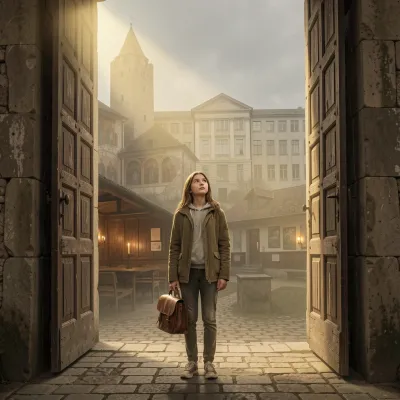
Education in Serbia has evolved from medieval monastic schools through Ottoman-era clandestine learning, Habsburg‑influenced institutions, and 19th‑century state‑building efforts to a modern system shaped by socialist expansion, post‑Yugoslav crisis, and ongoing European‑aligned reforms. The legal framework centers on the Constitution and key laws governing preschool, primary, secondary, and higher education, with the Ministry of Education, Science and Technological Development steering policy alongside advisory councils, accreditation bodies, and local governments that manage day‑to‑day school operations.
The system provides free, compulsory eight‑year primary education (ages 7‑14/15) followed by non‑compulsory secondary education divided into general gimnazije (academic streams) and vocational schools, with specialized schools for gifted students, arts, military, police, sports, and religious training. Completion of secondary education culminates in the Matura exam, which together with entrance examinations determines access to higher education. Serbian higher education, reorganized under the Bologna Process, offers bachelor’s, master’s, and doctoral degrees at public universities (Belgrade, Novi Sad, Niš, Kragujevac, Priština) and vocational colleges, complemented by a growing private sector. Quality assurance is overseen by NEAQA, which aligns standards with the European ESG and pursues ENQA/EQAR membership.
Current challenges include uneven funding, low teacher salaries, infrastructure gaps, equity gaps for rural and minority populations (especially Roma), curriculum relevance, and brain drain. Reforms focus on digital transformation (e.g., Connected Schools), inclusive education, teacher professional development, labor‑market alignment via dual education, lifelong learning, and deeper international cooperation through Erasmus+, CEEPUS, and EU pre‑accession funds. Looking ahead, Serbia’s EU accession aspirations will continue to drive legislative harmonization, quality‑assurance upgrades, digital literacy integration, curriculum modernization emphasizing 21st‑century skills, stronger higher‑education‑industry links, expanded internationalization, and robust lifelong‑learning initiatives to meet demographic and economic demands.
What You'll Find Inside:
- Historical development of Serbian education from medieval monastic schools through Ottoman rule, 19th-century national awakening, Yugoslav socialist era, and post-independence reforms toward EU alignment.
- Comprehensive breakdown of the educational structure: early childhood (nurseries/kindergartens), compulsory primary education, secondary pathways (general gimnazije and vocational schools), and higher education institutions under the Bologna Process.
- In-depth analysis of inclusive education for students with special needs (Individual Education Plans, support staff) and national minorities (mother-tongue instruction, bilingual programs, cultural preservation).
- Examination of modern educational dynamics including ICT integration (e-learning, digital literacy), international cooperation (Erasmus+, CEEPUS), adult education/lifelong learning initiatives, and the growing private education sector.
- Critical assessment of persistent challenges (funding inequities, teacher salaries, urban-rural disparities) and ongoing reforms focused on labor market alignment, quality assurance, and European standardization efforts.
Who's It For:
This book is essential reading for educators, administrators, and policymakers working within or alongside the Serbian educational system who need a comprehensive understanding of its structure and reforms. It also serves researchers and students of comparative education, particularly those focused on Western Balkan systems, as well as international development professionals and anyone interested in how national educational systems evolve through historical, political, and European integration pressures.
Table of Contents:
- Introduction
- Chapter 1 Historical Development of Serbian Education
- Chapter 2 Legal Framework and Governance of the Serbian Educational System
- Chapter 3 Funding and Economics of Education in Serbia
- Chapter 4 Early Childhood Education: Nurseries and Kindergartens
- Chapter 5 Curriculum and Pedagogy in Early Childhood Education
- Chapter 6 Primary Education: Structure and Compulsory Schooling
- Chapter 7 Curriculum and Assessment in Primary Education
- Chapter 8 Secondary Education: General and Vocational Schools
- Chapter 9 Specialized Secondary Schools and Programs
- Chapter 10 Matura Exam and Transition to Higher Education
- Chapter 11 Higher Education Institutions: Universities and Colleges
- Chapter 12 Accreditation and Quality Assurance in Higher Education
- Chapter 13 Study Programs and Degrees in Serbian Higher Education
- Chapter 14 Student Life and Support Services in Higher Education
- Chapter 15 Faculty and Staff in Serbian Educational Institutions
- Chapter 16 Teacher Training and Professional Development
- Chapter 17 Inclusive Education for Students with Special Needs
- Chapter 18 Education of National Minorities in Serbia
- Chapter 19 Role of Information and Communication Technologies in Education
- Chapter 20 International Cooperation and Exchange Programs in Education
- Chapter 21 Challenges and Reforms in the Serbian Educational System
- Chapter 22 Adult Education and Lifelong Learning Initiatives
- Chapter 23 Private Education Sector in Serbia
- Chapter 24 Impact of European Union Policies on Serbian Education
- Chapter 25 Future Prospects and Strategic Directions for Education in Serbia
Author:
Published By:
Date Published:
July 3, 2026
Type:
Nonfiction
Language:
English
Word Count:
44,321 words
Reading Time:
3 hours 6 minutes
Sample:
Order:
Order Education In Serbia (Paperback) on MixCache.com:
Buy NowPrint copy is made to order and ships worldwide. Includes the ebook free, ready to read instantly.
$5 account credit for all new MixCache.com accounts, usable toward any ebook purchase!*