
Browse by Category
Fiction
- Action & Adventure
- African American
- Anthologies
- Children's Fiction
- Classics
- Comics & Graphic Novels
- Coming of Age
- Contemporary
- Cultural & Regional
- Drama
- Erotica
- Fantasy
- General
- Historical Fiction
- Horror
- Humor & Satire
- Literary Fiction
- Mystery, Thriller & Suspense
- Poetry
- Religious & Inspirational
- Romance
- Science Fiction
- Short Stories
- War & Military
- Westerns
- Women's Fiction
- Young Adult
Non-Fiction
- Antiques & Collectibles
- Arts & Photography
- Biographies & Memoirs
- Business & Money
- Children's Non-Fiction
-
Computers & Technology
- Artificial Intelligence
- Computer Science
- Cybersecurity & Cryptography
- Data Science & Analytics
- Databases & Big Data
- Game Development & Design
- General
- Hardware & DIY
- Mobile App Development
- Networking & Cloud Computing
- Operating Systems
- Programming
- Robotics
- Software
- Software Engineering
- User Experience (UX) & Design
- Web Development & Design
- Cooking, Food & Wine
- Crafts, Hobbies & Home
- Education & Teaching
- Engineering
- General
- Health, Fitness & Dieting
-
History
- African History
- African History - North Africa
- African History - Sub-Saharan Africa
- American History
- American History - 20th Century
- American History - Civil War
- American History - Colonial Period
- Ancient History
- Asian History
- Asian History - China
- Asian History - India
- Asian History - Japan
- Asian History - Southeast Asia
- European History
- European History - Ancient Greece
- European History - Ancient Rome
- European History - Medieval
- European History - Modern
- European History - Renaissance
- General
- Middle Eastern History
- Military History
- Military History - Aviation
- Military History - Naval
- Social & Cultural History
- World History
- Humor & Entertainment
- Industrial Technology
- Language Learning
- Law
- LGBTQ+ Non-Fiction
- Literary Criticism
- Medical Books
- Parenting & Relationships
- Philosophy
- Politics & Social Sciences
- Reference
- Religion & Spirituality
-
Science & Math
- Agricultural Sciences
- Astronomy & Space Science
- Behavioral Sciences
- Biological Sciences
- Botany & Plant Science
- Chemistry
- Earth Sciences
- Engineering - Chemical
- Engineering - Civil
- Engineering - Electrical
- Engineering - Mechanical
- Environment
- General
- Geology
- Mathematics
- Nature & Ecology
- Oceanography
- Paleontology
- Physics
- Statistics
- Self-Help
- Sports & Outdoors
- Study Aids
- Sustainability & Green Living
- Textbooks
- Transportation
- Travel
- True Crime
- Urban Planning & Development
- Veterinary Medicine
- Writing & Publishing
Jump to Section
MixCache.com Total Access
Unlimited reading and audiobooks for every book published by MixCache.com.
Included titles carry the MTA badge.
Learn more →
Education In Romania
MTA
A Comprehensive Overview from Early Childhood to Higher Education
About this book:
**Summary:**
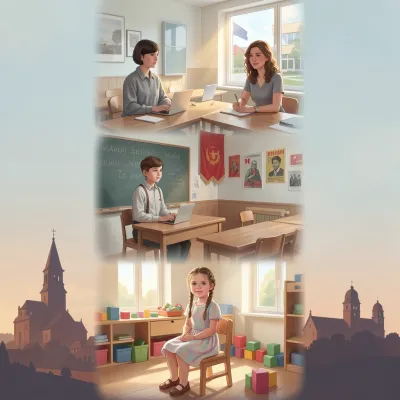
Education in Romania has undergone profound transformations over centuries, evolving from medieval monastic schools rooted in religious instruction to a modern, three-tiered system aligned with European standards. The book outlines the historical milestones that shaped the system, including the pivotal 1864 Educational Law, the rigid ideologization of curricula during communism, and the post-1989 reforms aimed at democratization and European integration. These foundational influences continue to shape Romania’s educational landscape, emphasizing the importance of historical context in understanding its current structure and challenges.
The Romanian educational system is structured sequentially from early childhood through higher education. Early childhood education (creches and kindergartens) focuses on socialization and foundational skills, while primary education (four years) and lower secondary education (four years) provide broad academic foundations. Upper secondary diversifies into general *licee* with specialized profiles (humanities/science) and vocational tracks (*colegii vocaționale*), culminating in the high-stakes National Evaluation and Baccalaureate Exam. Higher education adheres to the Bologna Process, offering three-year Bachelor’s, two-year Master’s, and three-year Doctoral programs, supported by public and private universities accredited under ARACIS for quality assurance.
Governance is centralized through the Ministry of Education, though regional inspectorates and EU funding play critical roles. Persistent challenges include underfunding, disparities between rural and urban regions, outdated infrastructure, and difficulties in attracting and retaining qualified teachers and researchers (brain drain). EU membership since 2007 has driven reforms, injecting structural funds to modernize facilities, integrate technology, and promote inclusive practices, including enhanced support for special education and minority-language schools. However, the system still grapples with aligning curricula to 21st-century competencies, managing high-stakes assessments, and bridging regional and socio-economic gaps.
Future perspectives emphasize technological integration, flexible competency-based curricula, and lifelong learning. There is a pressing need to address rural-urban inequities, enhance teacher training, and expand dual education models to better align vocational training with labor market demands. Private education and internationalization, particularly in higher education, contribute to diversification, yet challenges like brain drain, curriculum relevance, and equitable access persist. The book underscores Romania’s commitment to evolving its educational framework to foster innovation, inclusivity, and global competitiveness, aiming to equip citizens with skills necessary for a dynamically changing world.
What You'll Find Inside:
- Historical evolution of Romanian education from medieval monastic schools through communist era reforms to modern EU-aligned system
- Complete structure of the Romanian educational system covering early childhood, primary, secondary, and higher education levels
- Analysis of key challenges including rural-urban disparities, brain drain, funding limitations, and equity issues
- Impact of EU membership on curriculum development, quality assurance mechanisms, and internationalization of higher education
- Examination of specialized areas including minority language education, vocational training, special education, and adult learning initiatives
Who's It For:
This book is ideal for policymakers seeking informed perspectives on Romania's educational system, educators looking for comparative insights into different educational models, researchers studying national education systems and reform processes, and any interested reader eager to understand the dynamics of education in this Eastern European nation undergoing transformation through EU integration and 21st-century challenges.
Table of Contents:
- Introduction
- Chapter 1: Historical Foundations of Romanian Education
- Chapter 2: The Structure of the Romanian Educational System
- Chapter 3: Early Childhood Education: Creches and Kindergartens
- Chapter 4: Primary Education: Curriculum and Pedagogy
- Chapter 5: Secondary Education: General and Vocational Tracks
- Chapter 6: The National Evaluation System and Baccalaureate Exam
- Chapter 7: Higher Education: Universities and Academic Landscape
- Chapter 8: Funding and Governance in Romanian Education
- Chapter 9: Teacher Training and Professional Development
- Chapter 10: Special Education and Inclusive Practices
- Chapter 11: Minority Language Education
- Chapter 12: Rural vs. Urban Educational Disparities
- Chapter 13: The Impact of EU Membership on Romanian Education
- Chapter 14: Internationalization of Romanian Higher Education
- Chapter 15: Challenges and Reforms in the 21st Century
- Chapter 16: Educational Technology and Digital Learning Initiatives
- Chapter 17: Curriculum Development and Reform
- Chapter 18: Adult Education and Lifelong Learning
- Chapter 19: The Role of Private Education in Romania
- Chapter 20: Student Support Services and Guidance
- Chapter 21: Quality Assurance in Education
- Chapter 22: Research and Innovation in Romanian Universities
- Chapter 23: Brain Drain and its Impact on Education
- Chapter 24: Vocational Education and Training (VET) in the Modern Economy
- Chapter 25: Future Perspectives and Policy Directions for Romanian Education
Author:
Published By:
Date Published:
July 3, 2026
Type:
Nonfiction
Language:
English
Word Count:
42,061 words
Reading Time:
2 hours 57 minutes
Sample:
MixCache.com Total Access
Get unlimited access to this book + all books published by MixCache.com for $11.99/month
Subscribe to MTAOr purchase this book individually below
Order:
Buy the Education In Romania ebook on MixCache.com:
Buy Now
Full ebook will be available immediately
- read online or download as a PDF file.
$5 account credit for all new MixCache.com accounts, usable toward any ebook purchase!*






Ratings & Reviews
Ask Questions About This Book
Have a question about the content? Ask our AI assistant!
Start by asking a question about "Education In Romania"
Example: "Does this book mention William Shakespeare?"
Thinking...