Browse by Category
Fiction
- Action & Adventure
- African American
- Anthologies
- Children's Fiction
- Classics
- Comics & Graphic Novels
- Coming of Age
- Contemporary
- Cultural & Regional
- Drama
- Erotica
- Fantasy
- General
- Historical Fiction
- Horror
- Humor & Satire
- Literary Fiction
- Mystery, Thriller & Suspense
- Poetry
- Religious & Inspirational
- Romance
- Science Fiction
- Short Stories
- War & Military
- Westerns
- Women's Fiction
- Young Adult
Non-Fiction
- Antiques & Collectibles
- Arts & Photography
- Biographies & Memoirs
- Business & Money
- Children's Non-Fiction
-
Computers & Technology
- Artificial Intelligence
- Computer Science
- Cybersecurity & Cryptography
- Data Science & Analytics
- Databases & Big Data
- Game Development & Design
- General
- Hardware & DIY
- Mobile App Development
- Networking & Cloud Computing
- Operating Systems
- Programming
- Robotics
- Software
- Software Engineering
- User Experience (UX) & Design
- Web Development & Design
- Cooking, Food & Wine
- Crafts, Hobbies & Home
- Education & Teaching
- Engineering
- General
- Health, Fitness & Dieting
-
History
- African History
- African History - North Africa
- African History - Sub-Saharan Africa
- American History
- American History - 20th Century
- American History - Civil War
- American History - Colonial Period
- Ancient History
- Asian History
- Asian History - China
- Asian History - India
- Asian History - Japan
- Asian History - Southeast Asia
- European History
- European History - Ancient Greece
- European History - Ancient Rome
- European History - Medieval
- European History - Modern
- European History - Renaissance
- General
- Middle Eastern History
- Military History
- Military History - Aviation
- Military History - Naval
- Social & Cultural History
- World History
- Humor & Entertainment
- Industrial Technology
- Language Learning
- Law
- LGBTQ+ Non-Fiction
- Literary Criticism
- Medical Books
- Parenting & Relationships
- Philosophy
- Politics & Social Sciences
- Reference
- Religion & Spirituality
-
Science & Math
- Agricultural Sciences
- Astronomy & Space Science
- Behavioral Sciences
- Biological Sciences
- Botany & Plant Science
- Chemistry
- Earth Sciences
- Engineering - Chemical
- Engineering - Civil
- Engineering - Electrical
- Engineering - Mechanical
- Environment
- General
- Geology
- Mathematics
- Nature & Ecology
- Oceanography
- Paleontology
- Physics
- Statistics
- Self-Help
- Sports & Outdoors
- Study Aids
- Sustainability & Green Living
- Textbooks
- Transportation
- Travel
- True Crime
- Urban Planning & Development
- Veterinary Medicine
- Writing & Publishing
Jump to Section
MixCache.com Total Access
Unlimited reading and audiobooks for every book published by MixCache.com.
Included titles carry the MTA badge.
Learn more →
Education In Nicaragua
MTA
A Comprehensive Overview from Early Childhood to Higher Education
About this book:
# Education In Nicaragua
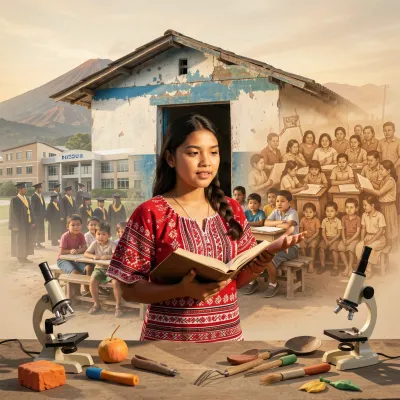
This book provides a comprehensive analysis of Nicaragua’s educational landscape, tracing its evolution from colonial origins, through periods of neglect under the Somoza dictatorship and revolutionary reforms, to contemporary challenges and initiatives. It highlights the pivotal role of the Ministry of Education (MINED) and the National Council of Universities (CNU) in governing the system, emphasizing policies aimed at free, inclusive, and quality education. Key historical milestones include the Sandinista literacy campaigns, which dramatically reduced illiteracy rates, and the ongoing struggle to balance political priorities with equitable access and resource distribution, particularly in rural and marginalized urban communities.
The analysis explores Nicaragua’s multifaceted approach to education across all levels—from early childhood and primary education emphasizing foundational skills and curriculum reforms to secondary, technical-vocational (TVET), and higher education sectors. It underscores persistent challenges including overcrowded classrooms, teacher shortages, inadequate infrastructure, and the "digital divide," while detailing efforts to expand access through mobile digital classrooms, bilingual education for indigenous communities, and distance learning programs. The book emphasizes the importance of teacher training, curriculum modernization focused on competency-based learning, and quality assurance mechanisms, though it notes concerns about political control and transparency in recent years.
Socioeconomic factors, gender disparities, and geographic divides significantly impact educational outcomes, with poverty and child labor contributing to dropout rates and "learning poverty" affecting a substantial percentage of students. Initiatives to address these issues include school feeding programs, NGO partnerships, international aid, and targeted support for marginalized groups like the indigenous Miskitu and students with special needs. The book also examines the role of non-governmental organizations and international cooperation in supplementing government efforts, alongside ongoing challenges in sustaining funding and ensuring equitable distribution of resources and opportunities across diverse communities.
Looking ahead, the book envisions a future where technological integration, curriculum innovation, and expanded vocational training align with national development goals of poverty reduction, economic diversification, and social equity. It stresses the importance of community engagement, the continuous professionalization of educators, and addressing structural inequities to realize the vision of quality education for all. Through case studies and best practices, it demonstrates that while significant hurdles remain, Nicaragua’s commitment to education as a cornerstone of national progress endures, driven by both internal resilience and external collaboration to build an inclusive, technologically-enriched, and culturally-responsive educational system.
What You'll Find Inside:
- The book provides a detailed historical analysis of Nicaraguan education from colonial ecclesiastical schools to Sandinista literacy campaigns and contemporary policy shifts, revealing how political ideologies have consistently shaped educational access and quality.
- It offers comprehensive coverage of Nicaragua's educational structure across all levels - early childhood, primary, secondary, TVET, and higher education - examining curriculum, access challenges, and quality issues specific to each stage.
- The text critically examines systemic barriers to educational equity, including rural-urban disparities, indigenous education challenges, socioeconomic factors affecting retention, and gender-based disparities in subject choices and completion rates.
- It analyzes the multifaceted funding landscape, detailing government budget allocations, international aid mechanisms, NGO contributions, and the persistent challenges of resource distribution in a developing context.
- The book explores innovative solutions and best practices, from community-led school construction projects to technology-enabled distance learning initiatives, demonstrating how local and international partnerships are addressing educational challenges.
Who's It For:
This book is intended for policymakers, educators, researchers, international development practitioners, and anyone with a vested interest in Nicaragua's educational future. It would particularly benefit those involved in education reform, international aid work in Latin America, academic researchers studying educational systems in developing countries, and professionals working to improve access and quality in Nicaraguan schools.
Table of Contents:
- Introduction
- Chapter 1: Historical Context of Nicaraguan Education
- Chapter 2: Educational Policy and Governance
- Chapter 3: Funding and Investment in Education
- Chapter 4: Early Childhood Education: Access and Quality
- Chapter 5: Primary Education: Curriculum and Challenges
- Chapter 6: Secondary Education: Structure and Relevance
- Chapter 7: Technical and Vocational Education and Training (TVET)
- Chapter 8: Higher Education System: Universities and Institutions
- Chapter 9: Teacher Training and Professional Development
- Chapter 10: Rural Education Initiatives
- Chapter 11: Urban Education Disparities
- Chapter 12: Indigenous Education and Cultural Preservation
- Chapter 13: Special Education Needs and Inclusion
- Chapter 14: Gender Equality in Education
- Chapter 15: Impact of Socioeconomic Factors on Educational Attainment
- Chapter 16: Role of Non-Governmental Organizations (NGOs) in Education
- Chapter 17: International Cooperation and Aid in Education
- Chapter 18: Educational Technology and Digital Learning
- Chapter 19: Assessment and Evaluation Systems
- Chapter 20: Challenges of Educational Access and Retention
- Chapter 21: Quality Assurance in Education
- Chapter 22: Education and National Development Goals
- Chapter 23: Student Support Services and Well-being
- Chapter 24: The Future of Education in Nicaragua
- Chapter 25: Case Studies and Best Practices
Author:
Published By:
Date Published:
June 30, 2026
Type:
Nonfiction
Language:
English
Word Count:
41,050 words
Reading Time:
2 hours 52 minutes
Sample:
Order:
Order Education In Nicaragua (Hardcover) on MixCache.com:
Buy NowPrint copy is made to order and ships worldwide. Includes the ebook free, ready to read instantly.
$5 account credit for all new MixCache.com accounts, usable toward any ebook purchase!*