Browse by Category
Fiction
- Action & Adventure
- African American
- Anthologies
- Children's Fiction
- Classics
- Comics & Graphic Novels
- Coming of Age
- Contemporary
- Cultural & Regional
- Drama
- Erotica
- Fantasy
- General
- Historical Fiction
- Horror
- Humor & Satire
- Literary Fiction
- Mystery, Thriller & Suspense
- Poetry
- Religious & Inspirational
- Romance
- Science Fiction
- Short Stories
- War & Military
- Westerns
- Women's Fiction
- Young Adult
Non-Fiction
- Antiques & Collectibles
- Arts & Photography
- Biographies & Memoirs
- Business & Money
- Children's Non-Fiction
-
Computers & Technology
- Artificial Intelligence
- Computer Science
- Cybersecurity & Cryptography
- Data Science & Analytics
- Databases & Big Data
- Game Development & Design
- General
- Hardware & DIY
- Mobile App Development
- Networking & Cloud Computing
- Operating Systems
- Programming
- Robotics
- Software
- Software Engineering
- User Experience (UX) & Design
- Web Development & Design
- Cooking, Food & Wine
- Crafts, Hobbies & Home
- Education & Teaching
- Engineering
- General
- Health, Fitness & Dieting
-
History
- African History
- African History - North Africa
- African History - Sub-Saharan Africa
- American History
- American History - 20th Century
- American History - Civil War
- American History - Colonial Period
- Ancient History
- Asian History
- Asian History - China
- Asian History - India
- Asian History - Japan
- Asian History - Southeast Asia
- European History
- European History - Ancient Greece
- European History - Ancient Rome
- European History - Medieval
- European History - Modern
- European History - Renaissance
- General
- Middle Eastern History
- Military History
- Military History - Aviation
- Military History - Naval
- Social & Cultural History
- World History
- Humor & Entertainment
- Industrial Technology
- Language Learning
- Law
- LGBTQ+ Non-Fiction
- Literary Criticism
- Medical Books
- Parenting & Relationships
- Philosophy
- Politics & Social Sciences
- Reference
- Religion & Spirituality
-
Science & Math
- Agricultural Sciences
- Astronomy & Space Science
- Behavioral Sciences
- Biological Sciences
- Botany & Plant Science
- Chemistry
- Earth Sciences
- Engineering - Chemical
- Engineering - Civil
- Engineering - Electrical
- Engineering - Mechanical
- Environment
- General
- Geology
- Mathematics
- Nature & Ecology
- Oceanography
- Paleontology
- Physics
- Statistics
- Self-Help
- Sports & Outdoors
- Study Aids
- Sustainability & Green Living
- Textbooks
- Transportation
- Travel
- True Crime
- Urban Planning & Development
- Veterinary Medicine
- Writing & Publishing
Jump to Section
MixCache.com Total Access
Unlimited reading and audiobooks for every book published by MixCache.com.
Included titles carry the MTA badge.
Learn more →
Education In Mozambique
MTA
A Comprehensive Overview from Early Childhood to Higher Education
About this book:
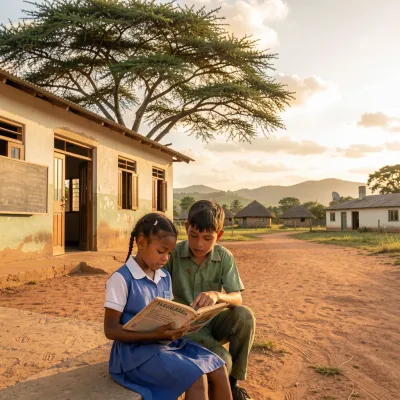
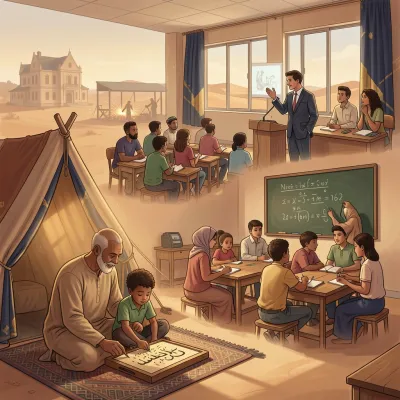
Education in Mozambique has evolved from informal indigenous learning through a colonial system designed to serve settler interests, to post‑independence efforts at universal education, and finally to a post‑civil war reconstruction phase shaped by peace accords and international aid. The Ministry of Education and Human Development (MINEDH) steers a centralized yet increasingly decentralized system, overseeing policy, curriculum, teacher training, and quality assurance while provincial and district offices implement services. Funding relies heavily on government budgets, supplemented by international donors, household contributions, and growing private‑sector involvement, yet resources remain unevenly distributed, especially between urban and rural areas.
The educational continuum faces persistent challenges: early childhood access is expanding but quality varies; primary education suffers from overcrowding, multishift schooling, teacher shortages, and language barriers as most children begin school without proficiency in Portuguese; secondary education contends with limited capacity, relevance to the labor market, and gender disparities that widen in later grades. Technical and vocational training aims to bridge skills gaps but is constrained by inadequate equipment, instructor quality, and urban bias. Higher education, though growing, struggles with limited seats, faculty shortages, research constraints, and graduate employability mismatches. Cross‑cutting issues include special‑needs inclusion, gender equity, the rural‑urban divide, multilingual instruction policies, and the impact of conflict, natural disasters, and climate change on school infrastructure and attendance.
Assessment combines continuous teacher evaluation with high‑stakes national exams that gate progression to secondary and higher education, often encouraging rote learning. Non‑formal education and adult literacy programs provide second chances for those excluded from formal schooling, while international aid has been crucial for rebuilding infrastructure, training teachers, developing curricula, and supporting emergency responses. Private providers expand choice, particularly in early childhood and urban secondary levels, but raise equity concerns. Ongoing reforms stress competency‑based learning, bilingual education in early grades, technology integration, education for sustainable development, and stronger links between training and labor‑market needs. Recommendations for the future prioritize scaling quality early childhood education, enhancing curriculum relevance, consolidating bilingual models, accelerating digital learning, aggressively addressing rural‑urban disparities, implementing inclusive education, strengthening teacher development, building disaster‑resilient systems, improving financing transparency, and embedding equity across all planning to ensure every Mozambican child can access a transformative, high‑quality learning experience.
What You'll Find Inside:
- The book traces Mozambique's educational evolution from indigenous learning systems through colonial restrictions, post-independence reforms, and post-conflict reconstruction, revealing how historical legacies shape current challenges and opportunities.
- It provides a comprehensive analysis of persistent barriers to educational access and quality, including the rural-urban divide, gender disparities, resource constraints, and the impact of conflict and natural disasters on learning environments.
- The text examines critical policy areas such as language of instruction (with emphasis on bilingual education initiatives), curriculum development and reform, and assessment systems that influence learning outcomes across all education levels.
- It highlights the pivotal role of teacher training and professional development in improving educational quality, while addressing challenges in attracting, retaining, and supporting qualified educators nationwide.
- The book explores the alignment between education and labor market needs through TVET programs, higher education relevance, and graduate employability initiatives, offering insights into skills development for economic participation.
Who's It For:
This book is an essential resource for education policymakers and government officials seeking to inform evidence-based reforms, researchers and academics studying African education systems, educators and practitioners working in Mozambican schools, and international development partners involved in education initiatives. It will also benefit students of international development, African studies, and education policy who need a comprehensive understanding of Mozambique's educational landscape.
Table of Contents:
- Introduction
- Chapter 1: Historical Context of Education in Mozambique
- Chapter 2: Educational Policy and Governance
- Chapter 3: Funding and Financing of Education
- Chapter 4: Early Childhood Education: Access and Quality
- Chapter 5: Primary Education: Curriculum and Challenges
- Chapter 6: Secondary Education: Structure and Relevance
- Chapter 7: Technical and Vocational Education and Training (TVET)
- Chapter 8: Higher Education: Institutions and Programs
- Chapter 9: Teacher Training and Professional Development
- Chapter 10: Special Needs Education and Inclusion
- Chapter 11: Gender Disparities in Education
- Chapter 12: Rural-Urban Divide in Educational Access
- Chapter 13: Language of Instruction and Multilingualism
- Chapter 14: Curriculum Development and Reform
- Chapter 15: Assessment and Examinations
- Chapter 16: Impact of Conflict and Natural Disasters on Education
- Chapter 17: Non-Formal Education and Adult Literacy
- Chapter 18: The Role of International Aid in Education
- Chapter 19: Private Sector Involvement in Education
- Chapter 20: Education for Sustainable Development
- Chapter 21: Technology and Digital Learning in Mozambique
- Chapter 22: Challenges in Educational Quality and Outcomes
- Chapter 23: Equity and Access in Mozambican Education
- Chapter 24: Graduate Employability and the Labor Market
- Chapter 25: Future Prospects and Recommendations for Educational Development
Author:
Published By:
Date Published:
June 30, 2026
Type:
Nonfiction
Language:
English
Word Count:
52,270 words
Reading Time:
3 hours 40 minutes
Sample:
Order:
Order Education In Mozambique (Hardcover) on MixCache.com:
Buy NowPrint copy is made to order and ships worldwide. Includes the ebook free, ready to read instantly.
$5 account credit for all new MixCache.com accounts, usable toward any ebook purchase!*