Browse by Category
Fiction
- Action & Adventure
- African American
- Anthologies
- Children's Fiction
- Classics
- Comics & Graphic Novels
- Coming of Age
- Contemporary
- Cultural & Regional
- Drama
- Erotica
- Fantasy
- General
- Historical Fiction
- Horror
- Humor & Satire
- Literary Fiction
- Mystery, Thriller & Suspense
- Poetry
- Religious & Inspirational
- Romance
- Science Fiction
- Short Stories
- War & Military
- Westerns
- Women's Fiction
- Young Adult
Non-Fiction
- Antiques & Collectibles
- Arts & Photography
- Biographies & Memoirs
- Business & Money
- Children's Non-Fiction
-
Computers & Technology
- Artificial Intelligence
- Computer Science
- Cybersecurity & Cryptography
- Data Science & Analytics
- Databases & Big Data
- Game Development & Design
- General
- Hardware & DIY
- Mobile App Development
- Networking & Cloud Computing
- Operating Systems
- Programming
- Robotics
- Software
- Software Engineering
- User Experience (UX) & Design
- Web Development & Design
- Cooking, Food & Wine
- Crafts, Hobbies & Home
- Education & Teaching
- Engineering
- General
- Health, Fitness & Dieting
-
History
- African History
- African History - North Africa
- African History - Sub-Saharan Africa
- American History
- American History - 20th Century
- American History - Civil War
- American History - Colonial Period
- Ancient History
- Asian History
- Asian History - China
- Asian History - India
- Asian History - Japan
- Asian History - Southeast Asia
- European History
- European History - Ancient Greece
- European History - Ancient Rome
- European History - Medieval
- European History - Modern
- European History - Renaissance
- General
- Middle Eastern History
- Military History
- Military History - Aviation
- Military History - Naval
- Social & Cultural History
- World History
- Humor & Entertainment
- Industrial Technology
- Language Learning
- Law
- LGBTQ+ Non-Fiction
- Literary Criticism
- Medical Books
- Parenting & Relationships
- Philosophy
- Politics & Social Sciences
- Reference
- Religion & Spirituality
-
Science & Math
- Agricultural Sciences
- Astronomy & Space Science
- Behavioral Sciences
- Biological Sciences
- Botany & Plant Science
- Chemistry
- Earth Sciences
- Engineering - Chemical
- Engineering - Civil
- Engineering - Electrical
- Engineering - Mechanical
- Environment
- General
- Geology
- Mathematics
- Nature & Ecology
- Oceanography
- Paleontology
- Physics
- Statistics
- Self-Help
- Sports & Outdoors
- Study Aids
- Sustainability & Green Living
- Textbooks
- Transportation
- Travel
- True Crime
- Urban Planning & Development
- Veterinary Medicine
- Writing & Publishing
Jump to Section
MixCache.com Total Access
Unlimited reading and audiobooks for every book published by MixCache.com.
Included titles carry the MTA badge.
Learn more →
Education In Mali
MTA
A Comprehensive Overview from Early Childhood to Higher Education
About this book:
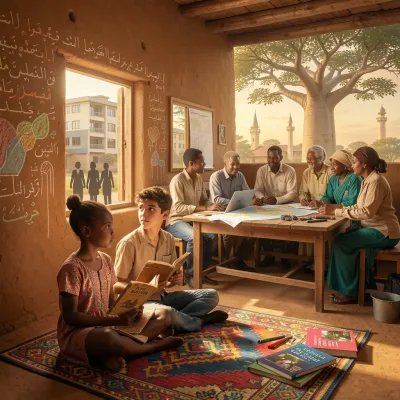
**Summary of "Education In Mali: A Comprehensive Overview from Early Childhood to Higher Education"**
This comprehensive book traces Mali's educational journey, highlighting its evolution from ancient indigenous learning systems and Islamic scholarship to the modern challenges of providing universal, quality education. The authors explore the historical foundations, including the post-independence reforms of 1962 aimed at decolonizing the curriculum, and the subsequent expansion of primary and secondary education, which has led to the current structure of a nine-year primary cycle, general and technical secondary streams, and various forms of higher education and vocational training. The book emphasizes the linguistic complexity of the system, dominated by French, while acknowledging the growing recognition of the importance of national languages in early education and the debates surrounding bilingual instruction. It also underscores the significant role of international aid in supplementing national efforts and the persistent challenges of teacher shortages, inadequate infrastructure, and socio-economic disparities that hinder equitable access.
The text then delves into the multifaceted challenges Mali faces across its educational landscape, including significant disparities in rural versus urban education, gender inequalities that disproportionately affect girls, especially in secondary and higher education, and the devastating impact of ongoing conflict in certain regions, which has led to school closures, displacement, and attacks on educational infrastructure. The book discusses innovative strategies and programs aimed at overcoming these obstacles, such as community-based schools that empower local ownership, targeted initiatives for girls' education that combine scholarships with improved infrastructure and awareness campaigns, and the integration of technology in classrooms to expand access and enhance learning. It also addresses the critical importance of non-formal education and adult literacy programs in reaching those marginalized by the formal system and the efforts to align vocational training with labor market demands to improve youth employability.
Furthermore, the book examines the crucial roles of educational financing, highlighting the reliance on both national budgets and international partners, the ongoing reforms in curriculum development to make learning more relevant, and the emphasis on strengthening teacher training and professional development to improve instructional quality. It explores the complexities of educational governance, including the process of decentralization to bring decision-making closer to communities and the vital contributions of School Management Committees. The text also touches on the integration of digital tools and the debate over using national languages in instruction, emphasizing the need for context-appropriate solutions and sustained investment to overcome long-standing systemic issues and build a resilient, inclusive, and adaptive educational system for all Malian citizens.
Finally, the book presents case studies of successful educational initiatives in Mali, illustrating how community engagement, targeted support, and strategic partnerships have yielded positive outcomes. These examples, such as the community school model, girls' education projects, and technology-driven programs, demonstrate the potential for overcoming barriers when interventions are well-designed and context-sensitive. The authors conclude by emphasizing that while the challenges are formidable, the documented successes and ongoing reforms provide a roadmap for continued progress, advocating for sustained commitment and innovative thinking to ensure that Mali's educational system effectively prepares its youth for the demands of the future.
What You'll Find Inside:
- Historical evolution of Malian education from indigenous traditions and Islamic scholarship through colonial reforms to post-independence initiatives
- Structure of Mali's educational system across pre-school, primary, secondary (general/technical), and higher education levels
- Analysis of access and quality challenges in rural education including geographical barriers, teacher shortages, and curriculum relevance
- Examination of gender disparities in education with focus on socio-cultural barriers, economic factors, and strategies for promoting girls' education
- Assessment of international aid's role in Malian education covering forms of support, impact, challenges, and maximization strategies
Who's It For:
This book is designed for policymakers, researchers, educators, and development practitioners working in or on Mali's education sector. It provides essential insights for those seeking to understand the historical context, current structure, and ongoing challenges of Mali's educational system to inform effective interventions and policy decisions.
Table of Contents:
- Introduction
- Chapter 1: Historical Foundations of Malian Education
- Chapter 2: The Structure of the Malian Educational System
- Chapter 3: Early Childhood Education: Access and Quality
- Chapter 4: Primary Education: Enrollment, Retention, and Completion
- Chapter 5: Curriculum Development in Primary Schools
- Chapter 6: Secondary Education: General and Technical Streams
- Chapter 7: Vocational Training and Skill Development
- Chapter 8: Higher Education Institutions in Mali
- Chapter 9: Access and Equity in Higher Education
- Chapter 10: Quality Assurance in Malian Higher Education
- Chapter 11: Teacher Training and Professional Development
- Chapter 12: Educational Financing and Budget Allocation
- Chapter 13: The Role of International Aid in Malian Education
- Chapter 14: Challenges and Opportunities in Rural Education
- Chapter 15: Gender Disparities in Education
- Chapter 16: Education for Children with Special Needs
- Chapter 17: The Impact of Conflict on Education
- Chapter 18: Integrating Technology in Malian Classrooms
- Chapter 19: Language of Instruction Debates and Policies
- Chapter 20: Non-Formal Education and Adult Literacy Programs
- Chapter 21: Education and Employment: Bridging the Gap
- Chapter 22: Decentralization and Educational Governance
- Chapter 23: Community Participation in School Management
- Chapter 24: Educational Reforms and Future Directions
- Chapter 25: Case Studies of Successful Educational Initiatives in Mali
Author:
Published By:
Date Published:
June 29, 2026
Type:
Nonfiction
Language:
English
Word Count:
55,585 words
Reading Time:
3 hours 54 minutes
Sample:
Order:
Order Education In Mali (Hardcover) on MixCache.com:
Buy NowPrint copy is made to order and ships worldwide. Includes the ebook free, ready to read instantly.
$5 account credit for all new MixCache.com accounts, usable toward any ebook purchase!*