Browse by Category
Fiction
- Action & Adventure
- African American
- Anthologies
- Children's Fiction
- Classics
- Comics & Graphic Novels
- Coming of Age
- Contemporary
- Cultural & Regional
- Drama
- Erotica
- Fantasy
- General
- Historical Fiction
- Horror
- Humor & Satire
- Literary Fiction
- Mystery, Thriller & Suspense
- Poetry
- Religious & Inspirational
- Romance
- Science Fiction
- Short Stories
- War & Military
- Westerns
- Women's Fiction
- Young Adult
Non-Fiction
- Antiques & Collectibles
- Arts & Photography
- Biographies & Memoirs
- Business & Money
- Children's Non-Fiction
-
Computers & Technology
- Artificial Intelligence
- Computer Science
- Cybersecurity & Cryptography
- Data Science & Analytics
- Databases & Big Data
- Game Development & Design
- General
- Hardware & DIY
- Mobile App Development
- Networking & Cloud Computing
- Operating Systems
- Programming
- Robotics
- Software
- Software Engineering
- User Experience (UX) & Design
- Web Development & Design
- Cooking, Food & Wine
- Crafts, Hobbies & Home
- Education & Teaching
- Engineering
- General
- Health, Fitness & Dieting
-
History
- African History
- African History - North Africa
- African History - Sub-Saharan Africa
- American History
- American History - 20th Century
- American History - Civil War
- American History - Colonial Period
- Ancient History
- Asian History
- Asian History - China
- Asian History - India
- Asian History - Japan
- Asian History - Southeast Asia
- European History
- European History - Ancient Greece
- European History - Ancient Rome
- European History - Medieval
- European History - Modern
- European History - Renaissance
- General
- Middle Eastern History
- Military History
- Military History - Aviation
- Military History - Naval
- Social & Cultural History
- World History
- Humor & Entertainment
- Industrial Technology
- Language Learning
- Law
- LGBTQ+ Non-Fiction
- Literary Criticism
- Medical Books
- Parenting & Relationships
- Philosophy
- Politics & Social Sciences
- Reference
- Religion & Spirituality
-
Science & Math
- Agricultural Sciences
- Astronomy & Space Science
- Behavioral Sciences
- Biological Sciences
- Botany & Plant Science
- Chemistry
- Earth Sciences
- Engineering - Chemical
- Engineering - Civil
- Engineering - Electrical
- Engineering - Mechanical
- Environment
- General
- Geology
- Mathematics
- Nature & Ecology
- Oceanography
- Paleontology
- Physics
- Statistics
- Self-Help
- Sports & Outdoors
- Study Aids
- Sustainability & Green Living
- Textbooks
- Transportation
- Travel
- True Crime
- Urban Planning & Development
- Veterinary Medicine
- Writing & Publishing
Jump to Section

Want unlimited access to all books published by MixCache.com (plus their audiobooks)? Try MixCache.com Total Access. Look for the MTA badge on book covers to identify included titles.
Access to infinite ebooks: Don't see the book you want? Suggest it and we'll create it (free!) for you from scratch with our powerful AI book writer. Then read it with MTA - besides profiting from any sales it makes!
The Provincial Atlas of China: Histories by Region
MTA
A cartographic tour of provincial transformations with one province per chapter
About this book:
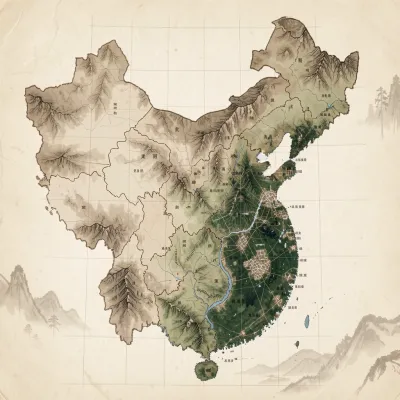
**Summary of *The Provincial Atlas of China: Histories by Region***
This atlas offers a comprehensive geographical and historical survey of China’s provincial transformations, structured through 24 chapters each dedicated to a distinct region. By pairing original maps, timelines, and narratives, the book traces how administrative boundaries, trade routes, and population shifts have evolved, emphasizing the interplay between natural constraints—such as rivers, mountains, and deserts—and human decisions like reforms, wars, and infrastructure projects. Each chapter follows a consistent format, using cartographic evidence to connect local developments to broader regional and global dynamics, highlighting provinces as dynamic nodes in systems of migration, commerce, and cultural exchange. The work underscores the importance of provincial-level units in governance, taxation, and identity, while acknowledging the fluidity of historical boundaries and the need to address often-competing cartographies.
Geographically, the provinces span China’s diverse landscapes: coastal areas like Fujian and Guangdong thrive on maritime trade and diaspora networks; frontier regions such as Xinjiang and Gansu reflect the legacy of the Silk Road and strategic borderlands; riverine provinces like Hunan and Hubei are shaped by the Yangtze and Huai River systems; and mountainous regions like Guizhou and Yunnan showcase ethnic diversity and adaptation to challenging terrains. Historical themes include the rise and fall of capitals (e.g., Shaanxi’s Chang’an), the impact of migrations (e.g., “Chuang Guandong” in Northeast China), and the role of trade routes like the Grand Canal and Maritime Silk Road. Cultural identities are deeply rooted in local customs, minority traditions, and global connections, with provinces like Anhui and Jiangxi preserving artistic legacies tied to their histories.
Modern transformations are central to the analysis, particularly China’s reform and opening-up policies, which reshaped coastal provinces like Guangdong into global manufacturing hubs and turned Hainan into a free-trade zone. The Belt and Road Initiative reinvigorates regions like Xinjiang and Gansu as economic corridors, while provinces such as Shaanxi and Sichuan balance agricultural heritage with emerging high-tech industries. Infrastructure projects—such as high-speed rail networks, dam construction, and urbanization—reflect ongoing efforts to integrate remote areas like Qinghai and Yunnan into national systems. Environmental challenges, from desertification in Inner Mongolia to the Three Gorges Dam’s impacts in Hubei, highlight the complexities of sustainable development.
The atlas ultimately presents China’s provinces as living archives of resilience, adaptation, and interconnectedness. By juxtaposing historical depth with contemporary shifts, it reveals how regions have navigated natural and political adversities while contributing to the nation’s economic and cultural fabric. The narratives underscore the enduring legacy of geography in shaping human endeavor, offering insights into how provinces like Hebei, tied to capital regions, and Zhejiang, driven by entrepreneurship, exemplify the diverse paths of China’s modernization. The work serves as both a scholarly resource and a lens for understanding the nation’s evolving identity through its regional mosaic.
What You'll Find Inside:
- Explores the unique historical and geographical identity of each Chinese province, highlighting how natural features, trade routes, and administrative changes shaped regional development and cultural diversity.
- Uses maps, timelines, and narratives to analyze the interplay between human activity and environment, from ancient Silk Road corridors to modern industrial transformation and ethnic mosaic.
- Examines the role of key provinces in pivotal national events, including the Communist Revolution, economic reforms, and geopolitical strategies like the Belt and Road Initiative.
- Highlights the cultural, economic, and social transformations of regions like the Pearl River Delta, Xinjiang, and Yunnan, showcasing their evolution from ancient frontiers to modern hubs.
- Integrates historical data, archaeological evidence, and modern statistical insights to provide a comprehensive view of China's provincial diversity and its ongoing impact on national and global processes.
Who's It For:
This book is ideal for students, educators, researchers, and travelers seeking a nuanced understanding of China's regional histories and transformations. It caters to those interested in geography, history, political science, and cultural studies, offering insights into how administrative, environmental, and social factors have shaped each province. The book is particularly valuable for readers focused on East Asian studies, urban planning, or global trade dynamics, as it bridges historical analysis with contemporary development strategies.
Author:
Published By:
Date Published:
June 11, 2026
Type:
Nonfiction
Language:
English
Word Count:
47,031 words
Reading Time:
3 hours 18 minutes
Sample:
Order:
Order The Provincial Atlas of China: Histories by Region (Paperback) on MixCache.com:
Buy NowPrint copy is made to order and ships worldwide. Includes the ebook free, ready to read instantly.
$5 account credit for all new MixCache.com accounts, usable toward any ebook purchase!*