
Browse by Category
Fiction
- Action & Adventure
- African American
- Anthologies
- Children's Fiction
- Classics
- Comics & Graphic Novels
- Coming of Age
- Contemporary
- Cultural & Regional
- Drama
- Erotica
- Fantasy
- General
- Historical Fiction
- Horror
- Humor & Satire
- Literary Fiction
- Mystery, Thriller & Suspense
- Poetry
- Religious & Inspirational
- Romance
- Science Fiction
- Short Stories
- War & Military
- Westerns
- Women's Fiction
- Young Adult
Non-Fiction
- Antiques & Collectibles
- Arts & Photography
- Biographies & Memoirs
- Business & Money
- Children's Non-Fiction
-
Computers & Technology
- Artificial Intelligence
- Computer Science
- Cybersecurity & Cryptography
- Data Science & Analytics
- Databases & Big Data
- Game Development & Design
- General
- Hardware & DIY
- Mobile App Development
- Networking & Cloud Computing
- Operating Systems
- Programming
- Robotics
- Software
- Software Engineering
- User Experience (UX) & Design
- Web Development & Design
- Cooking, Food & Wine
- Crafts, Hobbies & Home
- Education & Teaching
- Engineering
- General
- Health, Fitness & Dieting
-
History
- African History
- African History - North Africa
- African History - Sub-Saharan Africa
- American History
- American History - 20th Century
- American History - Civil War
- American History - Colonial Period
- Ancient History
- Asian History
- Asian History - China
- Asian History - India
- Asian History - Japan
- Asian History - Southeast Asia
- European History
- European History - Ancient Greece
- European History - Ancient Rome
- European History - Medieval
- European History - Modern
- European History - Renaissance
- General
- Middle Eastern History
- Military History
- Military History - Aviation
- Military History - Naval
- Social & Cultural History
- World History
- Humor & Entertainment
- Industrial Technology
- Language Learning
- Law
- LGBTQ+ Non-Fiction
- Literary Criticism
- Medical Books
- Parenting & Relationships
- Philosophy
- Politics & Social Sciences
- Reference
- Religion & Spirituality
-
Science & Math
- Agricultural Sciences
- Astronomy & Space Science
- Behavioral Sciences
- Biological Sciences
- Botany & Plant Science
- Chemistry
- Earth Sciences
- Engineering - Chemical
- Engineering - Civil
- Engineering - Electrical
- Engineering - Mechanical
- Environment
- General
- Geology
- Mathematics
- Nature & Ecology
- Oceanography
- Paleontology
- Physics
- Statistics
- Self-Help
- Sports & Outdoors
- Study Aids
- Sustainability & Green Living
- Textbooks
- Transportation
- Travel
- True Crime
- Urban Planning & Development
- Veterinary Medicine
- Writing & Publishing
Jump to Section

Want unlimited access to all books published by MixCache.com (plus their audiobooks)? Try MixCache.com Total Access. Look for the MTA badge on book covers to identify included titles.
Access to infinite ebooks: Don't see the book you want? Suggest it and we'll create it (free!) for you from scratch with our powerful AI book writer. Then read it with MTA - besides profiting from any sales it makes!
Rising from Rubble: Warsaw’s Reconstruction, Memory, and Modern Identity
MTA
Postwar rebuilding, memory politics, and urban renewal in Poland’s capital
About this book:
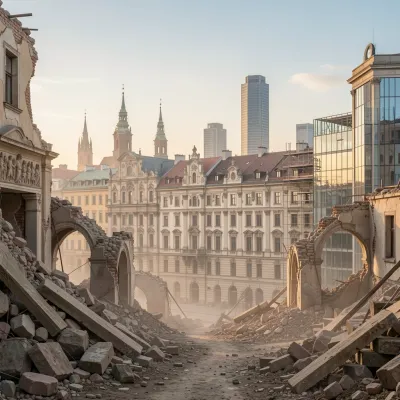
Warsaw’s reconstruction after near-total WWII destruction was a monumental act of political will and urban ingenuity. The Bureau for the Reconstruction of the Capital (BOS) meticulously rebuilt the Old Town based on historical documentation to restore national identity, while simultaneously implementing modernist principles for new housing estates and infrastructure. This dual approach created a city layered with memory: the meticulously reconstructed Old Town as a symbol of resilience stood alongside socialist realist monuments like the Palace of Culture, which embodied Soviet ideological dominance. The reconstruction was inherently political, shaping how the city commemorated heroism, suppressed Jewish heritage in the former Ghetto, and forged a socialist identity through urban form.
The process raised profound ethical dilemmas that continue to resonate. Debates over authenticity pitted meticulous historical reconstruction against modernist efficiency, forcing a reevaluation of UNESCO heritage principles. The nationalization of land under the Bierut Decree to enable rebuilding created a legacy of injustice, leading to complex, often contentious, post-1989 property restitution that pit former owners against current residents. Memory politics were selective: memorials celebrated Polish resistance while downplaying complicity, and the Jewish experience was largely erased from the urban fabric until recent decades, highlighting how reconstruction serves as a tool for national narrative-building.
Today, Warsaw grapples with the tensions and legacies of its past reconstruction. The socialist-era housing stock requires retrofitting for energy efficiency and climate resilience, while the skyline is transformed by market-driven high-rises that challenge the city’s historical scale. The digital twin and GIS technology offer new ways to map and engage with the city’s layered history, but also raise questions about equitable access. Ongoing debates over monuments—such as the Palace of Culture—reflect unresolved struggles with identity, memory, and the ethics of urban development in a globalized Europe. Warsaw’s journey from rubble to a complex, multi-layered capital remains a vital case study in how cities rebuild not just structures, but collective memory and identity, forever balancing its traumatic past with an uncertain future.
What You'll Find Inside:
- Warsaw's reconstruction was shaped by the interplay of political ideology, aesthetic choices, and technological innovation, revealing how urban rebuilding is never merely technical but deeply political and cultural.
- The book examines the intense debate over historical authenticity versus modernist vision, particularly in the meticulous reconstruction of Warsaw's Old Town versus modernist housing estates.
- It explores how Warsaw's Jewish heritage was largely erased from the official reconstruction narrative, creating a profound absence that later generations have worked to address.
- The text traces Warsaw's evolution from socialist monumentalism through market transition to contemporary challenges like climate resilience and digital urbanism.
- Warsaw serves as a global case study for understanding the ethics of reconstruction, memory politics, and how cities balance preservation with progress after catastrophic destruction.
Who's It For:
This book is essential reading for urban historians, planners, and policymakers interested in post-conflict reconstruction and heritage preservation. It will particularly benefit those studying how ideology shapes urban space, the politics of memory in cityscapes, and the long-term ethical challenges of rebuilding after destruction. Anyone concerned with how cities navigate between historical authenticity and modern development will find Warsaw's case both instructive and profoundly relevant.
Author:
Published By:
Date Published:
June 9, 2026
Type:
Nonfiction
Language:
English
Word Count:
45,560 words
Reading Time:
3 hours 11 minutes
Sample:
MixCache.com Total Access
Get unlimited access to this book + all books published by MixCache.com for $11.99/month
Subscribe to MTAOr purchase this book individually below
Order:
Buy the Rising from Rubble: Warsaw’s Reconstruction, Memory, and Modern Identity ebook on MixCache.com:
Buy Now
Full ebook will be available immediately
- read online or download as a PDF file.
$5 account credit for all new MixCache.com accounts, usable toward any ebook purchase!*

 Includes Audiobook


Ratings & Reviews
Ask Questions About This Book
Have a question about the content? Ask our AI assistant!
Start by asking a question about "Rising from Rubble: Warsaw’s Reconstruction, Memory, and Modern Identity"
Example: "Does this book mention William Shakespeare?"
Thinking...