Browse by Category
Fiction
- Action & Adventure
- African American
- Anthologies
- Children's Fiction
- Classics
- Comics & Graphic Novels
- Coming of Age
- Contemporary
- Cultural & Regional
- Drama
- Erotica
- Fantasy
- General
- Historical Fiction
- Horror
- Humor & Satire
- Literary Fiction
- Mystery, Thriller & Suspense
- Poetry
- Religious & Inspirational
- Romance
- Science Fiction
- Short Stories
- War & Military
- Westerns
- Women's Fiction
- Young Adult
Non-Fiction
- Antiques & Collectibles
- Arts & Photography
- Biographies & Memoirs
- Business & Money
- Children's Non-Fiction
-
Computers & Technology
- Artificial Intelligence
- Computer Science
- Cybersecurity & Cryptography
- Data Science & Analytics
- Databases & Big Data
- Game Development & Design
- General
- Hardware & DIY
- Mobile App Development
- Networking & Cloud Computing
- Operating Systems
- Programming
- Robotics
- Software
- Software Engineering
- User Experience (UX) & Design
- Web Development & Design
- Cooking, Food & Wine
- Crafts, Hobbies & Home
- Education & Teaching
- Engineering
- General
- Health, Fitness & Dieting
-
History
- African History
- African History - North Africa
- African History - Sub-Saharan Africa
- American History
- American History - 20th Century
- American History - Civil War
- American History - Colonial Period
- Ancient History
- Asian History
- Asian History - China
- Asian History - India
- Asian History - Japan
- Asian History - Southeast Asia
- European History
- European History - Ancient Greece
- European History - Ancient Rome
- European History - Medieval
- European History - Modern
- European History - Renaissance
- General
- Middle Eastern History
- Military History
- Military History - Aviation
- Military History - Naval
- Social & Cultural History
- World History
- Humor & Entertainment
- Industrial Technology
- Language Learning
- Law
- LGBTQ+ Non-Fiction
- Literary Criticism
- Medical Books
- Parenting & Relationships
- Philosophy
- Politics & Social Sciences
- Reference
- Religion & Spirituality
-
Science & Math
- Agricultural Sciences
- Astronomy & Space Science
- Behavioral Sciences
- Biological Sciences
- Botany & Plant Science
- Chemistry
- Earth Sciences
- Engineering - Chemical
- Engineering - Civil
- Engineering - Electrical
- Engineering - Mechanical
- Environment
- General
- Geology
- Mathematics
- Nature & Ecology
- Oceanography
- Paleontology
- Physics
- Statistics
- Self-Help
- Sports & Outdoors
- Study Aids
- Sustainability & Green Living
- Textbooks
- Transportation
- Travel
- True Crime
- Urban Planning & Development
- Veterinary Medicine
- Writing & Publishing
Jump to Section
MixCache.com Total Access
Unlimited reading and audiobooks for every book published by MixCache.com.
Included titles carry the MTA badge.
Learn more →
Sacred Spaces of New Delhi
MTA
Temples, mosques, gurudwaras, and synagogues as living heritage sites
About this book:
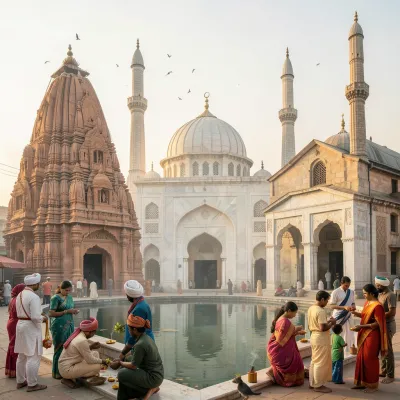
Sacred Spaces of New Delhi presents the city’s religious landscape as a living tapestry woven from centuries of Hindu, Muslim, Sikh, Jain, Buddhist, Baháʼí, and Jewish traditions. The book opens by framing temples, mosques, gurudwaras, and synagogues not merely as monuments but as active sites where daily rituals of greeting, cleansing, covering the head, and removing shoes shape communal life. It emphasizes a respectful, guest‑like approach, offering practical guidance on dress, timing, photography, and participation while stressing that each tradition’s protocols serve as conversation starters with caretakers rather than rigid rules.
The work then surveys Delhi’s sacred geography in detail: the imperial Mughal mosques of Jama Masjid and Fatehpuri Masjid; the austere Sultanate‑era village mosques such as Khirki and Begumpur; the Sufi dargahs of Hazrat Nizamuddin Auliya, Qutbuddin Bakhtiar Kaki, and Chirag‑e‑Delhi, centers of qawwali and Urs festivals; Sikh gurudwaras like Bangla Sahib, Sis Ganj Sahib, Rakab Ganj Sahib, and Majnu Ka Tilla, highlighting the institutions of langar, kirtan, and seva; Hindu temples ranging from ancient Kali and Yogmaya shrines to modern complexes like Birla Mandir, Akshardham, and Chhatarpur, with attention to goddess worship, aarti, and prasad; the Digambar Jain Lal Mandir and its Birds’ Charity Hospital embodying ahimsa; the Baháʼí Lotus Temple as a house of quiet contemplation for all faiths; and the Judah Hyam Synagogue preserving Delhi’s Jewish memory. Throughout, chapters explore architectural evolution—from red sandstone and quartzite to marble, glass, and steel—and the ways materials, layouts, and ornamentation reflect theological and historical narratives.
Beyond description, the book delves into the living practices that sustain these spaces: etiquette around head coverings, shoe removal, gendered spaces, and modest dress; soundscapes of azaan, aarti, kirtan, qawwali, and intentional silence; food as offering through prasad, langar, Sufi community meals, and Shabbat kiddush; ritual calendars marking Urs, Navratri, Gurpurabs, Shabbat, and Eid; interfaith dialogues, heritage walks, and school programs that foster shared learning; and the vital role of community custodians—neighborhood committees, trusts, and NGOs—in conservation, ritual preservation, and social welfare. It concludes with practical itineraries and an invitation to move through Delhi as a respectful student, allowing sound, scent, and sincere engagement to reveal the city’s profound spiritual continuity.
What You'll Find Inside:
- Practical guidance on respectful visitation protocols across Hindu, Muslim, Sikh, Jain, Baháʼí, and Jewish sacred sites in Delhi, including dress codes, shoe removal, head covering, timing, and photography etiquette.
- Exploration of Delhi's living sacred heritage through architectural analysis, historical context, and community practices that reveal how faith is actively practiced in temples, mosques, gurudwaras, dargahs, and synagogues.
- Insight into interfaith opportunities including shared festivals (Phoolwalon Ki Sair), community meals (langar), educational walks, and dialogue programs that demonstrate Delhi's pluralistic spirit.
- Understanding of ritual calendars and soundscapes that animate sacred spaces - from Urs and Navratri celebrations to azaan, aarti, kirtan, and intentional quiet in places like the Lotus Temple.
- Recognition of community custodianship that sustains these sites through volunteer seva, conservation efforts, and intergenerational transmission of traditions.
Who's It For:
This book is designed for visitors to New Delhi seeking to engage respectfully with the city's rich tapestry of sacred spaces, as well as residents looking to deepen their understanding of their own religious heritage and that of others. It will particularly benefit students of religion, architecture, or urban studies; interfaith practitioners; cultural tourists; and anyone interested in learning about living heritage through practical guidance on protocols, history, and community engagement. The book serves as both a practical guide and an invitation to experience Delhi's sacred spaces as vibrant centers of faith, community, and shared human values.
Table of Contents:
- Introduction
- Chapter 1 The City of Many Faiths: A Sacred Cartography of New Delhi
- Chapter 2 Ways of Welcome: Etiquette and Access Protocols Across Traditions
- Chapter 3 Stone and Story: Reading Delhi’s Religious Architecture
- Chapter 4 Old Delhi’s Grand Mosques: Jama Masjid and Fatehpuri Masjid
- Chapter 5 Village Mosques of the Sultanate: Khirki, Begumpur, and Beyond
- Chapter 6 At the Heart of Sufism: The Dargah of Hazrat Nizamuddin Auliya
- Chapter 7 Saints of the Southern Ridge: Mehrauli and Chirag Delhi Dargahs
- Chapter 8 Sikh Delhi: Gurudwara Bangla Sahib and the Practice of Seva
- Chapter 9 Martyrs and Memory: Sis Ganj Sahib and Rakab Ganj Sahib
- Chapter 10 Rivers and Refuge: Majnu Ka Tilla Gurudwara and Yamuna Traditions
- Chapter 11 Temples of the Goddess: Kalkaji Mandir and Chhatarpur
- Chapter 12 Modern Devotion: Birla Mandir and the Akshardham Complex
- Chapter 13 Ancient Echoes: Yogmaya, Bhairon, and Other Old Shrines
- Chapter 14 The Temple in the Market: Hanuman Mandir and Everyday Piety
- Chapter 15 Jain Heritage in Shahjahanabad: Digambar Jain Lal Mandir and the Birds’ Charity Hospital
- Chapter 16 A House of Many: The Lotus Temple and the Ethics of Quiet
- Chapter 17 Delhi’s Only Synagogue: Judah Hyam and the City’s Jewish Memory
- Chapter 18 Ritual Calendars: Urs, Navratri, Langar, Shabbat, and Eid
- Chapter 19 Soundscapes of Devotion: Azaan, Aarti, Kirtan, and Silence
- Chapter 20 Gender, Dress, and Space: Navigating Sacred Boundaries
- Chapter 21 Food as Offering: Prasad, Langar, Sufi Kitchens, and Community Meals
- Chapter 22 Photography, Conservation, and Consent: Visiting with Care
- Chapter 23 Learning Together: Interfaith Dialogues, Walks, and School Programs
- Chapter 24 Community Custodians: Neighborhood Committees and Heritage NGOs
- Chapter 25 Beyond the Monument: Planning Your Own Sacred Delhi Itinerary
Author:
Published By:
Date Published:
June 5, 2026
Type:
Nonfiction
Language:
English
Word Count:
44,716 words
Reading Time:
3 hours 8 minutes
Sample:
Order:
Order Sacred Spaces of New Delhi (Hardcover) on MixCache.com:
Buy NowPrint copy is made to order and ships worldwide. Includes the ebook free, ready to read instantly.
$5 account credit for all new MixCache.com accounts, usable toward any ebook purchase!*