Browse by Category
Fiction
- Action & Adventure
- African American
- Anthologies
- Children's Fiction
- Classics
- Comics & Graphic Novels
- Coming of Age
- Contemporary
- Cultural & Regional
- Drama
- Erotica
- Fantasy
- General
- Historical Fiction
- Horror
- Humor & Satire
- Literary Fiction
- Mystery, Thriller & Suspense
- Poetry
- Religious & Inspirational
- Romance
- Science Fiction
- Short Stories
- War & Military
- Westerns
- Women's Fiction
- Young Adult
Non-Fiction
- Antiques & Collectibles
- Arts & Photography
- Biographies & Memoirs
- Business & Money
- Children's Non-Fiction
-
Computers & Technology
- Artificial Intelligence
- Computer Science
- Cybersecurity & Cryptography
- Data Science & Analytics
- Databases & Big Data
- Game Development & Design
- General
- Hardware & DIY
- Mobile App Development
- Networking & Cloud Computing
- Operating Systems
- Programming
- Robotics
- Software
- Software Engineering
- User Experience (UX) & Design
- Web Development & Design
- Cooking, Food & Wine
- Crafts, Hobbies & Home
- Education & Teaching
- Engineering
- General
- Health, Fitness & Dieting
-
History
- African History
- African History - North Africa
- African History - Sub-Saharan Africa
- American History
- American History - 20th Century
- American History - Civil War
- American History - Colonial Period
- Ancient History
- Asian History
- Asian History - China
- Asian History - India
- Asian History - Japan
- Asian History - Southeast Asia
- European History
- European History - Ancient Greece
- European History - Ancient Rome
- European History - Medieval
- European History - Modern
- European History - Renaissance
- General
- Middle Eastern History
- Military History
- Military History - Aviation
- Military History - Naval
- Social & Cultural History
- World History
- Humor & Entertainment
- Industrial Technology
- Language Learning
- Law
- LGBTQ+ Non-Fiction
- Literary Criticism
- Medical Books
- Parenting & Relationships
- Philosophy
- Politics & Social Sciences
- Reference
- Religion & Spirituality
-
Science & Math
- Agricultural Sciences
- Astronomy & Space Science
- Behavioral Sciences
- Biological Sciences
- Botany & Plant Science
- Chemistry
- Earth Sciences
- Engineering - Chemical
- Engineering - Civil
- Engineering - Electrical
- Engineering - Mechanical
- Environment
- General
- Geology
- Mathematics
- Nature & Ecology
- Oceanography
- Paleontology
- Physics
- Statistics
- Self-Help
- Sports & Outdoors
- Study Aids
- Sustainability & Green Living
- Textbooks
- Transportation
- Travel
- True Crime
- Urban Planning & Development
- Veterinary Medicine
- Writing & Publishing
Jump to Section
MixCache.com Total Access
Unlimited reading and audiobooks for every book published by MixCache.com.
Included titles carry the MTA badge.
Learn more →A History of Mesopotamia MTA
About this book:
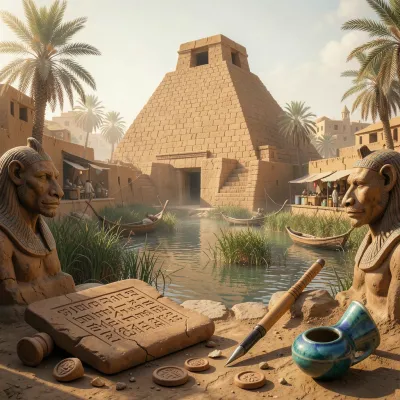
A History of Mesopotamia traces the development of civilization in the land between the Tigris and Euphrates rivers from its earliest Neolithic settlements through the early Islamic period. The book establishes the rivers' dual role as both life-giving sources of fertile silt and unpredictable forces requiring large-scale irrigation management, which drove social organization, technological innovation, and the rise of complex societies. Beginning with the Ubaid period's pioneering canal systems and temple-centered villages, it follows the Uruk explosion that birthed the world's first true cities, complete with monumental architecture, proto-cuneiform accounting, and administrative bureaucracies. The narrative then details how Early Dynastic Sumerian city-states like Ur and Lagash competed for resources while developing sophisticated legal, religious, and artistic traditions, setting the stage for imperial unification.
The work chronicles Mesopotamia's cyclical pattern of empire-building and collapse, starting with Sargon of Akkad's creation of the first true empire around 2334 BCE, which introduced standing armies, centralized administration, and linguistic Akkadian dominance. It examines the Third Dynasty of Ur's Neo-Sumerian renaissance, highlighted by Ur-Namma's law code and Shulgi's administrative reforms, before detailing Old Babylonian supremacy under Hammurabi, whose famous code systematized law with principles like lex talionis while elevating Marduk as the chief deity. Subsequent chapters explore the Kassite period's cultural continuity, the Middle Assyrian emergence, the Neo-Assyrian Empire's iron-powered machinery of terror and deportation, and the Neo-Babylonian revival under Nebuchadnezzar II, featuring monumental projects like the Ishtar Gate and Etemenanki ziggurat alongside advances in astronomy and mathematics.
The narrative continues through Mesopotamia's transformation into a contested frontier and imperial province: first under Achaemenid Persian rule, which preserved local institutions while integrating the region into a vast multicultural empire; then the Hellenistic Seleucid era that founded cities like Seleucia on the Tigris and fostered Greek-Mesopotamian cultural synthesis; followed by centuries as a buffer zone between Parthian and Roman powers, where Aramaic became the lingua franca and trade flourished; and finally the Sasanian period, which made Mesopotamia the heartland of a Zoroastrian-promoting empire locked in chronic conflict with Byzantium. The book concludes with the early Islamic transformation, detailing how the Rashidun conquests established garrison cities like Kufa and Basra, how Arabic gradually supplanted Aramaic, and how Baghdad's founding in 762 CE made Mesopotamia the new center of the Islamic caliphate, absorbing and transforming the region's vast intellectual heritage while marking the end of ancient Mesopotamian cultural continuity as a living tradition. Throughout, the text emphasizes Mesopotamia's foundational contributions to writing, law, urbanization, science, and imperial administration that shaped subsequent world civilizations.
What You'll Find Inside:
- Mesopotamian civilization arose from the need to manage the Tigris and Euphrates rivers through large-scale irrigation, which enabled surplus agriculture and urban growth.
- The invention of cuneiform writing in Uruk transformed administration, law, and scholarship, creating the first enduring record of human thought and transactions.
- Successive powers—Akkadian, Ur III, Assyrian, Babylonian, Persian, Hellenistic, Parthian, Sasanian, and Islamic—each left distinct political, cultural, and technological imprints on the region.
- Legal innovations such as the Code of Ur-Namma and Hammurabi’s Code established early concepts of justice, property rights, and social hierarchy that influenced later legal traditions.
- Mesopotamian achievements in literature (e.g., the Epic of Gilgamesh), science (mathematics, astronomy, medicine), and art (cylinder seals, ziggurats, glazed brickwork) laid foundations for later world civilizations.
Who's It For:
This book is ideal for undergraduate and graduate students of ancient history, archaeology, or Near Eastern studies seeking a comprehensive, up-to-date overview of Mesopotamian civilization. It also appeals to general readers with an interest in the origins of writing, law, empire, and cultural heritage, as well as to professionals looking for a synthesized reference that integrates archaeological, textual, and environmental evidence.
Table of Contents:
- Introduction
- Chapter 1 The Tigris and Euphrates: Geography, Climate, and Ecology
- Chapter 2 From Village to Temple: The Ubaid Period
- Chapter 3 The First Cities: The Uruk Expansion
- Chapter 4 Writing and Administration: The Birth of Cuneiform
- Chapter 5 City-States of Early Dynastic Sumer
- Chapter 6 Gods, Temples, and Ziggurats: Religion and Ritual
- Chapter 7 Royal Power and Warfare: The Sumerian King List and Beyond
- Chapter 8 Sargon and the Akkadian Empire
- Chapter 9 Collapse and Renewal: The Gutians and the Third Dynasty of Ur
- Chapter 10 Law and Society: From Ur-Namma to Hammurabi
- Chapter 11 The Old Babylonian World
- Chapter 12 Trade, Economy, and Irrigation: Managing Abundance
- Chapter 13 Science and Scholarship: Mathematics, Medicine, and Astronomy
- Chapter 14 Art, Literature, and Myth: From Enheduanna to Gilgamesh
- Chapter 15 Kassites, Mitanni, and Hittites: A Changing Bronze Age
- Chapter 16 Assyria Ascendant: The Middle Assyrian Period
- Chapter 17 Empire of Iron: The Neo-Assyrian State
- Chapter 18 Babylon Revived: The Neo-Babylonian Dynasty
- Chapter 19 Conquest and Continuity: Achaemenid Rule in Mesopotamia
- Chapter 20 Cities and Cultures in the Hellenistic Age
- Chapter 21 Parthians, Romans, and the Space Between Empires
- Chapter 22 Sasanian Mesopotamia: Power, Faith, and Frontiers
- Chapter 23 From Ctesiphon to Kufa: The Early Islamic Transformation
- Chapter 24 Landscapes of Memory: Archaeology and the Rediscovery of Mesopotamia
- Chapter 25 Afterlives: Mesopotamia’s Legacy in Law, Language, and Learning
Author:
Published By:
Date Published:
May 25, 2026
Type:
Nonfiction
Language:
English
Word Count:
41,973 words
Reading Time:
2 hours 56 minutes
Sample:
Order:
Order A History of Mesopotamia (Hardcover) on MixCache.com:
Buy NowPrint copy is made to order and ships worldwide. Includes the ebook free, ready to read instantly.
$5 account credit for all new MixCache.com accounts, usable toward any ebook purchase!*