
Browse by Category
Fiction
- Action & Adventure
- African American
- Anthologies
- Children's Fiction
- Classics
- Comics & Graphic Novels
- Coming of Age
- Contemporary
- Cultural & Regional
- Drama
- Erotica
- Fantasy
- General
- Historical Fiction
- Horror
- Humor & Satire
- Literary Fiction
- Mystery, Thriller & Suspense
- Poetry
- Religious & Inspirational
- Romance
- Science Fiction
- Short Stories
- War & Military
- Westerns
- Women's Fiction
- Young Adult
Non-Fiction
- Antiques & Collectibles
- Arts & Photography
- Biographies & Memoirs
- Business & Money
- Children's Non-Fiction
-
Computers & Technology
- Artificial Intelligence
- Computer Science
- Cybersecurity & Cryptography
- Data Science & Analytics
- Databases & Big Data
- Game Development & Design
- General
- Hardware & DIY
- Mobile App Development
- Networking & Cloud Computing
- Operating Systems
- Programming
- Robotics
- Software
- Software Engineering
- User Experience (UX) & Design
- Web Development & Design
- Cooking, Food & Wine
- Crafts, Hobbies & Home
- Education & Teaching
- Engineering
- General
- Health, Fitness & Dieting
-
History
- African History
- African History - North Africa
- African History - Sub-Saharan Africa
- American History
- American History - 20th Century
- American History - Civil War
- American History - Colonial Period
- Ancient History
- Asian History
- Asian History - China
- Asian History - India
- Asian History - Japan
- Asian History - Southeast Asia
- European History
- European History - Ancient Greece
- European History - Ancient Rome
- European History - Medieval
- European History - Modern
- European History - Renaissance
- General
- Middle Eastern History
- Military History
- Military History - Aviation
- Military History - Naval
- Social & Cultural History
- World History
- Humor & Entertainment
- Industrial Technology
- Language Learning
- Law
- LGBTQ+ Non-Fiction
- Literary Criticism
- Medical Books
- Parenting & Relationships
- Philosophy
- Politics & Social Sciences
- Reference
- Religion & Spirituality
-
Science & Math
- Agricultural Sciences
- Astronomy & Space Science
- Behavioral Sciences
- Biological Sciences
- Botany & Plant Science
- Chemistry
- Earth Sciences
- Engineering - Chemical
- Engineering - Civil
- Engineering - Electrical
- Engineering - Mechanical
- Environment
- General
- Geology
- Mathematics
- Nature & Ecology
- Oceanography
- Paleontology
- Physics
- Statistics
- Self-Help
- Sports & Outdoors
- Study Aids
- Sustainability & Green Living
- Textbooks
- Transportation
- Travel
- True Crime
- Urban Planning & Development
- Veterinary Medicine
- Writing & Publishing
Jump to Section
MixCache.com Total Access
Unlimited reading and audiobooks for every book published by MixCache.com.
Included titles carry the MTA badge.
Learn more →A History of the Arctic
About this book:
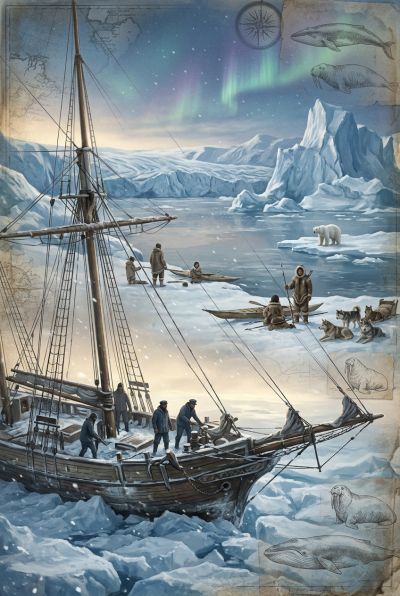
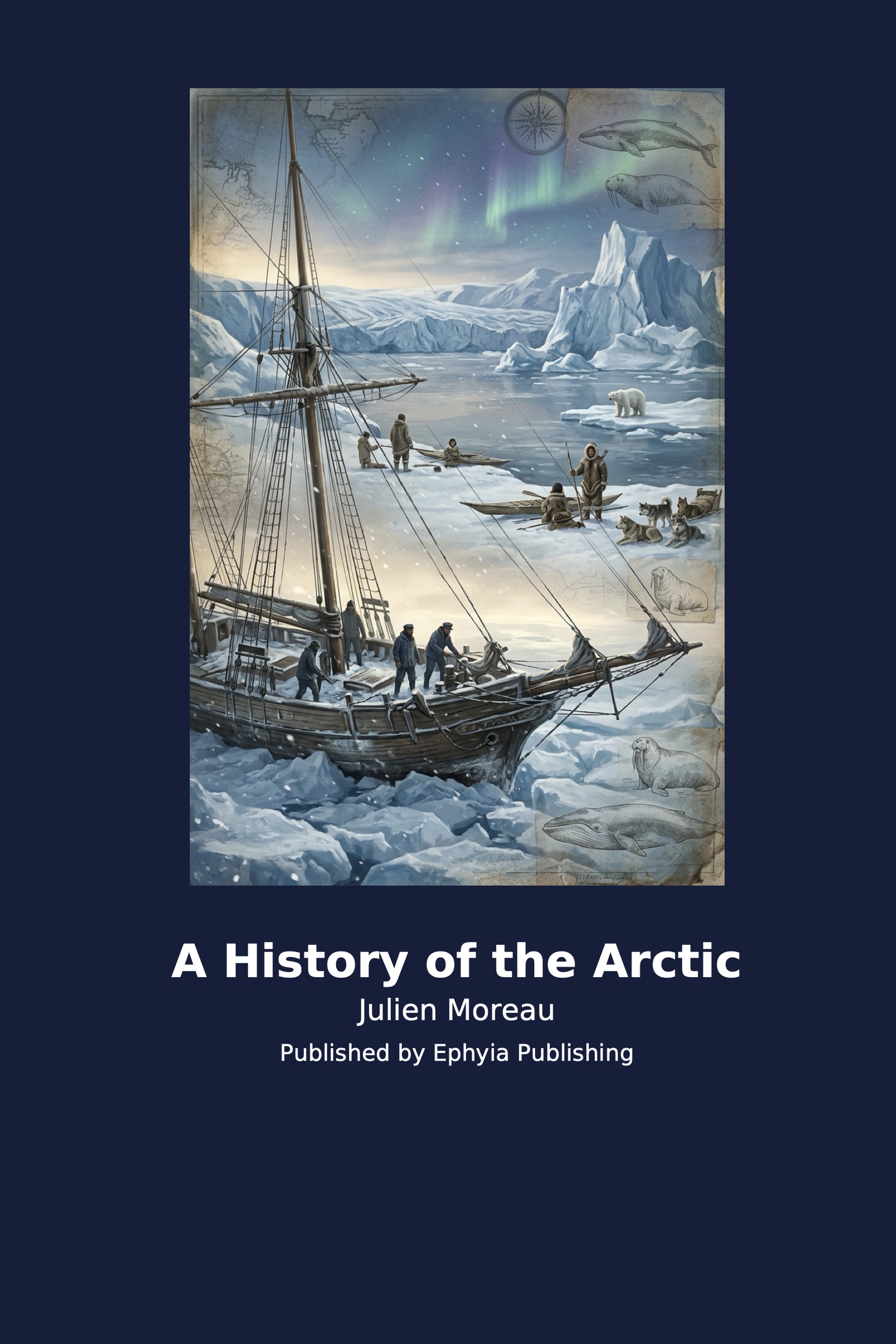

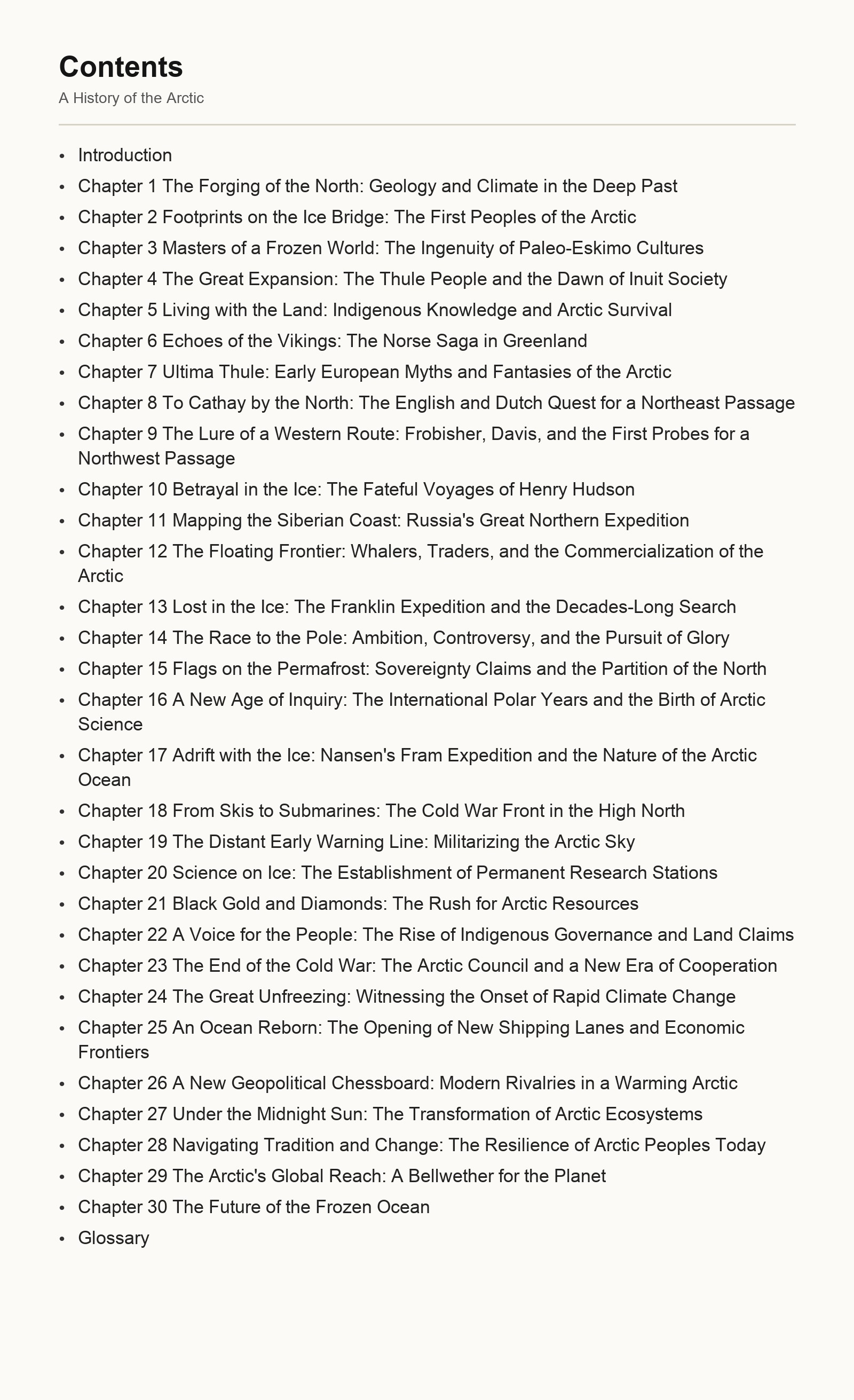
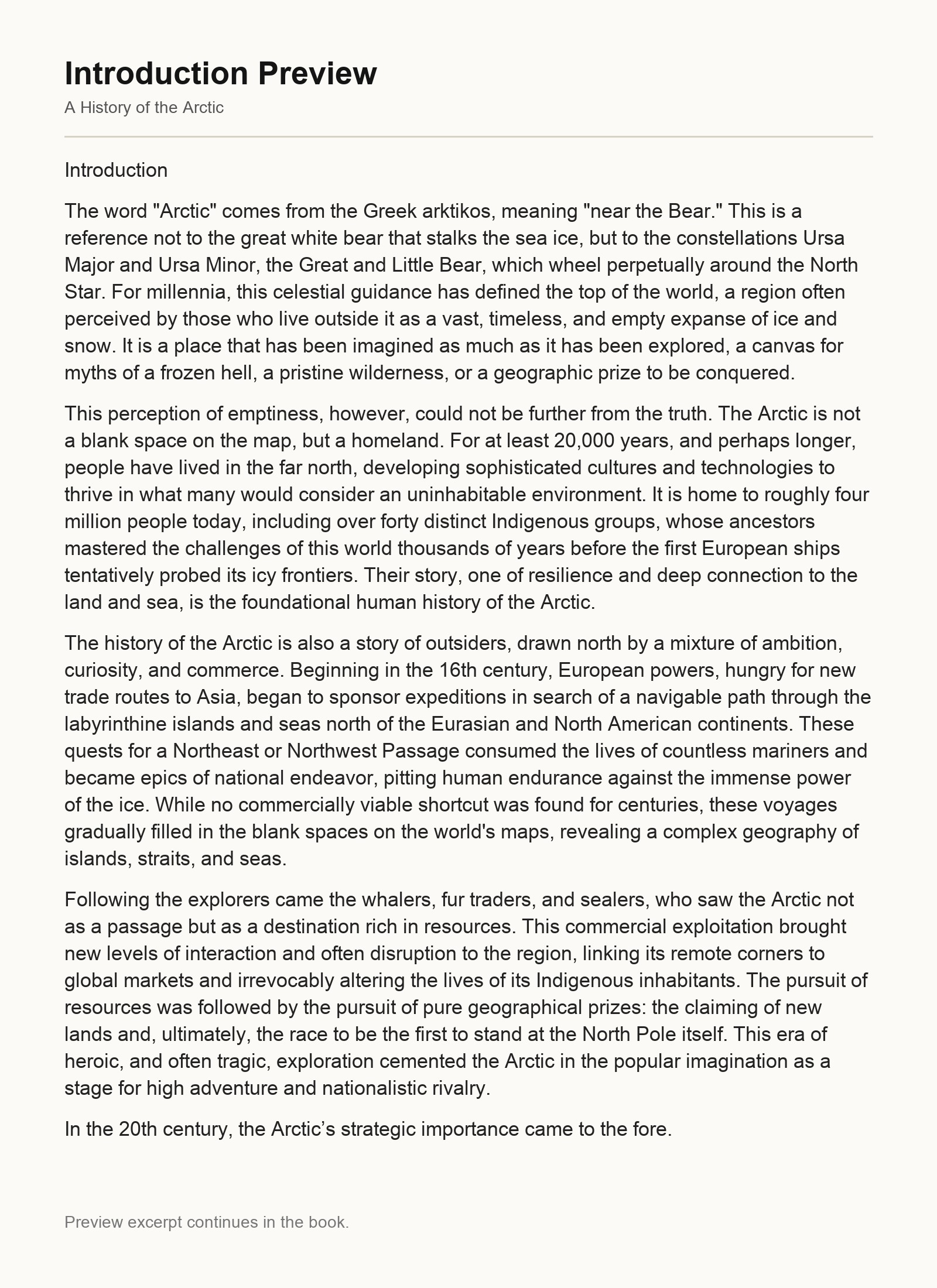
A History of the Arctic invites readers on a sweeping journey from the planet’s deep geological past to the urgent challenges of the twenty‑first century. Beginning with the warm, forested Arctic of the Eocene and the slow drift of continents that forged today’s icy seas, the book reveals how a once‑tropical basin became the frozen cap that has shaped life, migration, and myth for millennia. Readers will walk alongside the first peoples who crossed Beringia, mastered the Mammoth Steppe, and later turned to the sea with ingenious tools like the toggling harpoon and the qamutiik sled, discovering how Indigenous knowledge turned a seemingly hostile landscape into a thriving homeland.
The narrative then follows the waves of outsiders drawn north by ambition and commerce—from Norse settlers in Greenland and the desperate searches for a Northeast and Northwest Passage, to the whalers, fur traders, and rival naval powers that turned the Arctic into a floating frontier of industry and conflict. Chapters on the Franklin expedition, the race to the Pole, and the Cold War militarization illustrate how technological daring, national pride, and strategic fear have repeatedly reshaped the region, leaving behind both heroic triumphs and enduring mysteries. Readers will gain insight into the human cost of these endeavors, the cultural encounters that sparked both cooperation and violence, and the ways in which maps, treaties, and military lines have redrawn the Arctic’s political geography.
Beyond exploration and empire, the book delves into the modern transformation driven by climate change, resource extraction, and new geopolitical rivalries. It explains the science behind Arctic amplification, the thawing permafrost, and the opening of seasonal shipping lanes, while also tracing the rise of Indigenous governance—from the Alaska Native Claims Settlement Act to the creation of Nunavut and the Inuit Circumpolar Council. Readers will see how traditional ecological knowledge now sits alongside cutting‑edge research, how economic opportunities clash with cultural survival, and how the Arctic has become a bellwether for planetary health, influencing sea levels, weather patterns, and the global carbon cycle.
Finally, A History of the Arctic looks ahead to a seasonally ice‑free ocean, examining the uncertainties of future shipping routes, legal battles over seabed claims, and the fragile resilience of Arctic ecosystems and communities. By weaving together geology, anthropology, history, environmental science, and international relations, the work offers a comprehensive portrait of a region that is no longer a remote periphery but a central player in the story of our planet. Readers will finish with a deeper understanding of how the Arctic’s past illuminates its present and future, and why its fate is inextricably linked to the choices we make today.
What You'll Find Inside:
- The deep history of Indigenous peoples in the Arctic, from their arrival over 20,000 years ago through diverse Paleo-Eskimo and Thule cultures to modern Inuit society and governance
- How European perceptions and ambitions transformed the Arctic from a mythical frontier to a zone of commercial exploitation, scientific investigation, and geopolitical competition
- The profound impact of rapid climate change on Arctic ecosystems, infrastructure, and Indigenous ways of life, serving as a global bellwether for planetary change
- The evolution of Arctic exploration from early passage hunts to polar races, military strategizing during the Cold War, and modern resource development
- The ongoing struggle for Indigenous sovereignty and self-determination, including land claims, governance structures like Nunavut, and international advocacy through organizations like the Inuit Circumpolar Council
Who's It For:
This book is ideal for students, researchers, and professionals in environmental history, Arctic studies, Indigenous studies, and climate science, as well as general readers seeking to understand the Arctic's complex past and its critical role in contemporary global environmental and geopolitical dynamics. It provides essential context for policymakers, educators, and anyone interested in how this remote region shapes our shared planetary future.
Table of Contents:
- Introduction
- Chapter 1 The Forging of the North: Geology and Climate in the Deep Past
- Chapter 2 Footprints on the Ice Bridge: The First Peoples of the Arctic
- Chapter 3 Masters of a Frozen World: The Ingenuity of Paleo-Eskimo Cultures
- Chapter 4 The Great Expansion: The Thule People and the Dawn of Inuit Society
- Chapter 5 Living with the Land: Indigenous Knowledge and Arctic Survival
- Chapter 6 Echoes of the Vikings: The Norse Saga in Greenland
- Chapter 7 Ultima Thule: Early European Myths and Fantasies of the Arctic
- Chapter 8 To Cathay by the North: The English and Dutch Quest for a Northeast Passage
- Chapter 9 The Lure of a Western Route: Frobisher, Davis, and the First Probes for a Northwest Passage
- Chapter 10 Betrayal in the Ice: The Fateful Voyages of Henry Hudson
- Chapter 11 Mapping the Siberian Coast: Russia's Great Northern Expedition
- Chapter 12 The Floating Frontier: Whalers, Traders, and the Commercialization of the Arctic
- Chapter 13 Lost in the Ice: The Franklin Expedition and the Decades-Long Search
- Chapter 14 The Race to the Pole: Ambition, Controversy, and the Pursuit of Glory
- Chapter 15 Flags on the Permafrost: Sovereignty Claims and the Partition of the North
- Chapter 16 A New Age of Inquiry: The International Polar Years and the Birth of Arctic Science
- Chapter 17 Adrift with the Ice: Nansen's Fram Expedition and the Nature of the Arctic Ocean
- Chapter 18 From Skis to Submarines: The Cold War Front in the High North
- Chapter 19 The Distant Early Warning Line: Militarizing the Arctic Sky
- Chapter 20 Science on Ice: The Establishment of Permanent Research Stations
- Chapter 21 Black Gold and Diamonds: The Rush for Arctic Resources
- Chapter 22 A Voice for the People: The Rise of Indigenous Governance and Land Claims
- Chapter 23 The End of the Cold War: The Arctic Council and a New Era of Cooperation
- Chapter 24 The Great Unfreezing: Witnessing the Onset of Rapid Climate Change
- Chapter 25 An Ocean Reborn: The Opening of New Shipping Lanes and Economic Frontiers
- Chapter 26 A New Geopolitical Chessboard: Modern Rivalries in a Warming Arctic
- Chapter 27 Under the Midnight Sun: The Transformation of Arctic Ecosystems
- Chapter 28 Navigating Tradition and Change: The Resilience of Arctic Peoples Today
- Chapter 29 The Arctic's Global Reach: A Bellwether for the Planet
- Chapter 30 The Future of the Frozen Ocean
- Glossary
Author:
Published By:
Date Published:
May 24, 2026
Type:
Nonfiction
Language:
English
Also Available In:
Word Count:
57,701 words
Reading Time:
4 hours 2 minutes
Sample:
Order:
Buy the A History of the Arctic ebook on MixCache.com:
Buy NowThe full ebook will be available immediately to read instantly on any device.
$5 account credit for all new MixCache.com accounts, usable toward any ebook purchase!*






Ratings & Reviews
Ask Questions About This Book
Have a question about the content? Ask our AI assistant!
Start by asking a question about "A History of the Arctic"
Example: "Does this book mention William Shakespeare?"
Thinking...