
Browse by Category
Fiction
- Action & Adventure
- African American
- Anthologies
- Children's Fiction
- Classics
- Comics & Graphic Novels
- Coming of Age
- Contemporary
- Cultural & Regional
- Drama
- Erotica
- Fantasy
- General
- Historical Fiction
- Horror
- Humor & Satire
- Literary Fiction
- Mystery, Thriller & Suspense
- Poetry
- Religious & Inspirational
- Romance
- Science Fiction
- Short Stories
- War & Military
- Westerns
- Women's Fiction
- Young Adult
Non-Fiction
- Antiques & Collectibles
- Arts & Photography
- Biographies & Memoirs
- Business & Money
- Children's Non-Fiction
-
Computers & Technology
- Artificial Intelligence
- Computer Science
- Cybersecurity & Cryptography
- Data Science & Analytics
- Databases & Big Data
- Game Development & Design
- General
- Hardware & DIY
- Mobile App Development
- Networking & Cloud Computing
- Operating Systems
- Programming
- Robotics
- Software
- Software Engineering
- User Experience (UX) & Design
- Web Development & Design
- Cooking, Food & Wine
- Crafts, Hobbies & Home
- Education & Teaching
- Engineering
- General
- Health, Fitness & Dieting
-
History
- African History
- African History - North Africa
- African History - Sub-Saharan Africa
- American History
- American History - 20th Century
- American History - Civil War
- American History - Colonial Period
- Ancient History
- Asian History
- Asian History - China
- Asian History - India
- Asian History - Japan
- Asian History - Southeast Asia
- European History
- European History - Ancient Greece
- European History - Ancient Rome
- European History - Medieval
- European History - Modern
- European History - Renaissance
- General
- Middle Eastern History
- Military History
- Military History - Aviation
- Military History - Naval
- Social & Cultural History
- World History
- Humor & Entertainment
- Industrial Technology
- Language Learning
- Law
- LGBTQ+ Non-Fiction
- Literary Criticism
- Medical Books
- Parenting & Relationships
- Philosophy
- Politics & Social Sciences
- Reference
- Religion & Spirituality
-
Science & Math
- Agricultural Sciences
- Astronomy & Space Science
- Behavioral Sciences
- Biological Sciences
- Botany & Plant Science
- Chemistry
- Earth Sciences
- Engineering - Chemical
- Engineering - Civil
- Engineering - Electrical
- Engineering - Mechanical
- Environment
- General
- Geology
- Mathematics
- Nature & Ecology
- Oceanography
- Paleontology
- Physics
- Statistics
- Self-Help
- Sports & Outdoors
- Study Aids
- Sustainability & Green Living
- Textbooks
- Transportation
- Travel
- True Crime
- Urban Planning & Development
- Veterinary Medicine
- Writing & Publishing
Jump to Section
MixCache.com Total Access
Unlimited reading and audiobooks for every book published by MixCache.com.
Included titles carry the MTA badge.
Learn more →
Waqf and Philanthropy: Historical Endowments and Modern Social Finance
MTA
The past, present, and future of Islamic charitable institutions and their role in development
About this book:
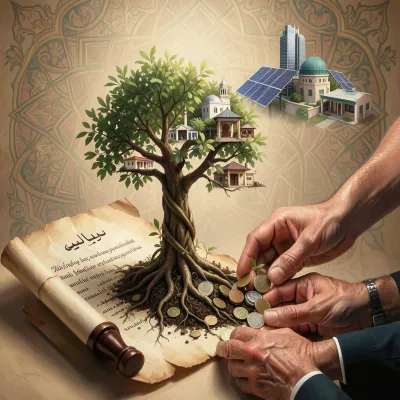
Waqf, the Islamic endowment system, originated from Prophetic traditions emphasizing perpetual charity (*sadaqah jariyah*), where assets are rendered inalienable and their usufruct dedicated to communal benefit. Classical Islamic jurisprudence, developed across the Hanafi, Maliki, Shafi‘i, and Hanbali schools, solidified waqf's legal architecture around principles of perpetuity, irrevocability, and virtuous purpose, enabling endowments to fund diverse public goods including madrasas, hospitals (*bimaristans*), libraries, water systems, markets, and caravanserais. Premodern governance relied on trustees (*mutawallis*), judicial oversight by *qadis*, and community vigilance to safeguard assets and ensure alignment with founders' intentions, creating enduring institutions that shaped urban fabric and provided social safety nets across centuries.
The nineteenth and twentieth centuries brought profound transformations through state centralization, colonial legal interventions, and postcolonial reforms. Ottoman *Evkaf Nezareti*, Egyptian state control under Muhammad Ali, and British-Indian legal debates (culminating in the Mussalman Waqf Validating Act of 1913) sought to modernize administration but often diverted waqf assets from original purposes or imposed foreign legal frameworks. Postcolonial trajectories varied widely: some nations maintained centralized waqf ministries, others saw emergence of private foundations, and legal pluralism persisted as classical, colonial, and national laws intersected. Waqf adapted through innovations like cash waqf (*waqf nuqud*) and waqf shares, which monetized endowments to engage with financial markets while preserving capital through Shariah-compliant investments in *mudaraba*, *murabaha*, and *sukuk*.
Modern waqf integrates with broader Islamic social finance, leveraging instruments such as *sukuk al-waqf* for large-scale infrastructure, *takaful* for risk mitigation, and blended capital to attract impact investment. Contemporary applications emphasize education (scholarships, universities, EdTech), healthcare (clinics, mutual aid, pandemic response), urban development (affordable housing via waqf land trusts), and climate resilience (green waqfs for renewable energy, reforestation, and water governance). Robust Shariah governance, impact measurement aligning *Maqasid al-Shariah* with SDGs, and digital innovations (crowdfunding, fintech, smart contracts) enhance transparency and efficiency. Waqf now seeks to drive systems change—addressing climate vulnerability, inequality, and unsustainable development—by mobilizing perpetual capital for environmental stewardship, resilient cities, and ethical enterprise, reaffirming its role as a dynamic force for global social good rooted in enduring Islamic philanthropic principles.
What You'll Find Inside:
- Historical foundations and evolution of waqf from prophetic origins through classical jurisprudence (Hanafi, Maliki, Shafi‘i, Hanbali) to modern transformations across Ottoman, colonial, and postcolonial eras.
- Traditional applications of waqf in education (madrasas, libraries), health (hospitals, clinics), and urban infrastructure (markets, water systems, housing) that built premodern Islamic civilization's social fabric.
- Modern financial innovations including cash waqf, waqf shares, sukuk, and blended capital that transform perpetual endowments into dynamic instruments for large-scale social impact and financial inclusion.
- Contemporary governance frameworks featuring Shariah supervisory boards, fiduciary duties, impact measurement aligning Maqasid al-Shariah with SDGs, and risk management for sustainable waqf institutions.
- Practical guidance for designing waqf-based solutions in education, healthcare, affordable housing, and climate resilience using digital tools, diaspora engagement, and enabling regulatory environments.
Who's It For:
This book is written for practitioners, funders, and policy planners seeking models that convert generosity into durable public value. It specifically benefits professionals working in Islamic social finance, development economics, philanthropy, urban planning, and public policy who need actionable templates for designing endowments, structuring blended capital, and developing waqf land for education, healthcare, and urban infrastructure while aligning with both Islamic ethical principles and global development frameworks.
Table of Contents:
- Introduction
- Chapter 1 Origins and Principles of Waqf: Foundations of Perpetual Charity
- Chapter 2 Classical Legal Architecture: Hanafi, Maliki, Shafi‘i, and Hanbali Perspectives
- Chapter 3 Governance in the Premodern Waqf: Mutawalli, Qadi, and Community Oversight
- Chapter 4 Education Endowments: Madrasas, Libraries, and Knowledge Commons
- Chapter 5 Health and Social Care: Hospitals, Caravanserais, and Public Welfare
- Chapter 6 Urban Fabric Shaped by Waqf: Markets, Water Systems, and Public Works
- Chapter 7 Women, Family, and Private Waqf: Agency, Inheritance, and Social Safety Nets
- Chapter 8 Fiscal States and Waqf: Taxation, Iltizam, and Political Economy
- Chapter 9 Reform and Centralization: Nineteenth–Twentieth Century Transformations
- Chapter 10 Colonial Law and Codification: Conversions, Abolition, and Adaptation
- Chapter 11 Postcolonial Trajectories: Ministries, Foundations, and Legal Pluralism
- Chapter 12 Cash Waqf and Waqf Shares: From Pious Foundations to Financial Instruments
- Chapter 13 Zakat, Sadaqah, and Waqf: Complementarities and Boundaries
- Chapter 14 Shariah Governance and Fiduciary Duty in Modern Awqaf
- Chapter 15 Impact Measurement: Maqasid, SDGs, and Outcome Metrics
- Chapter 16 Waqf for Education Today: Scholarships, Universities, and EdTech
- Chapter 17 Waqf for Healthcare Today: Clinics, Mutual Aid, and Pandemic Resilience
- Chapter 18 Urban Development and Affordable Housing: Waqf Land and Land Trusts
- Chapter 19 Instruments of Islamic Social Finance: Sukuk, Takaful, and Blended Capital
- Chapter 20 Digital Awqaf: Crowdfunding, Fintech, and Smart Contracts
- Chapter 21 Diaspora and Corporate Philanthropy: Cross-Border Giving and ESG
- Chapter 22 Regulation, Tax, and Compliance: Building Enabling Environments
- Chapter 23 Risk Management: Investment Policy, Liquidity, and Ethical Screens
- Chapter 24 Regional Case Studies: MENA, South Asia, Southeast Asia, and Beyond
- Chapter 25 The Future of Waqf: Climate Action, Resilience, and Systems Change
Author:
Published By:
Date Published:
May 22, 2026
Type:
Nonfiction
Language:
English
Word Count:
43,440 words
Reading Time:
3 hours 3 minutes
Sample:
MixCache.com Total Access
Get unlimited access to this book + all books published by MixCache.com for $11.99/month
Subscribe to MTAOr purchase this book individually below
Order:
Buy the Waqf and Philanthropy: Historical Endowments and Modern Social Finance ebook on MixCache.com:
Buy Now
Full ebook will be available immediately
- read online or download as a PDF file.
$5 account credit for all new MixCache.com accounts, usable toward any ebook purchase!*




Ratings & Reviews
Ask Questions About This Book
Have a question about the content? Ask our AI assistant!
Start by asking a question about "Waqf and Philanthropy: Historical Endowments and Modern Social Finance"
Example: "Does this book mention William Shakespeare?"
Thinking...