Browse by Category
Fiction
- Action & Adventure
- African American
- Anthologies
- Children's Fiction
- Classics
- Comics & Graphic Novels
- Coming of Age
- Contemporary
- Cultural & Regional
- Drama
- Erotica
- Fantasy
- General
- Historical Fiction
- Horror
- Humor & Satire
- Literary Fiction
- Mystery, Thriller & Suspense
- Poetry
- Religious & Inspirational
- Romance
- Science Fiction
- Short Stories
- War & Military
- Westerns
- Women's Fiction
- Young Adult
Non-Fiction
- Antiques & Collectibles
- Arts & Photography
- Biographies & Memoirs
- Business & Money
- Children's Non-Fiction
-
Computers & Technology
- Artificial Intelligence
- Computer Science
- Cybersecurity & Cryptography
- Data Science & Analytics
- Databases & Big Data
- Game Development & Design
- General
- Hardware & DIY
- Mobile App Development
- Networking & Cloud Computing
- Operating Systems
- Programming
- Robotics
- Software
- Software Engineering
- User Experience (UX) & Design
- Web Development & Design
- Cooking, Food & Wine
- Crafts, Hobbies & Home
- Education & Teaching
- Engineering
- General
- Health, Fitness & Dieting
-
History
- African History
- African History - North Africa
- African History - Sub-Saharan Africa
- American History
- American History - 20th Century
- American History - Civil War
- American History - Colonial Period
- Ancient History
- Asian History
- Asian History - China
- Asian History - India
- Asian History - Japan
- Asian History - Southeast Asia
- European History
- European History - Ancient Greece
- European History - Ancient Rome
- European History - Medieval
- European History - Modern
- European History - Renaissance
- General
- Middle Eastern History
- Military History
- Military History - Aviation
- Military History - Naval
- Social & Cultural History
- World History
- Humor & Entertainment
- Industrial Technology
- Language Learning
- Law
- LGBTQ+ Non-Fiction
- Literary Criticism
- Medical Books
- Parenting & Relationships
- Philosophy
- Politics & Social Sciences
- Reference
- Religion & Spirituality
-
Science & Math
- Agricultural Sciences
- Astronomy & Space Science
- Behavioral Sciences
- Biological Sciences
- Botany & Plant Science
- Chemistry
- Earth Sciences
- Engineering - Chemical
- Engineering - Civil
- Engineering - Electrical
- Engineering - Mechanical
- Environment
- General
- Geology
- Mathematics
- Nature & Ecology
- Oceanography
- Paleontology
- Physics
- Statistics
- Self-Help
- Sports & Outdoors
- Study Aids
- Sustainability & Green Living
- Textbooks
- Transportation
- Travel
- True Crime
- Urban Planning & Development
- Veterinary Medicine
- Writing & Publishing
Jump to Section
MixCache.com Total Access
Unlimited reading and audiobooks for every book published by MixCache.com.
Included titles carry the MTA badge.
Learn more →A History of Sichuan
About this book:

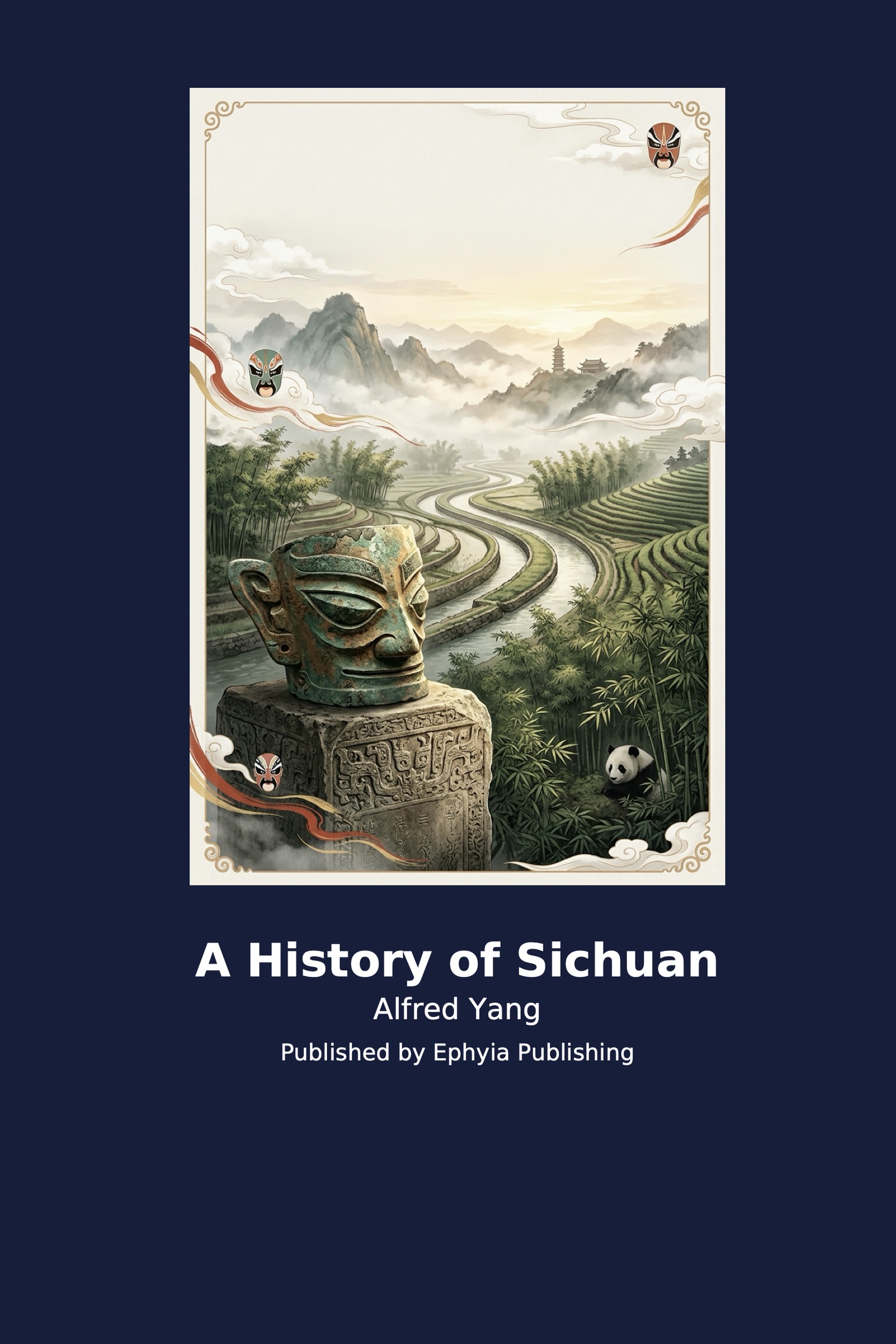
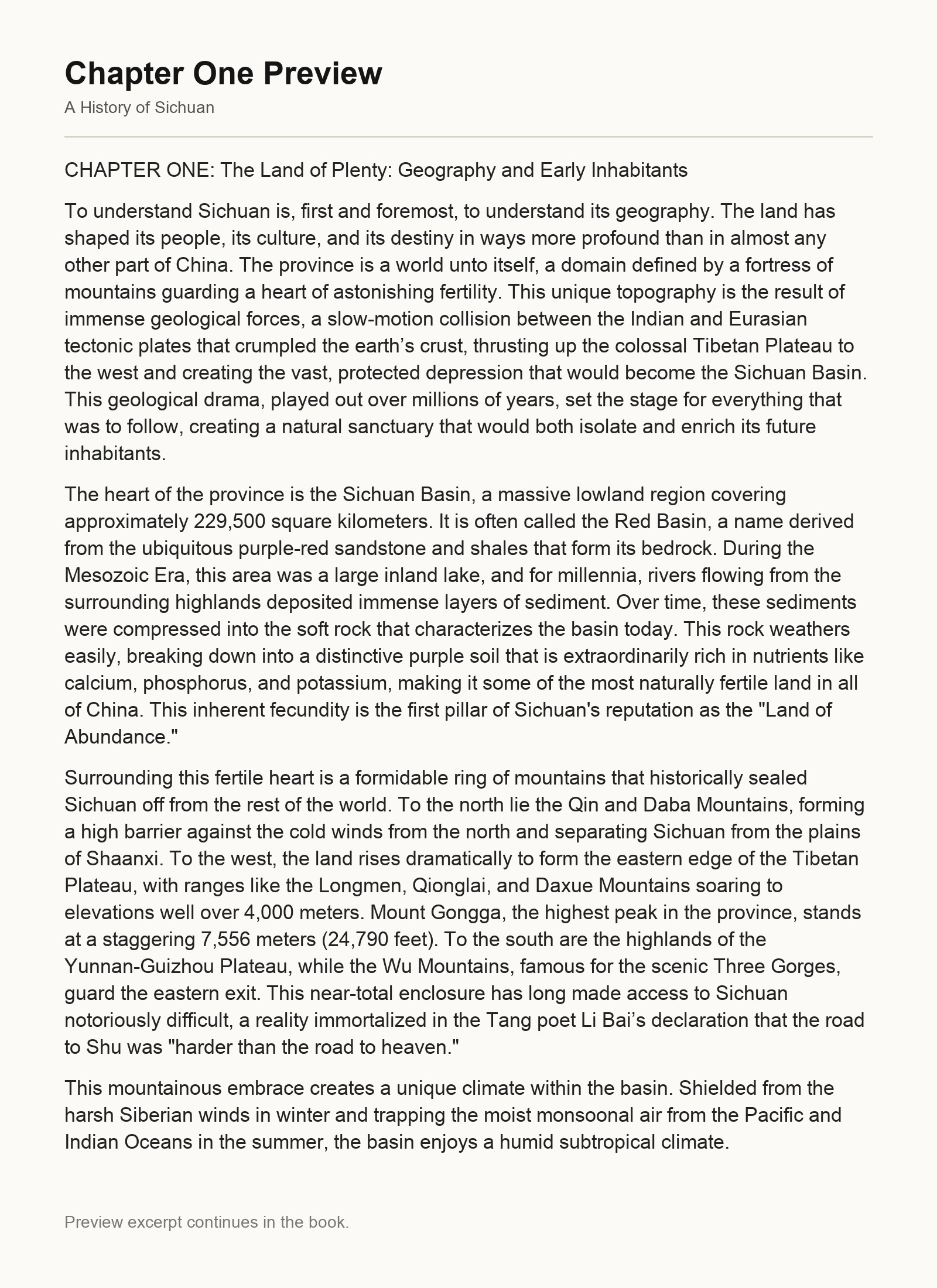
A History of Sichuan invites readers on an immersive journey through one of China’s most dynamic and enigmatic provinces, tracing its story from prehistoric hunter‑gatherers to the cutting‑edge metropolises of the twenty‑first century. Each chapter unfolds a distinct era—geography and early settlements, the mysterious bronze civilizations of Sanxingdui and Jinsha, the rise and fall of the Shu and Ba kingdoms, and the pivotal Qin conquest that laid the foundations for imperial unity. Readers will discover how the Dujiangyan irrigation system transformed the Sichuan Basin into the “Land of Abundance,” and how this fertile heartland became a crucible for economic innovation, cultural brilliance, and repeated cycles of devastation and rebirth.
The narrative continues through the golden ages of the Han, Tang, and Song dynasties, highlighting Sichuan’s role as a refuge for emperors, a haven for poets like Li Bai and Du Fu, and a pioneer of paper money and global trade routes such as the Southern Silk Road and the Tea‑Horer Road. It details the province’s turbulent episodes—from the brutal reign of Zhang Xianzhong and the Ming‑Qing transition to the warlord era, the wartime capital of Chongqing during the Second Sino‑Japanese War, and the dramatic shifts of the Chinese Civil War. Readers will gain insight into the profound social upheavals of the Mao era, the transformative reforms of Deng Xiaoping, and the astonishing resilience displayed after the 2008 Wenchuan earthquake.
Beyond political and military history, the book delves into Sichuan’s rich cultural tapestry: the evolution of its world‑renowned cuisine, the vibrant teahouse culture, the diverse traditions of ethnic minorities such as the Yi, Tibetan, and Qiang peoples, and the enduring symbol of the giant panda. Chapters on art, literature, religion, and festivals reveal how local customs have intertwined with imperial influences to create a unique identity that persists today. The discussion of environmental challenges and conservation efforts shows how the province balances rapid modernization with the preservation of its natural heritage.
Readers will also experience Sichuan’s contemporary transformation—from the high‑tech boom of Chengdu’s industrial zones and the Belt and Road Initiative’s new logistics corridors, to the ambitious Chengdu‑Chongqing Economic Circle and the “Park City” vision that seeks to weave green spaces into urban life. The book illustrates how ancient isolation is being reengineered into a global gateway, while the province’s deep‑rooted spirit of resilience and joy continues to shape its people’s daily lives, from bustling hotpot markets to tranquil mountain monasteries.
Ultimately, A History of Sichuan offers more than a chronicle of dates and events; it provides a vivid, sensory understanding of a land where geography has forged both sanctuary and struggle, where abundance has been won through ingenuity and perseverance, and where every era leaves a lasting flavor in the province’s cuisine, culture, and collective memory. Whether you are a student of Chinese history, a lover of food and travel, or simply curious about the forces that have shaped one of the world’s most fascinating regions, this book will equip you with a deep appreciation of Sichuan’s past, present, and the enduring spirit that drives its future.
What You'll Find Inside:
- Sichuan's geographic isolation, protected by mountains and centered on the fertile Chengdu Basin, has repeatedly shaped its history as both a self-sufficient refuge and a strategic stronghold for dynasties and warlords.
- The Bronze Age Sanxingdui and Jinsha cultures reveal an independent, highly advanced civilization in Sichuan that predates and differs from the Yellow River Shang civilization, forcing a reevaluation of early Chinese origins.
- From the Han through the Song dynasties, Sichuan served as China's economic engine—producing grain, salt, silk, brocade, and pioneering innovations like paper money—while also providing cultural refuge for poets and emperors during times of turmoil.
- Massive population upheavals, especially the Ming-Qing transition's near depopulation and the Qing-led Huguang tian Sichuan migration, forged the modern Sichuanese identity through a melting pot of Han migrants and indigenous minorities.
- In the contemporary era, Sichuan has transformed from an agricultural base into a high-tech and logistics hub, exemplified by the Chengdu-Chongqing Economic Circle, the Belt and Road Initiative, and recovery from the 2008 earthquake, while retaining its world-renowned cuisine and ethnic diversity.
Who's It For:
This book is ideal for students, scholars, and general readers interested in Chinese regional history, particularly those seeking a deep understanding of how geography, migration, and cultural resilience have shaped Sichuan from ancient times to the 21st century. It will also appeal to travelers, business professionals, and anyone fascinated by Sichuan's cuisine, ethnic diversity, and its role as an emerging economic and technological hub in western China.
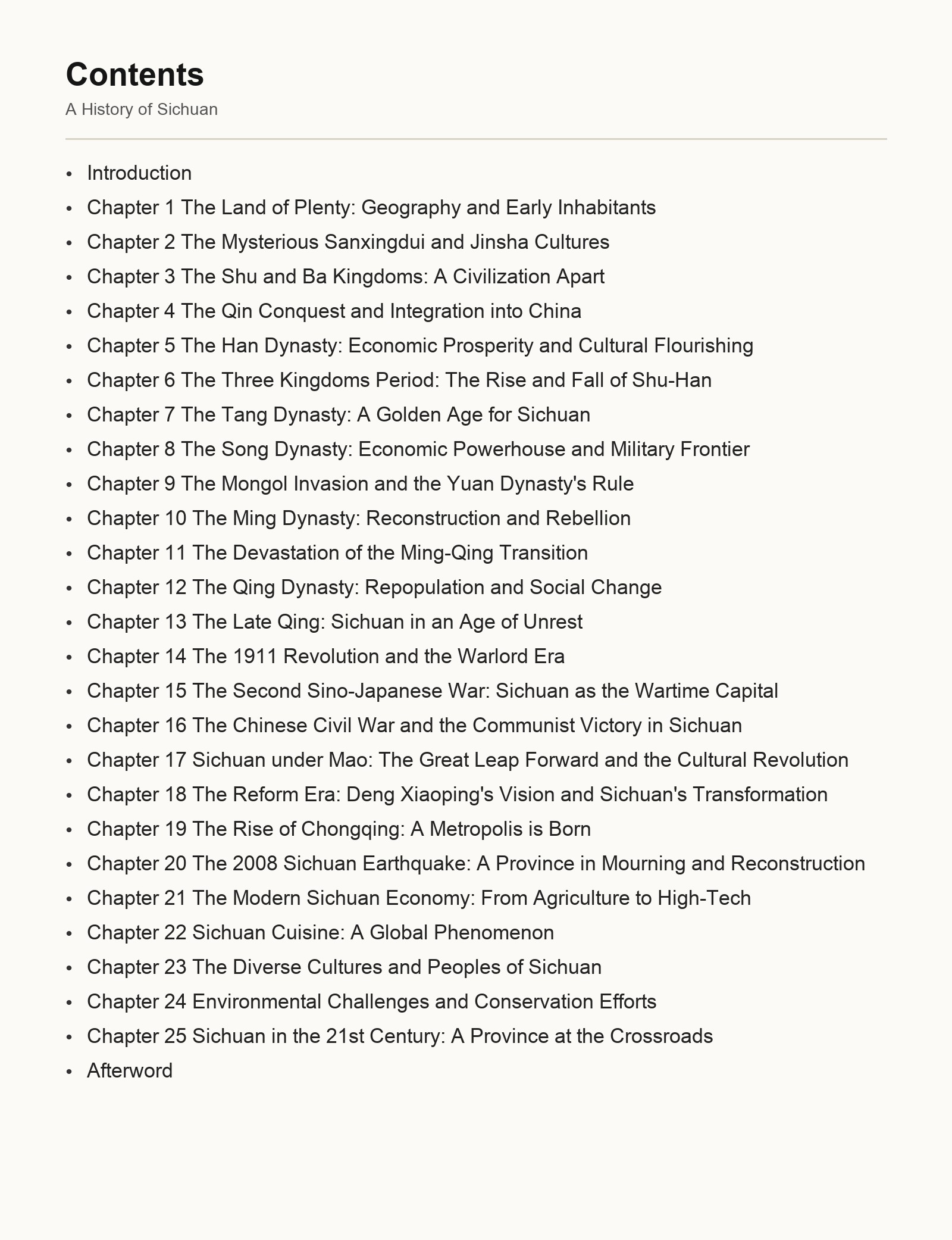
Table of Contents:
- Introduction
- Chapter 1 The Land of Plenty: Geography and Early Inhabitants
- Chapter 2 The Mysterious Sanxingdui and Jinsha Cultures
- Chapter 3 The Shu and Ba Kingdoms: A Civilization Apart
- Chapter 4 The Qin Conquest and Integration into China
- Chapter 5 The Han Dynasty: Economic Prosperity and Cultural Flourishing
- Chapter 6 The Three Kingdoms Period: The Rise and Fall of Shu-Han
- Chapter 7 The Tang Dynasty: A Golden Age for Sichuan
- Chapter 8 The Song Dynasty: Economic Powerhouse and Military Frontier
- Chapter 9 The Mongol Invasion and the Yuan Dynasty's Rule
- Chapter 10 The Ming Dynasty: Reconstruction and Rebellion
- Chapter 11 The Devastation of the Ming-Qing Transition
- Chapter 12 The Qing Dynasty: Repopulation and Social Change
- Chapter 13 The Late Qing: Sichuan in an Age of Unrest
- Chapter 14 The 1911 Revolution and the Warlord Era
- Chapter 15 The Second Sino-Japanese War: Sichuan as the Wartime Capital
- Chapter 16 The Chinese Civil War and the Communist Victory in Sichuan
- Chapter 17 Sichuan under Mao: The Great Leap Forward and the Cultural Revolution
- Chapter 18 The Reform Era: Deng Xiaoping's Vision and Sichuan's Transformation
- Chapter 19 The Rise of Chongqing: A Metropolis is Born
- Chapter 20 The 2008 Sichuan Earthquake: A Province in Mourning and Reconstruction
- Chapter 21 The Modern Sichuan Economy: From Agriculture to High-Tech
- Chapter 22 Sichuan Cuisine: A Global Phenomenon
- Chapter 23 The Diverse Cultures and Peoples of Sichuan
- Chapter 24 Environmental Challenges and Conservation Efforts
- Chapter 25 Sichuan in the 21st Century: A Province at the Crossroads
- Afterword
Author:
Published By:
Date Published:
May 22, 2026
Type:
Nonfiction
Language:
English
Also Available In:
Word Count:
50,055 words
Reading Time:
3 hours 30 minutes
Sample:
Order:
Order A History of Sichuan (Hardcover) on MixCache.com:
Buy NowPrint copy is made to order and ships worldwide. Includes the ebook free, ready to read instantly.
$5 account credit for all new MixCache.com accounts, usable toward any ebook purchase!*