Browse by Category
Fiction
- Action & Adventure
- African American
- Anthologies
- Children's Fiction
- Classics
- Comics & Graphic Novels
- Coming of Age
- Contemporary
- Cultural & Regional
- Drama
- Erotica
- Fantasy
- General
- Historical Fiction
- Horror
- Humor & Satire
- Literary Fiction
- Mystery, Thriller & Suspense
- Poetry
- Religious & Inspirational
- Romance
- Science Fiction
- Short Stories
- War & Military
- Westerns
- Women's Fiction
- Young Adult
Non-Fiction
- Antiques & Collectibles
- Arts & Photography
- Biographies & Memoirs
- Business & Money
- Children's Non-Fiction
-
Computers & Technology
- Artificial Intelligence
- Computer Science
- Cybersecurity & Cryptography
- Data Science & Analytics
- Databases & Big Data
- Game Development & Design
- General
- Hardware & DIY
- Mobile App Development
- Networking & Cloud Computing
- Operating Systems
- Programming
- Robotics
- Software
- Software Engineering
- User Experience (UX) & Design
- Web Development & Design
- Cooking, Food & Wine
- Crafts, Hobbies & Home
- Education & Teaching
- Engineering
- General
- Health, Fitness & Dieting
-
History
- African History
- African History - North Africa
- African History - Sub-Saharan Africa
- American History
- American History - 20th Century
- American History - Civil War
- American History - Colonial Period
- Ancient History
- Asian History
- Asian History - China
- Asian History - India
- Asian History - Japan
- Asian History - Southeast Asia
- European History
- European History - Ancient Greece
- European History - Ancient Rome
- European History - Medieval
- European History - Modern
- European History - Renaissance
- General
- Middle Eastern History
- Military History
- Military History - Aviation
- Military History - Naval
- Social & Cultural History
- World History
- Humor & Entertainment
- Industrial Technology
- Language Learning
- Law
- LGBTQ+ Non-Fiction
- Literary Criticism
- Medical Books
- Parenting & Relationships
- Philosophy
- Politics & Social Sciences
- Reference
- Religion & Spirituality
-
Science & Math
- Agricultural Sciences
- Astronomy & Space Science
- Behavioral Sciences
- Biological Sciences
- Botany & Plant Science
- Chemistry
- Earth Sciences
- Engineering - Chemical
- Engineering - Civil
- Engineering - Electrical
- Engineering - Mechanical
- Environment
- General
- Geology
- Mathematics
- Nature & Ecology
- Oceanography
- Paleontology
- Physics
- Statistics
- Self-Help
- Sports & Outdoors
- Study Aids
- Sustainability & Green Living
- Textbooks
- Transportation
- Travel
- True Crime
- Urban Planning & Development
- Veterinary Medicine
- Writing & Publishing
Jump to Section
MixCache.com Total Access
Unlimited reading and audiobooks for every book published by MixCache.com.
Included titles carry the MTA badge.
Learn more →Prions and Prion Diseases
About this book:
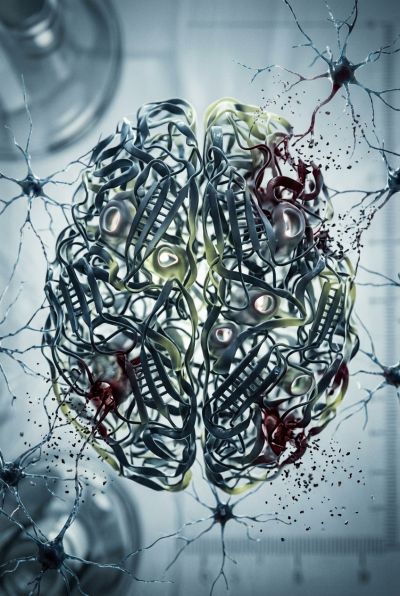
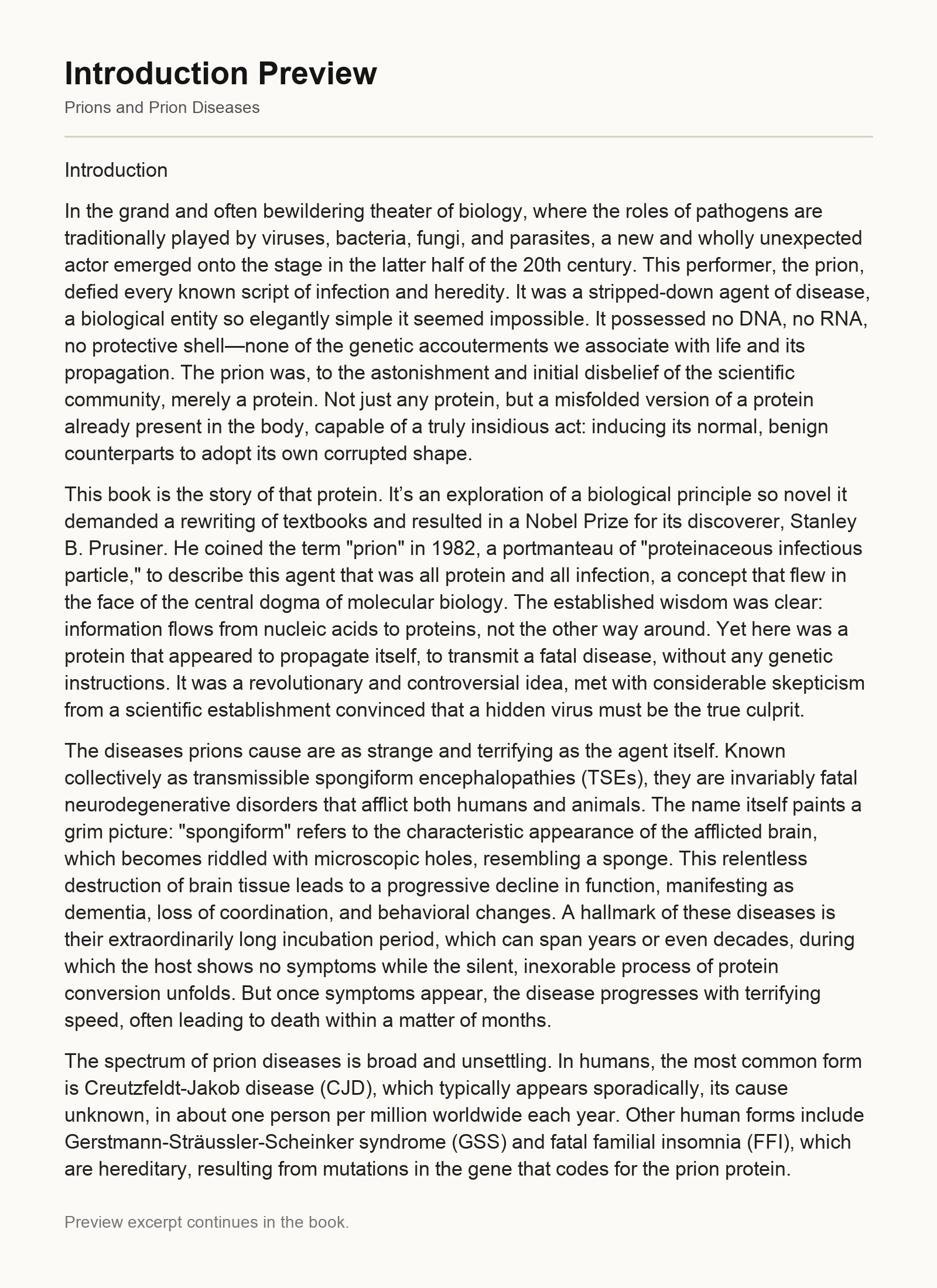
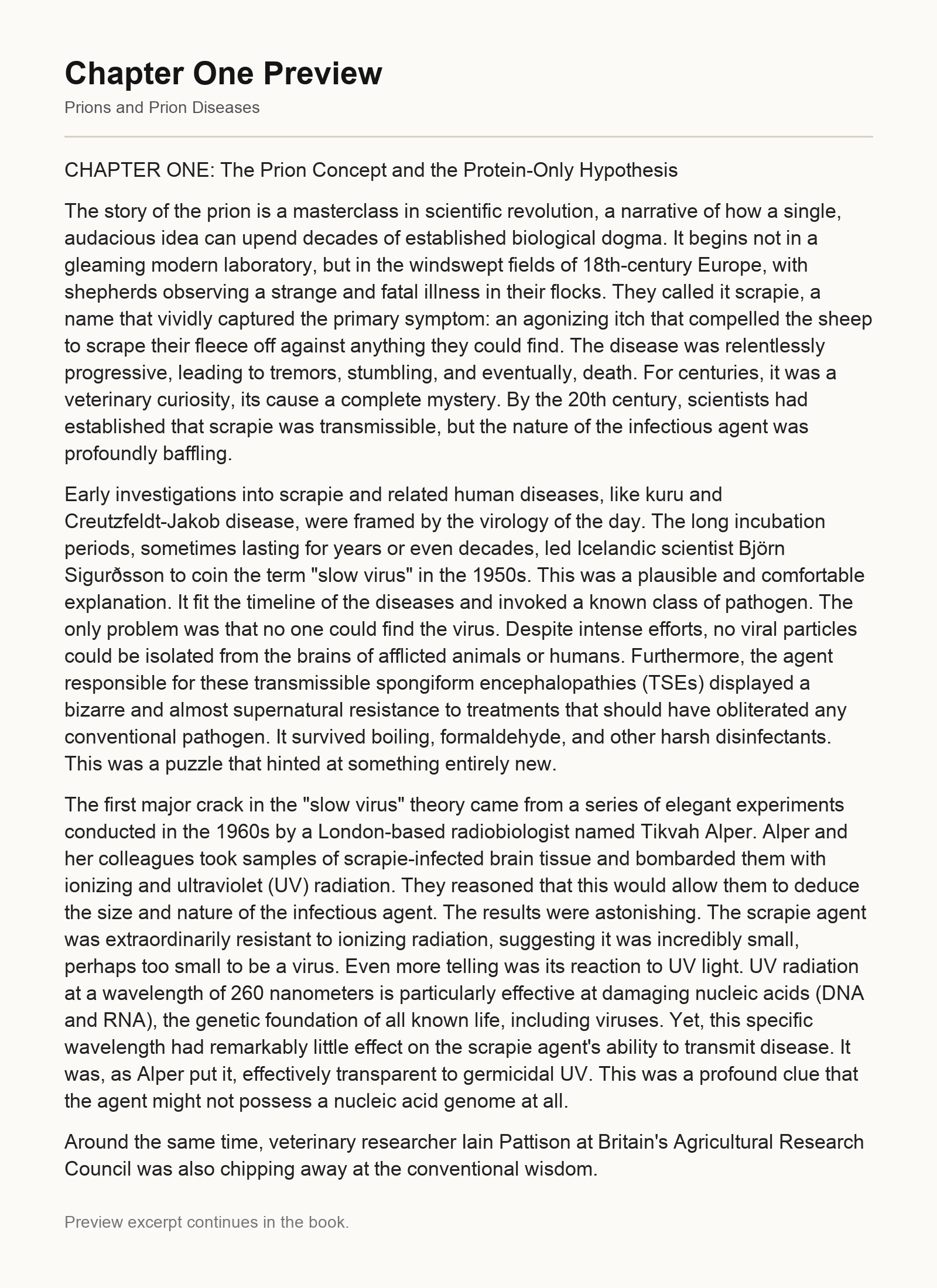
"Prions and Prion Diseases" offers a deep, authoritative journey into one of biology’s most intriguing and deadly phenomena, guiding readers from the historic scrapie outbreaks of the 18th century to the cutting‑edge science of protein misfolding that now reshapes our understanding of neurodegeneration. Written by Adrian Voss, the book synthesizes decades of research into a clear, comprehensive narrative that explains how a simple misfolded protein can trigger fatal brain disease, jump species barriers, and inspire new therapeutic avenues.
Readers will first grasp the revolutionary protein‑only hypothesis, learning how the normal cellular prion protein (PrPᶜ) and its lethal isoform (PrPˢᶜ) differ only in conformation yet drive a relentless chain reaction of misfolding. The text details the structural biology of PrP, the genetics of the PRNP gene, and the molecular mechanisms—such as seeded nucleation and fibril fragmentation—that underlie prion propagation, strain diversity, and the formidable resistance of these agents to conventional decontamination.
The work then surveys the full spectrum of human and animal prion illnesses, from sporadic, genetic, and iatrogenic Creutzfeldt‑Jakob disease to kuru, scrapie, bovine spongiform encephalopathy, and chronic wasting disease. Chapters on clinical diagnosis illuminate the power of MRI, RT‑QuIC, CSF biomarkers, and emerging blood tests, while sections on neuropathology and imaging show how characteristic spongiform change, plaques, and gliosis reveal disease strain and progression. This knowledge equips clinicians, researchers, and students to recognize, test, and interpret prion disease with confidence.
Beyond diagnostics, the book evaluates current and future therapeutic strategies, including antisense oligonucleotides that lower PrPᶜ expression, immunotherapy approaches, pharmacological chaperones, and clearance‑enhancing drugs. It also covers essential public health measures—decontamination protocols, blood safety policies, surveillance systems, and genetic counseling—providing practical guidance for healthcare workers, veterinarians, and policymakers confronting prion risks in medicine, agriculture, and wildlife management.
Finally, the text looks ahead to unresolved questions: the elusive normal function of PrPᶜ, the structural basis of prion strains, the hunt for a prion‑specific PET ligand, and the prospect of gene‑editing or vector‑based therapies. It explores the broader relevance of prion‑like mechanisms in Alzheimer’s, Parkinson’s, and ALS, and confronts the ethical and social dilemmas posed by genetic testing, stigma, and the balance between individual liberty and public protection. This thorough, up‑to‑date resource empowers anyone studying neurodegenerative disease to appreciate both the stark danger and the scientific promise that prions embody.
What You'll Find Inside:
- The protein-only hypothesis and how misfolded prion proteins (PrPSc) propagate by converting normal cellular prion protein (PrPC) into pathogenic isoforms through conformational templating, challenging the central dogma of molecular biology.
- Prion strains and species barriers explained by distinct protein conformations rather than nucleic acid differences, with implications for cross-species transmission like BSE to humans causing variant CJD.
- Comprehensive overview of human prion diseases including sporadic, genetic, and iatrogenic Creutzfeldt-Jakob disease, kuru, and variant CJD, with their clinical presentations, epidemiology, and molecular basis.
- Revolutionary diagnostic techniques such as RT-QuIC and PMCA that enable detection of prions in cerebrospinal fluid and other samples ante-mortem with high sensitivity and specificity.
- The prion-like mechanism concept applied to other neurodegenerative disorders (Alzheimer's, Parkinson's, ALS) where misfolded proteins spread through templated corruption within the brain.
Who's It For:
This book is intended for researchers, clinicians, and advanced students in neuroscience, microbiology, public health, and biomedical sciences who seek a comprehensive understanding of prion biology, disease mechanisms, diagnostics, and therapeutic strategies. It will be particularly valuable for neurologists diagnosing rapidly progressive dementias, infectious disease specialists studying unconventional pathogens, and scientists investigating protein misfolding in neurodegenerative disorders.
Table of Contents:
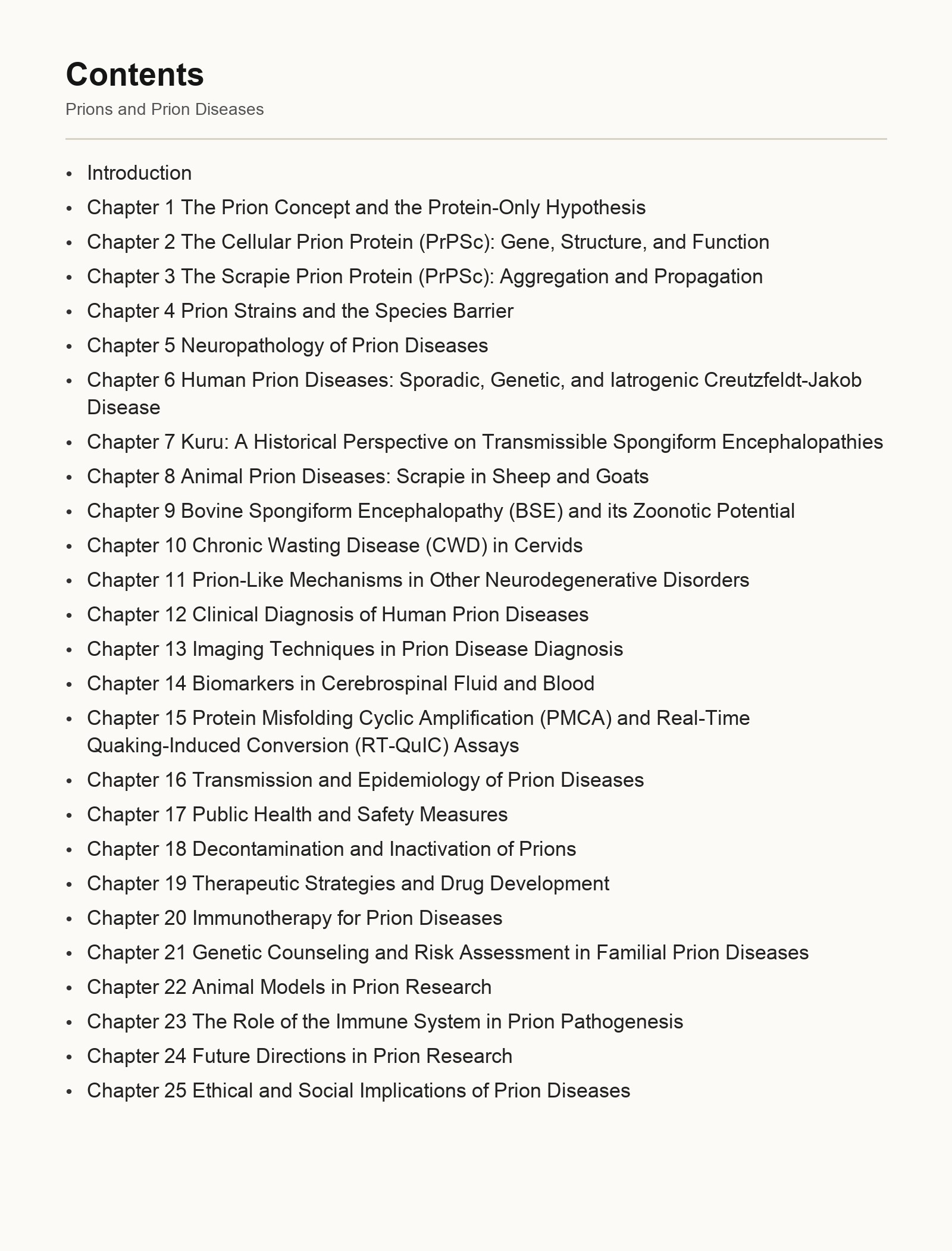
- Introduction
- Chapter 1 The Prion Concept and the Protein-Only Hypothesis
- Chapter 2 The Cellular Prion Protein (PrPSc): Gene, Structure, and Function
- Chapter 3 The Scrapie Prion Protein (PrPSc): Aggregation and Propagation
- Chapter 4 Prion Strains and the Species Barrier
- Chapter 5 Neuropathology of Prion Diseases
- Chapter 6 Human Prion Diseases: Sporadic, Genetic, and Iatrogenic Creutzfeldt-Jakob Disease.
- Chapter 7 Kuru: A Historical Perspective on Transmissible Spongiform Encephalopathies
- Chapter 8 Animal Prion Diseases: Scrapie in Sheep and Goats
- Chapter 9 Bovine Spongiform Encephalopathy (BSE) and its Zoonotic Potential
- Chapter 10 Chronic Wasting Disease (CWD) in Cervids
- Chapter 11 Prion-Like Mechanisms in Other Neurodegenerative Disorders.
- Chapter 12 Clinical Diagnosis of Human Prion Diseases.
- Chapter 13 Imaging Techniques in Prion Disease Diagnosis.
- Chapter 14 Biomarkers in Cerebrospinal Fluid and Blood.
- Chapter 15 Protein Misfolding Cyclic Amplification (PMCA) and Real-Time Quaking-Induced Conversion (RT-QuIC) Assays.
- Chapter 16 Transmission and Epidemiology of Prion Diseases
- Chapter 17 Public Health and Safety Measures
- Chapter 18 Decontamination and Inactivation of Prions
- Chapter 19 Therapeutic Strategies and Drug Development
- Chapter 20 Immunotherapy for Prion Diseases
- Chapter 21 Genetic Counseling and Risk Assessment in Familial Prion Diseases.
- Chapter 22 Animal Models in Prion Research.
- Chapter 23 The Role of the Immune System in Prion Pathogenesis.
- Chapter 24 Future Directions in Prion Research
- Chapter 25 Ethical and Social Implications of Prion Diseases
Author:
Published By:
Date Published:
May 19, 2026
Type:
Nonfiction
Language:
English
Also Available In:
Spanish, French, Italian, Portuguese
Word Count:
46,514 words
Reading Time:
3 hours 15 minutes
Sample:
Order:
Order Prions and Prion Diseases (Hardcover) on MixCache.com:
Buy NowPrint copy is made to order and ships worldwide. Includes the ebook free, ready to read instantly.
$5 account credit for all new MixCache.com accounts, usable toward any ebook purchase!*