
Browse by Category
Fiction
- Action & Adventure
- African American
- Anthologies
- Children's Fiction
- Classics
- Comics & Graphic Novels
- Coming of Age
- Contemporary
- Cultural & Regional
- Drama
- Erotica
- Fantasy
- General
- Historical Fiction
- Horror
- Humor & Satire
- Literary Fiction
- Mystery, Thriller & Suspense
- Poetry
- Religious & Inspirational
- Romance
- Science Fiction
- Short Stories
- War & Military
- Westerns
- Women's Fiction
- Young Adult
Non-Fiction
- Antiques & Collectibles
- Arts & Photography
- Biographies & Memoirs
- Business & Money
- Children's Non-Fiction
-
Computers & Technology
- Artificial Intelligence
- Computer Science
- Cybersecurity & Cryptography
- Data Science & Analytics
- Databases & Big Data
- Game Development & Design
- General
- Hardware & DIY
- Mobile App Development
- Networking & Cloud Computing
- Operating Systems
- Programming
- Robotics
- Software
- Software Engineering
- User Experience (UX) & Design
- Web Development & Design
- Cooking, Food & Wine
- Crafts, Hobbies & Home
- Education & Teaching
- Engineering
- General
- Health, Fitness & Dieting
-
History
- African History
- African History - North Africa
- African History - Sub-Saharan Africa
- American History
- American History - 20th Century
- American History - Civil War
- American History - Colonial Period
- Ancient History
- Asian History
- Asian History - China
- Asian History - India
- Asian History - Japan
- Asian History - Southeast Asia
- European History
- European History - Ancient Greece
- European History - Ancient Rome
- European History - Medieval
- European History - Modern
- European History - Renaissance
- General
- Middle Eastern History
- Military History
- Military History - Aviation
- Military History - Naval
- Social & Cultural History
- World History
- Humor & Entertainment
- Industrial Technology
- Language Learning
- Law
- LGBTQ+ Non-Fiction
- Literary Criticism
- Medical Books
- Parenting & Relationships
- Philosophy
- Politics & Social Sciences
- Reference
- Religion & Spirituality
-
Science & Math
- Agricultural Sciences
- Astronomy & Space Science
- Behavioral Sciences
- Biological Sciences
- Botany & Plant Science
- Chemistry
- Earth Sciences
- Engineering - Chemical
- Engineering - Civil
- Engineering - Electrical
- Engineering - Mechanical
- Environment
- General
- Geology
- Mathematics
- Nature & Ecology
- Oceanography
- Paleontology
- Physics
- Statistics
- Self-Help
- Sports & Outdoors
- Study Aids
- Sustainability & Green Living
- Textbooks
- Transportation
- Travel
- True Crime
- Urban Planning & Development
- Veterinary Medicine
- Writing & Publishing
Jump to Section
MixCache.com Total Access
Unlimited reading and audiobooks for every book published by MixCache.com.
Included titles carry the MTA badge.
Learn more →A History of the Cayman Islands
About this book:

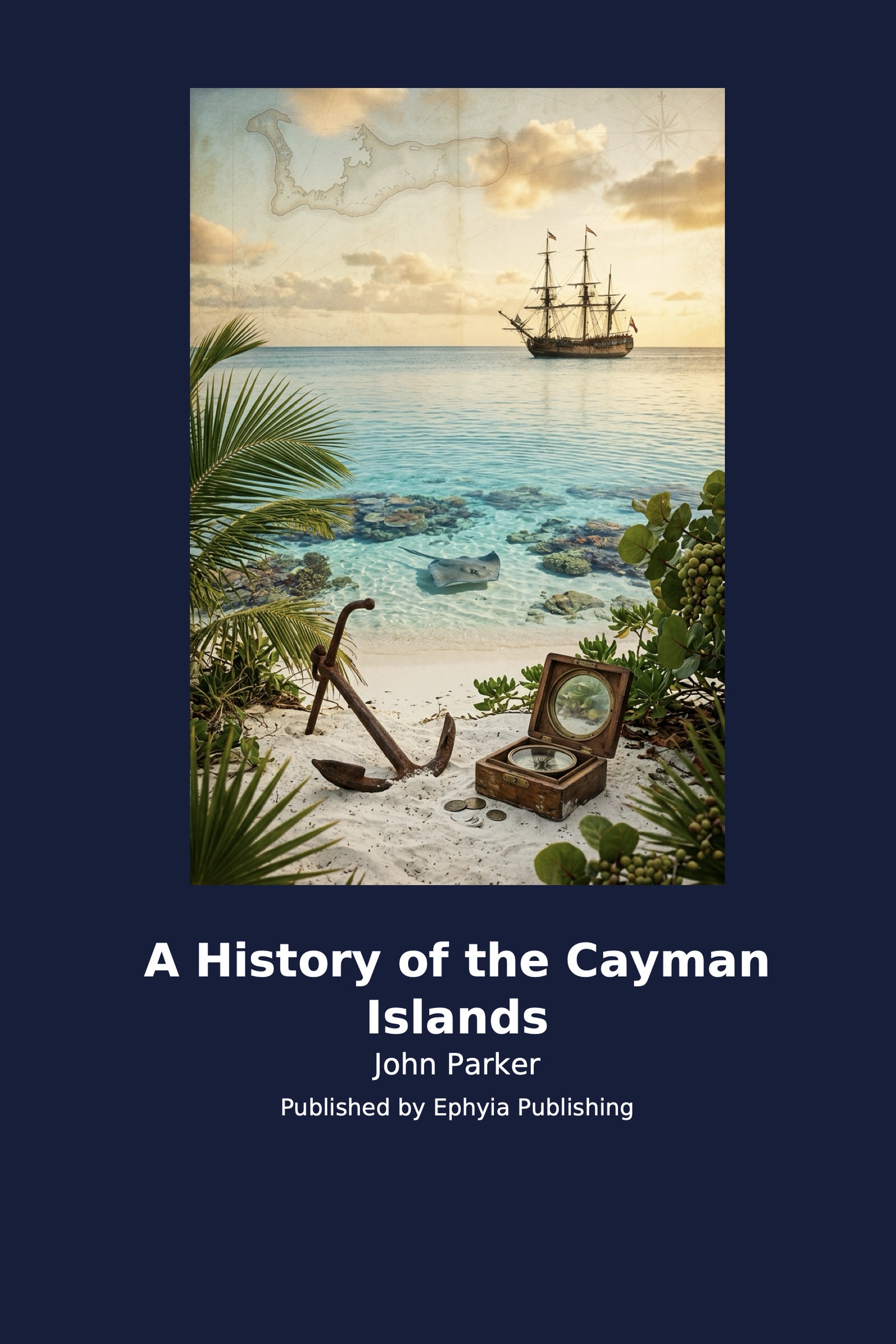
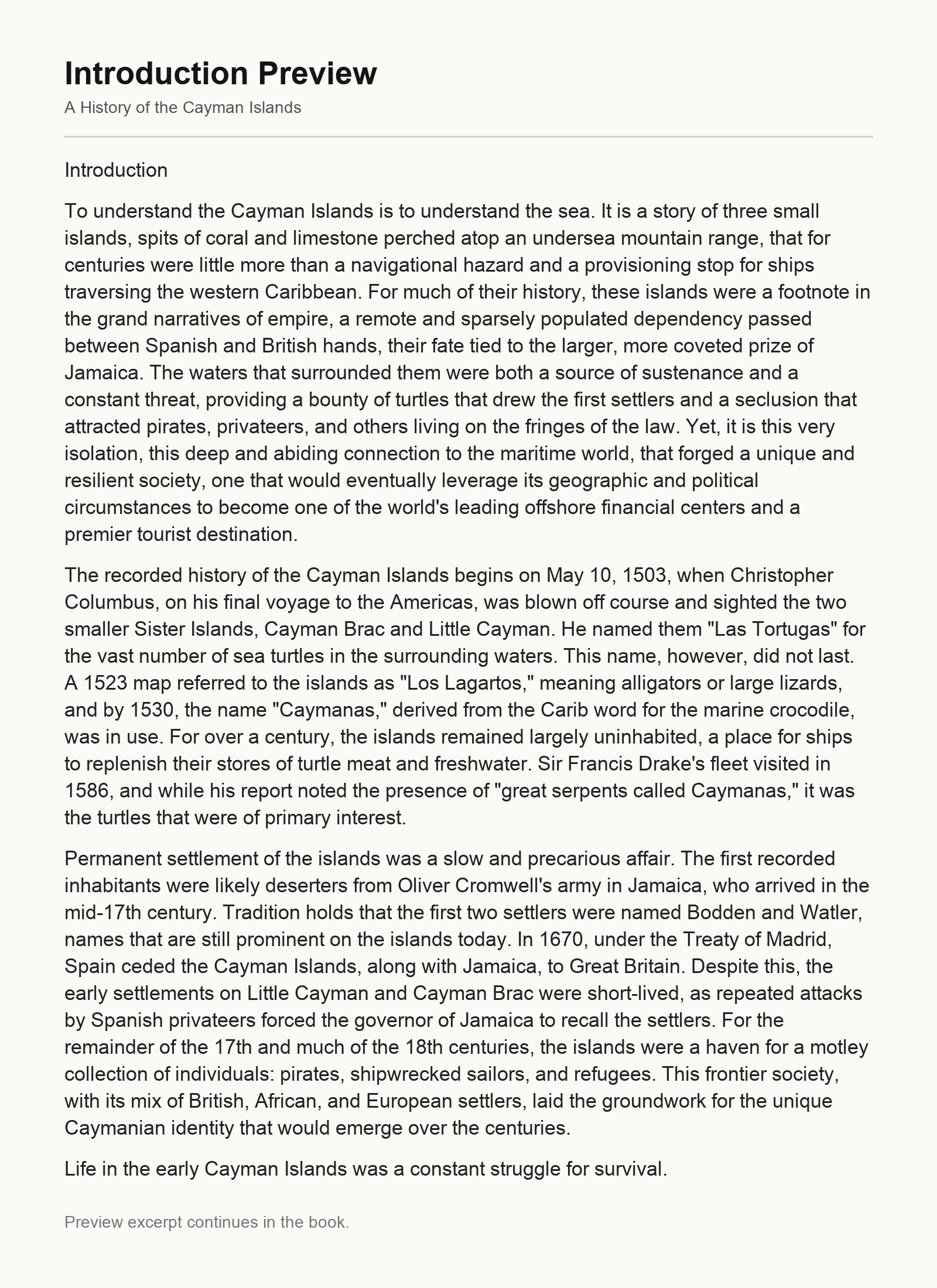
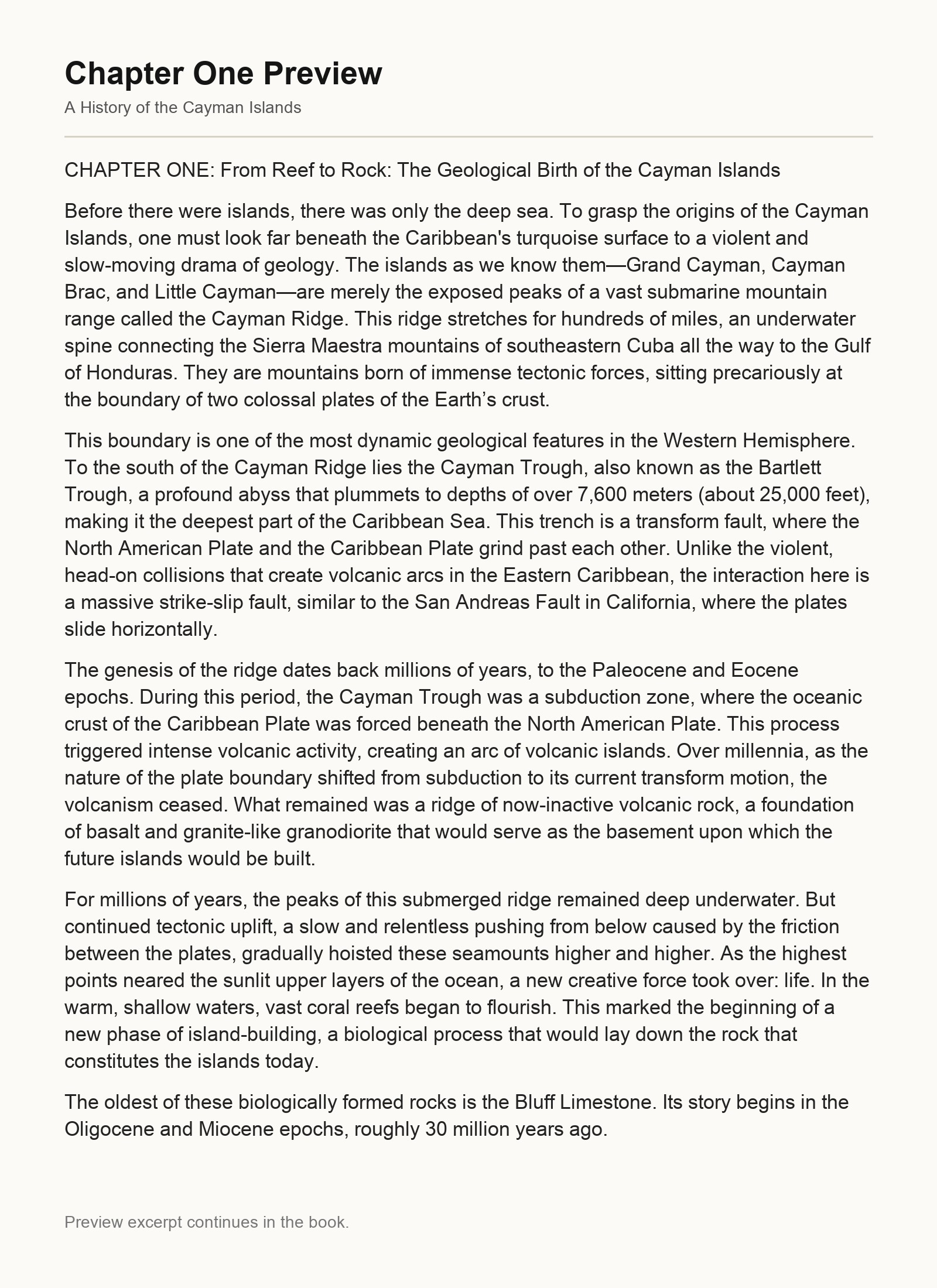
A History of the Cayman Islands invites readers on a comprehensive journey from the islands’ fiery geological birth to their present status as a global financial hub and beloved tourist destination. Beginning with the tectonic forces that lifted the Cayman Ridge from the Caribbean depths, the narrative reveals how coral reefs and limestone strata shaped the land, its scarce freshwater lens, and the unique flora and fauna that would later define Caymanian identity. Readers will witness the first human encounters—Columbus’s amazed sighting of “Las Tortugas,” the shifting names that hinted at crocodiles and turtles, and the islands’ role as a wild provisioning stop for passing ships long before any permanent settlement took hold.
The book then delves into the centuries of maritime frontier life where pirates, privateers, and wreckers used the treacherous reefs as both sanctuary and trap, laying the groundwork for a fiercely independent society. Readers will learn how the slow arrival of settlers—deserters, shipwrecked sailors, and eventually enslaved Africans—created a frontier economy centered on turtling, subsistence farming, and the skilled craft of shipbuilding. The pivotal moments of emancipation in 1835, the rise of a locally elected assembly at Pedro St. James, and the enduring matrifocal strength of Caymanian women are explored in detail, showing how isolation forged a culture of self‑reliance, communal resilience, and a deep connection to the sea.
Moving into the twentieth century, the text traces the arrival of modern infrastructure—roads, the Owen Roberts airfield, radio, and telephone—that finally broke the islands’ isolation and set the stage for the twin pillars of finance and tourism. Readers will experience the strategic legal innovations that attracted international banks, the daring efforts to conquer the mosquito menace, and the birth of world‑class scuba diving on walls like the North Wall and Bloody Bay. The narrative also covers the devastating tests of Hurricane Ivan in 2004 and the remarkable community response that rebuilt a shattered island, reinforcing the national spirit of “Caymankind” forged in earlier storms.
In the contemporary era, the book examines how the Cayman Islands navigated global scrutiny, adopting rigorous regulatory frameworks while preserving its reputation as a well‑regulated financial center. Readers will gain insight into the ongoing environmental battles to protect coral reefs, combat invasive lionfish, and rescue the iconic Blue Iguana from extinction. The work also explores the demographic transformation brought by decades of migration, the blending of traditions with new cultural expressions like Pirates Week and Batabano, and the challenges of sustaining prosperity amid climate change, economic volatility, and the need for social cohesion.
Ultimately, A History of the Cayman Islands offers readers a deep understanding of how a tiny, resource‑poor archipelago leveraged its seafaring legacy, political stability, and geographic position to punch far above its weight on the world stage. By tracing the islands’ journey from geological obscurity to global significance, the book provides valuable lessons in resilience, adaptation, and the enduring power of a community that has continually found ways to steer its own course—past, present, and into the uncertainties of the twenty‑first century.
What You'll Find Inside:
- The geological origins of the islands from submarine mountain ranges, coral reefs, and limestone formations that created Grand Cayman, Cayman Brac, and Little Cayman
- The evolution of the Caymanian economy from turtling and thatch rope to becoming a leading offshore financial center and premier tourist destination
- The formation of Caymanian society through settlement, slavery, emancipation, and the development of a distinct cultural identity rooted in maritime heritage
- The political journey from Spanish and British control through Jamaican dependency to modern self-government and constitutional reforms
- The environmental frontlines of conservation, including coral reef protection, sea turtle preservation, and the remarkable recovery of the Grand Cayman Blue Iguana
Who's It For:
This book is ideal for students, researchers, and professionals interested in Caribbean history, economic development, or offshore finance who seek a comprehensive understanding of the Cayman Islands' transformation. It will particularly benefit those considering relocation, investment, or business operations in the territory by providing essential historical and cultural context. Travelers wanting to move beyond typical tourist experiences to appreciate the islands' rich heritage and environmental challenges will also find valuable insights. Additionally, anyone fascinated by how small, isolated communities can leverage unique circumstances to achieve global prominence will find this historical account both informative and inspiring.
Table of Contents:
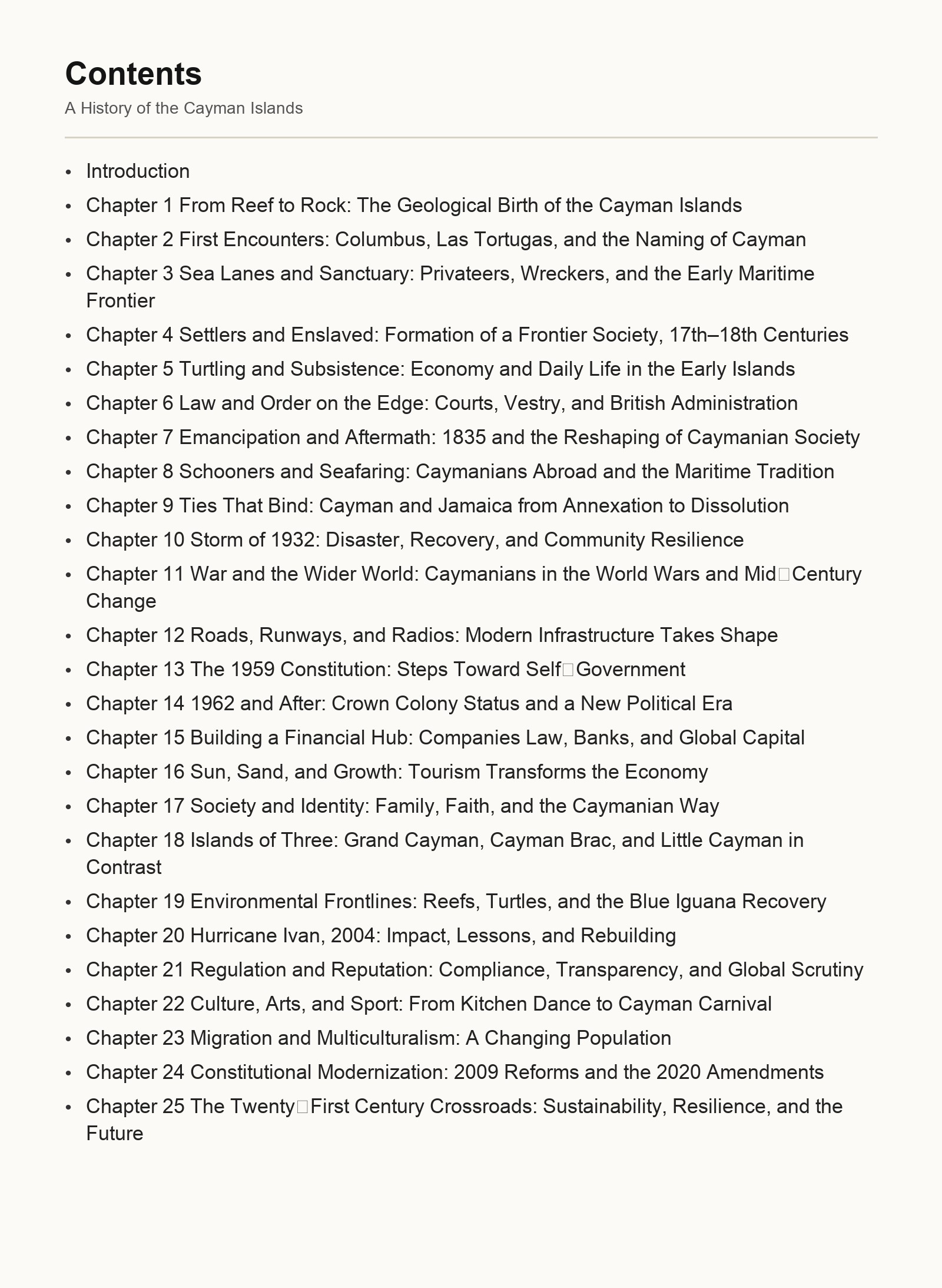
- Introduction
- Chapter 1 From Reef to Rock: The Geological Birth of the Cayman Islands
- Chapter 2 First Encounters: Columbus, Las Tortugas, and the Naming of Cayman
- Chapter 3 Sea Lanes and Sanctuary: Privateers, Wreckers, and the Early Maritime Frontier
- Chapter 4 Settlers and Enslaved: Formation of a Frontier Society, 17th–18th Centuries
- Chapter 5 Turtling and Subsistence: Economy and Daily Life in the Early Islands
- Chapter 6 Law and Order on the Edge: Courts, Vestry, and British Administration
- Chapter 7 Emancipation and Aftermath: 1835 and the Reshaping of Caymanian Society
- Chapter 8 Schooners and Seafaring: Caymanians Abroad and the Maritime Tradition
- Chapter 9 Ties That Bind: Cayman and Jamaica from Annexation to Dissolution
- Chapter 10 Storm of 1932: Disaster, Recovery, and Community Resilience
- Chapter 11 War and the Wider World: Caymanians in the World Wars and Mid‑Century Change
- Chapter 12 Roads, Runways, and Radios: Modern Infrastructure Takes Shape
- Chapter 13 The 1959 Constitution: Steps Toward Self‑Government
- Chapter 14 1962 and After: Crown Colony Status and a New Political Era
- Chapter 15 Building a Financial Hub: Companies Law, Banks, and Global Capital
- Chapter 16 Sun, Sand, and Growth: Tourism Transforms the Economy
- Chapter 17 Society and Identity: Family, Faith, and the Caymanian Way
- Chapter 18 Islands of Three: Grand Cayman, Cayman Brac, and Little Cayman in Contrast
- Chapter 19 Environmental Frontlines: Reefs, Turtles, and the Blue Iguana Recovery
- Chapter 20 Hurricane Ivan, 2004: Impact, Lessons, and Rebuilding
- Chapter 21 Regulation and Reputation: Compliance, Transparency, and Global Scrutiny
- Chapter 22 Culture, Arts, and Sport: From Kitchen Dance to Cayman Carnival
- Chapter 23 Migration and Multiculturalism: A Changing Population
- Chapter 24 Constitutional Modernization: 2009 Reforms and the 2020 Amendments
- Chapter 25 The Twenty‑First Century Crossroads: Sustainability, Resilience, and the Future
Author:
Published By:
Date Published:
May 18, 2026
Type:
Nonfiction
Language:
English
Also Available In:
Word Count:
38,837 words
Reading Time:
2 hours 43 minutes
Sample:
Order:
Buy the A History of the Cayman Islands ebook on MixCache.com:
Buy NowThe full ebook will be available immediately to read instantly on any device.
$5 account credit for all new MixCache.com accounts, usable toward any ebook purchase!*





Ratings & Reviews
Ask Questions About This Book
Have a question about the content? Ask our AI assistant!
Start by asking a question about "A History of the Cayman Islands"
Example: "Does this book mention William Shakespeare?"
Thinking...