Browse by Category
Fiction
- Action & Adventure
- African American
- Anthologies
- Children's Fiction
- Classics
- Comics & Graphic Novels
- Coming of Age
- Contemporary
- Cultural & Regional
- Drama
- Erotica
- Fantasy
- General
- Historical Fiction
- Horror
- Humor & Satire
- Literary Fiction
- Mystery, Thriller & Suspense
- Poetry
- Religious & Inspirational
- Romance
- Science Fiction
- Short Stories
- War & Military
- Westerns
- Women's Fiction
- Young Adult
Non-Fiction
- Antiques & Collectibles
- Arts & Photography
- Biographies & Memoirs
- Business & Money
- Children's Non-Fiction
-
Computers & Technology
- Artificial Intelligence
- Computer Science
- Cybersecurity & Cryptography
- Data Science & Analytics
- Databases & Big Data
- Game Development & Design
- General
- Hardware & DIY
- Mobile App Development
- Networking & Cloud Computing
- Operating Systems
- Programming
- Robotics
- Software
- Software Engineering
- User Experience (UX) & Design
- Web Development & Design
- Cooking, Food & Wine
- Crafts, Hobbies & Home
- Education & Teaching
- Engineering
- General
- Health, Fitness & Dieting
-
History
- African History
- African History - North Africa
- African History - Sub-Saharan Africa
- American History
- American History - 20th Century
- American History - Civil War
- American History - Colonial Period
- Ancient History
- Asian History
- Asian History - China
- Asian History - India
- Asian History - Japan
- Asian History - Southeast Asia
- European History
- European History - Ancient Greece
- European History - Ancient Rome
- European History - Medieval
- European History - Modern
- European History - Renaissance
- General
- Middle Eastern History
- Military History
- Military History - Aviation
- Military History - Naval
- Social & Cultural History
- World History
- Humor & Entertainment
- Industrial Technology
- Language Learning
- Law
- LGBTQ+ Non-Fiction
- Literary Criticism
- Medical Books
- Parenting & Relationships
- Philosophy
- Politics & Social Sciences
- Reference
- Religion & Spirituality
-
Science & Math
- Agricultural Sciences
- Astronomy & Space Science
- Behavioral Sciences
- Biological Sciences
- Botany & Plant Science
- Chemistry
- Earth Sciences
- Engineering - Chemical
- Engineering - Civil
- Engineering - Electrical
- Engineering - Mechanical
- Environment
- General
- Geology
- Mathematics
- Nature & Ecology
- Oceanography
- Paleontology
- Physics
- Statistics
- Self-Help
- Sports & Outdoors
- Study Aids
- Sustainability & Green Living
- Textbooks
- Transportation
- Travel
- True Crime
- Urban Planning & Development
- Veterinary Medicine
- Writing & Publishing
Jump to Section
MixCache.com Total Access
Unlimited reading and audiobooks for every book published by MixCache.com.
Included titles carry the MTA badge.
Learn more →
Tornados and Hurricanes
The Wrath of the Wind
About this book:
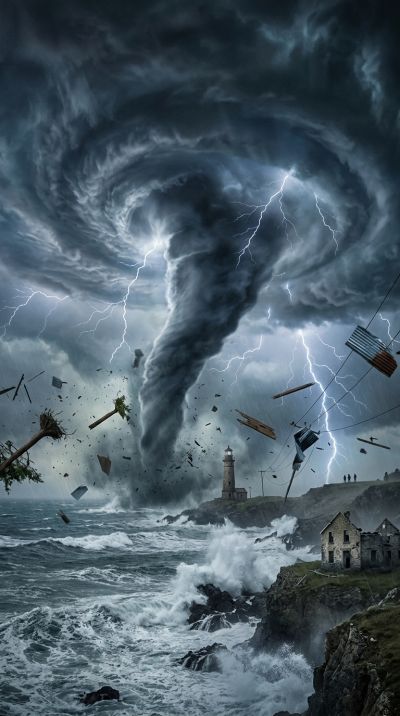
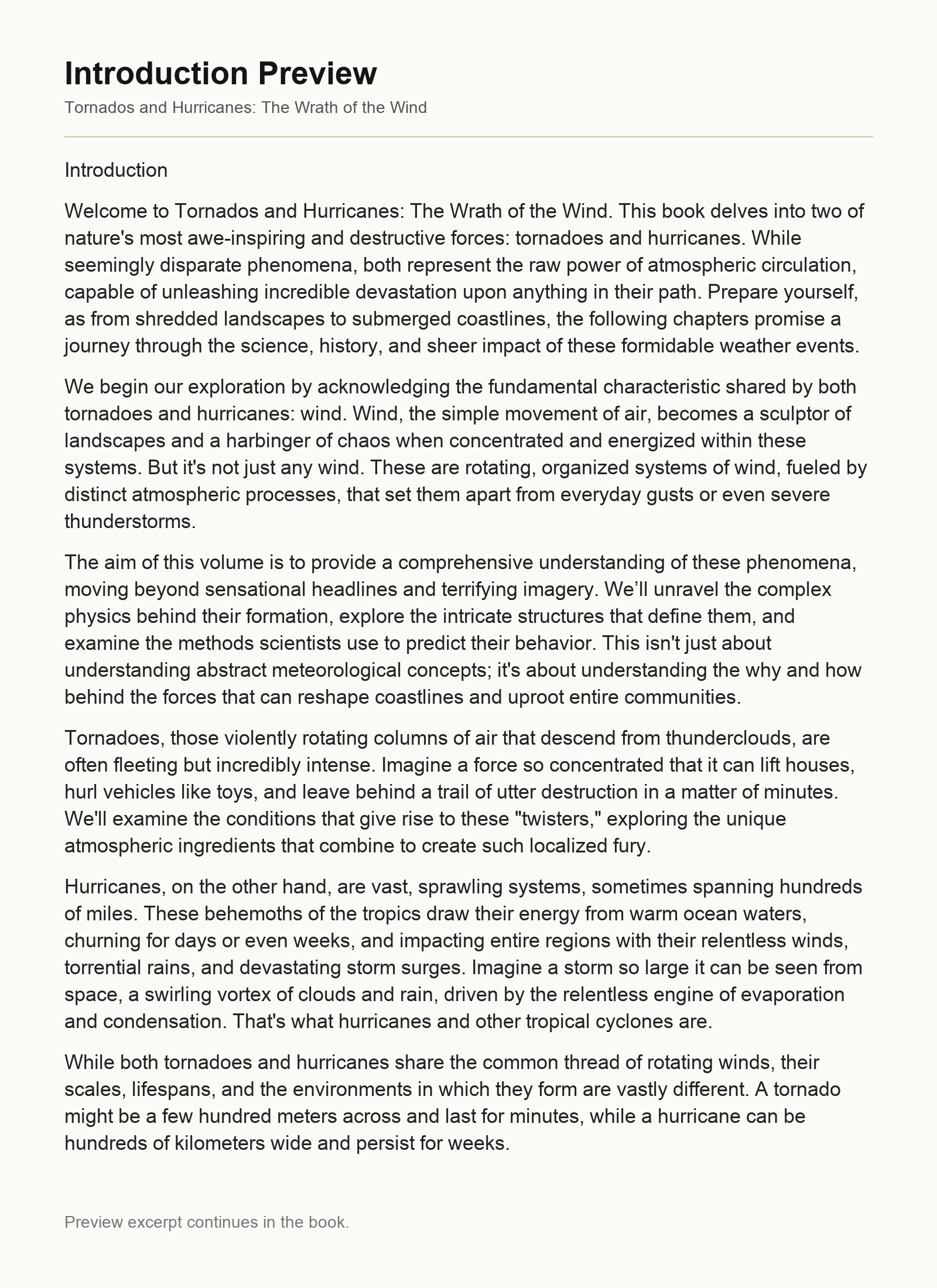
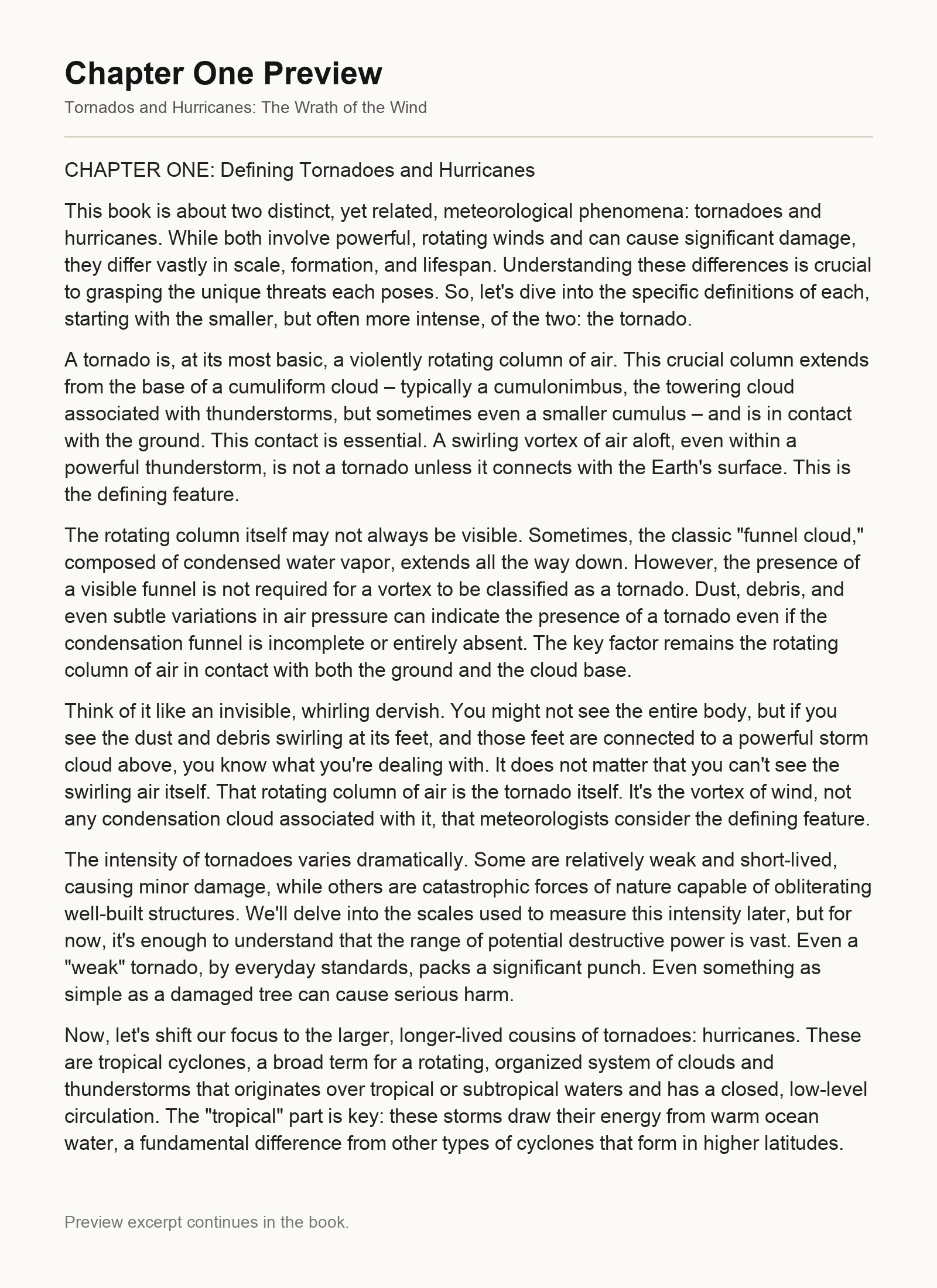
Tornados and Hurricanes: The Wrath of the Wind offers readers a comprehensive journey into the science and impact of two of nature’s most powerful atmospheric forces. From the moment you open the book you will explore clear definitions that distinguish a tornado’s violently rotating column of air from a hurricane’s vast, organized tropical cyclone, laying a solid foundation for understanding their similarities and critical differences. Each chapter builds on this base, guiding you through the intricate structures, formation processes, and life cycles that shape these storms, so you can grasp not only what they are but how they develop and evolve.
You will learn to read the sky like a meteorologist, discovering how Doppler radar, storm spotters, and hurricane hunters provide early warnings and vital data, while also becoming familiar with the scales that measure intensity—from the Fujita and Enhanced Fujita scales for tornadoes to the Saffir‑Simpson scale for hurricanes. The book demystifies technical terms such as mesocyclone, eyewall, storm surge, and beta drift, turning jargon into practical knowledge that helps you interpret forecasts and recognize genuine danger signals. Through vivid descriptions of size, shape, and appearance, you will visualize everything from slender rope tornadoes to monstrous wedge systems and from the calm eye of a hurricane to its destructive eyewall.
Beyond the physics, the narrative takes you into the human experience of these events, sharing stories of survivors, first responders, and communities that have faced the wrath of the wind and emerged with lessons in resilience and preparedness. You will examine safety strategies that really work—knowing the difference between a watch and a warning, identifying safe shelter locations, assembling emergency kits, and understanding why myths like opening windows or seeking refuge under overpasses are deadly misconceptions. The book also explores the psychological and long‑term social impacts, giving you a full picture of what it means to live in tornado‑prone or hurricane‑vulnerable regions.
Readers will also gain insight into the broader forces that shape storm behavior, including climatology, climate change, and large‑scale patterns such as El Niño and the Atlantic Multidecadal Oscillation. You will see how warming oceans, rising sea levels, and shifting atmospheric currents may alter the frequency, intensity, and tracks of future storms, and you will discover the cutting‑edge research—from mobile radars and drone observations to advanced computer modeling—that is striving to improve forecasts and save lives. Record‑breaking events like the Tri‑State Tornado and Hurricane Patricia are examined not just for their staggering numbers but for what they reveal about the extremes of atmospheric power.
Ultimately, this book equips you with the knowledge to appreciate the awe‑inspiring beauty of these phenomena while respecting their destructive potential. Whether you are a student, a weather enthusiast, a resident of a storm‑prone area, or simply curious about the forces that shape our planet, you will walk away with a deeper understanding of how tornadoes and hurricanes form, how they are detected and predicted, and how you can stay safe when they threaten. The wrath of the wind is laid bare, not to frighten, but to inform and empower you to face it with confidence and preparedness.
What You'll Find Inside:
- Clear definitions differentiate tornadoes (localized rotating columns of air touching ground) from hurricanes (large tropical cyclones fueled by warm ocean water).
- Tornado life cycle involves formation via supercell mesocyclones, maturity with peak intensity, and dissipation often influenced by rear-flank downdraft interactions.
- Hurricane formation requires warm sea surface temperatures (>26.5°C), low wind shear, sufficient Coriolis force, atmospheric instability, and a pre-existing disturbance.
- Detection relies on Doppler radar for rotation signatures and trained storm spotters/ hurricane hunters for ground truth and aircraft reconnaissance.
- Climate change is projected to increase hurricane intensity, rainfall rates, storm surge potential, and rapid intensification, while tornado trends remain less certain.
Who's It For:
This book is ideal for students of meteorology, weather enthusiasts, emergency management professionals, and residents of tornado- or hurricane-prone regions seeking a thorough yet accessible guide. It provides the scientific foundation, safety practices, and latest research needed to understand and prepare for these extreme weather events.
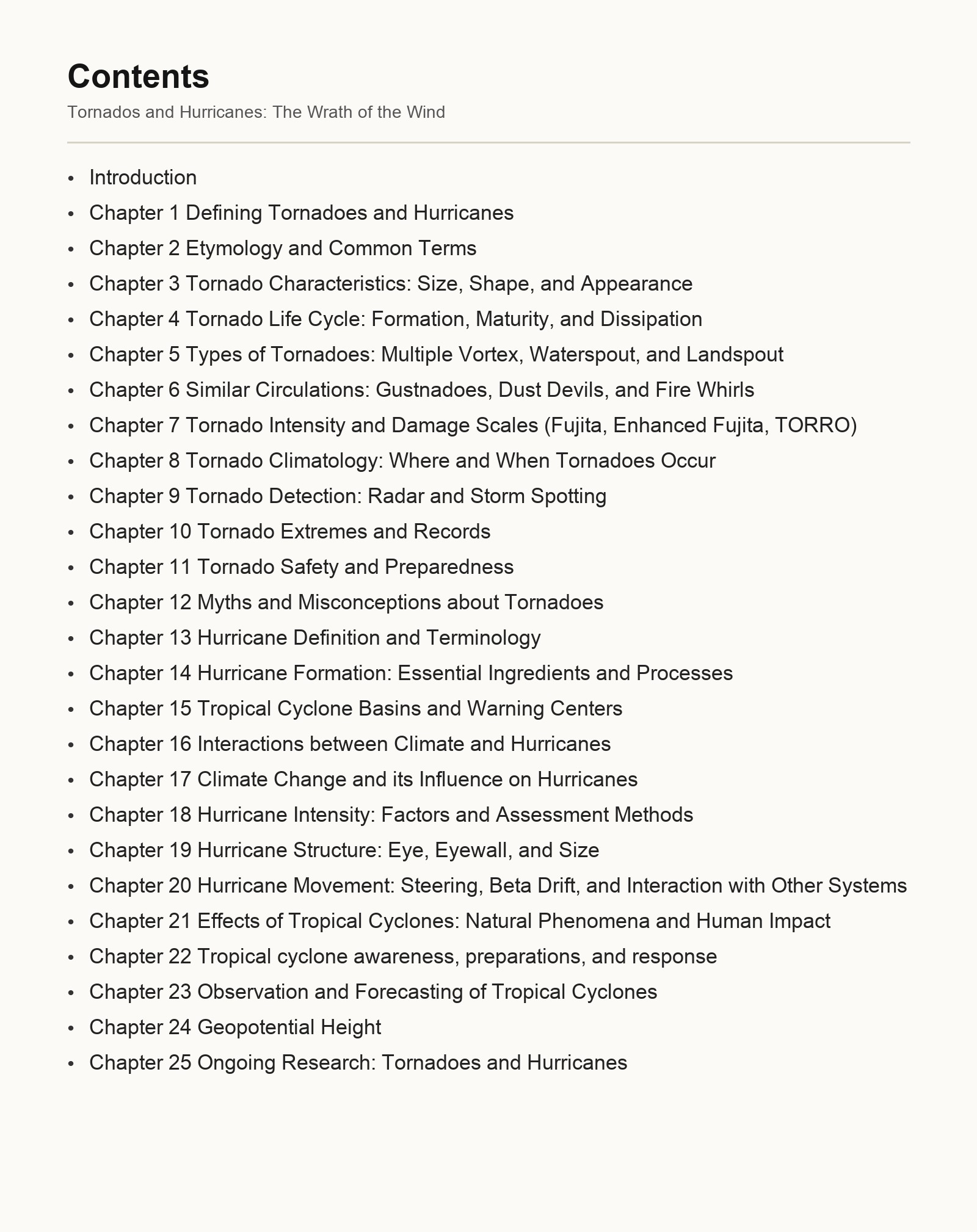
Table of Contents:
-
Introduction
-
Chapter 1 Defining Tornadoes and Hurricanes
-
Chapter 2 Etymology and Common Terms
-
Chapter 3 Tornado Characteristics: Size, Shape, and Appearance
-
Chapter 4 Tornado Life Cycle: Formation, Maturity, and Dissipation
-
Chapter 5 Types of Tornadoes: Multiple Vortex, Waterspout, and Landspout
-
Chapter 6 Similar Circulations: Gustnadoes, Dust Devils, and Fire Whirls
-
Chapter 7 Tornado Intensity and Damage Scales (Fujita, Enhanced Fujita, TORRO)
-
Chapter 8 Tornado Climatology: Where and When Tornadoes Occur
-
Chapter 9 Tornado Detection: Radar and Storm Spotting
-
Chapter 10 Tornado Extremes and Records
-
Chapter 11 Tornado Safety and Preparedness
-
Chapter 12 Myths and Misconceptions about Tornadoes
-
Chapter 13 Hurricane Definition and Terminology
-
Chapter 14 Hurricane Formation: Essential Ingredients and Processes
-
Chapter 15 Tropical Cyclone Basins and Warning Centers
-
Chapter 16 Interactions between Climate and Hurricanes
-
Chapter 17 Climate Change and its Influence on Hurricanes
-
Chapter 18 Hurricane Intensity: Factors and Assessment Methods
-
Chapter 19 Hurricane Structure: Eye, Eyewall, and Size
-
Chapter 20 Hurricane Movement: Steering, Beta Drift, and Interaction with Other Systems
-
Chapter 21 Effects of Tropical Cyclones: Natural Phenomena and Human Impact
-
Chapter 22 Tropical cyclone awareness, preparations, and response
-
Chapter 23 Observation and Forecasting of Tropical Cyclones
-
Chapter 24 Geopotential Height.
-
Chapter 25 Ongoing Research: Tornadoes and Hurricanes
Author:
Published By:
Date Published:
May 17, 2026
Type:
Nonfiction
Language:
English
Also Available In:
Word Count:
54,627 words
Reading Time:
3 hours 50 minutes
Sample:
Order:
Order Tornados and Hurricanes (Paperback) on MixCache.com:
Buy NowPrint copy is made to order and ships worldwide. Includes the ebook free, ready to read instantly.
$5 account credit for all new MixCache.com accounts, usable toward any ebook purchase!*