Browse by Category
Fiction
- Action & Adventure
- African American
- Anthologies
- Children's Fiction
- Classics
- Comics & Graphic Novels
- Coming of Age
- Contemporary
- Cultural & Regional
- Drama
- Erotica
- Fantasy
- General
- Historical Fiction
- Horror
- Humor & Satire
- Literary Fiction
- Mystery, Thriller & Suspense
- Poetry
- Religious & Inspirational
- Romance
- Science Fiction
- Short Stories
- War & Military
- Westerns
- Women's Fiction
- Young Adult
Non-Fiction
- Antiques & Collectibles
- Arts & Photography
- Biographies & Memoirs
- Business & Money
- Children's Non-Fiction
-
Computers & Technology
- Artificial Intelligence
- Computer Science
- Cybersecurity & Cryptography
- Data Science & Analytics
- Databases & Big Data
- Game Development & Design
- General
- Hardware & DIY
- Mobile App Development
- Networking & Cloud Computing
- Operating Systems
- Programming
- Robotics
- Software
- Software Engineering
- User Experience (UX) & Design
- Web Development & Design
- Cooking, Food & Wine
- Crafts, Hobbies & Home
- Education & Teaching
- Engineering
- General
- Health, Fitness & Dieting
-
History
- African History
- African History - North Africa
- African History - Sub-Saharan Africa
- American History
- American History - 20th Century
- American History - Civil War
- American History - Colonial Period
- Ancient History
- Asian History
- Asian History - China
- Asian History - India
- Asian History - Japan
- Asian History - Southeast Asia
- European History
- European History - Ancient Greece
- European History - Ancient Rome
- European History - Medieval
- European History - Modern
- European History - Renaissance
- General
- Middle Eastern History
- Military History
- Military History - Aviation
- Military History - Naval
- Social & Cultural History
- World History
- Humor & Entertainment
- Industrial Technology
- Language Learning
- Law
- LGBTQ+ Non-Fiction
- Literary Criticism
- Medical Books
- Parenting & Relationships
- Philosophy
- Politics & Social Sciences
- Reference
- Religion & Spirituality
-
Science & Math
- Agricultural Sciences
- Astronomy & Space Science
- Behavioral Sciences
- Biological Sciences
- Botany & Plant Science
- Chemistry
- Earth Sciences
- Engineering - Chemical
- Engineering - Civil
- Engineering - Electrical
- Engineering - Mechanical
- Environment
- General
- Geology
- Mathematics
- Nature & Ecology
- Oceanography
- Paleontology
- Physics
- Statistics
- Self-Help
- Sports & Outdoors
- Study Aids
- Sustainability & Green Living
- Textbooks
- Transportation
- Travel
- True Crime
- Urban Planning & Development
- Veterinary Medicine
- Writing & Publishing
Jump to Section
MixCache.com Total Access
Unlimited reading and audiobooks for every book published by MixCache.com.
Included titles carry the MTA badge.
Learn more →
Mandate and Merit: The Imperial Examination System and Social Mobility in China
MTA
A study of how exams shaped governance, literacy, and elite formation from Sui to Qing
About this book:
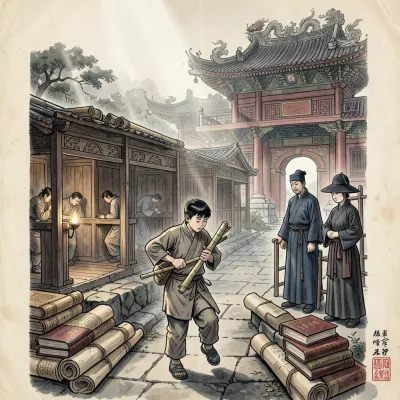
*Mandate and Merit: The Imperial Examination System and Social Mobility in China* provides a comprehensive historical analysis of the *keju* system, tracing its evolution from its inception under the Sui and Tang dynasties to its abolition in the late Qing. The book explores the examination system not merely as a bureaucratic tool for recruitment, but as a vast social and cultural ecosystem that linked political legitimacy to classical mastery. It details the rigorous stages of selection—from local county tests to the prestigious palace examination—and examines the rigid "eight-legged essay" format that served as both a mental discipline and a standardized measure of moral and intellectual worth.
The study delves into the complex interplay between meritocratic ideals and entrenched social realities, illustrating how family strategies, kinship networks, and regional quotas shaped the landscape of opportunity. While the system offered a rare path for upward mobility, it was heavily influenced by the economic capacity of families to fund decades of study. The narrative also highlights the "culture of writing" that defined the literati class, the role of academies in training the elite, and the sophisticated anti-fraud measures designed to maintain the system’s integrity. Furthermore, it addresses the experiences of those at the margins, including women, military candidates, and ethnic minorities in the empire’s borderlands.
The final chapters focus on the system’s struggle to adapt to the pressures of the 19th century. As the Qing dynasty faced internal rebellion and foreign imperialist aggression, critics increasingly argued that a curriculum rooted in ancient classics was inadequate for a modern world requiring scientific and technical expertise. This led to the radical educational reforms of the late 19th century and the eventual abolition of the exams in 1905. The book concludes by tracing the enduring legacy of the *keju* in modern East Asian educational practices and global civil service models.
Ultimately, the work argues that the imperial examination system was foundational to the longevity of the Chinese state. By entwining the personal ambitions of the elite with the ideological requirements of the throne, the system created a cohesive governing class that shared a common language of statecraft. Even after its formal end, the cultural value placed on examination-based merit continues to influence social hierarchies and institutional credentials in contemporary society, demonstrating the persistent power of the "mandate and merit" framework.
What You'll Find Inside:
- The book examines how the imperial examination system balanced meritocratic ideals with social realities, exploring how talent intersected with birth, wealth, geography, and patronage to determine success in China's civil service exams from Sui to Qing dynasties.
- It details the multi-stage examination process—from county tests to palace examinations before the emperor—including the eight-legged essay format, study logistics, and the physical and psychological experience of candidates in examination cells.
- The work analyzes how the examination system functioned as a social ecosystem that shaped family strategies, kinship networks, patronage, academy education, print culture, and local gentry formation across China's diverse regions.
- It examines the system's role in governing a multiethnic empire, covering ethnic minority access, regional quotas, borderland variations, and how the exams both integrated and reproduced hierarchies within China's diverse population.
- The book traces the examination system's evolution and legacy, from its origins and adaptations through dynastic transitions to its abolition in 1905 and lasting influence on modern educational systems and meritocratic ideals in China and beyond.
Who's It For:
This book is ideal for students and scholars of Chinese history, particularly those focused on social history, education systems, and imperial governance. It will also appeal to readers interested in the historical roots of meritocracy, examination culture, and how societies balance ideals of fairness with social realities. Academics in comparative education, political science, and sociology will find relevant insights into how examination systems shape elite formation and social mobility.
Table of Contents:
- Introduction
- Chapter 1 From Sui to Song: Birth of the Examination Ideal
- Chapter 2 Canon and Commentary: What the Exams Tested
- Chapter 3 The Eight-Legged Essay: Form, Discipline, and Creativity
- Chapter 4 Stages of Selection: Local, Provincial, Metropolitan, and Palace
- Chapter 5 Quotas and Geography: Balancing Center and Periphery
- Chapter 6 Schools and Academies: Training the Literati
- Chapter 7 Print Culture and Study Aids: Commentaries, Anthologies, and Guides
- Chapter 8 Time, Space, and Bodies: The Logistics of the Examination Cell
- Chapter 9 Fraud and Fairness: Cheating, Proctors, and Punishments
- Chapter 10 Merit and Lineage: Family Strategies and Kinship Networks
- Chapter 11 Patronage and Power: Mentors, Factions, and Office
- Chapter 12 Women at the Threshold: Gendered Worlds around the Exams
- Chapter 13 Beyond Han: Ethnicity, Empire, and Access in Multiethnic Rule
- Chapter 14 Local Elites: Gentry Formation and Community Leadership
- Chapter 15 From Degree to Desk: Careers in Governance
- Chapter 16 Law, Ritual, and the Classicist State
- Chapter 17 The Economics of Study: Wealth, Work, and Opportunity Costs
- Chapter 18 Culture of Writing: Poetry, Prose, and Moral Selfhood
- Chapter 19 Failure and Resilience: The Many Who Did Not Succeed
- Chapter 20 Dissent within Orthodoxy: Critics, Reformers, and Heresies
- Chapter 21 Crisis and Adaptation: The Exams in Ming–Qing Transitions
- Chapter 22 The Military Examinations: Parallel Paths of Service
- Chapter 23 Borderlands and Diaspora: Regional Variations and Mobility
- Chapter 24 Late Qing Reforms: Confronting the Modern World
- Chapter 25 Legacies of Merit: From Imperial Degrees to Modern Credentials
Author:
Published By:
Date Published:
May 14, 2026
Type:
Nonfiction
Language:
English
Word Count:
70,862 words
Reading Time:
4 hours 58 minutes
Sample:
Order:
Order Mandate and Merit: The Imperial Examination System and Social Mobility in China (Hardcover) on MixCache.com:
Buy NowPrint copy is made to order and ships worldwide. Includes the ebook free, ready to read instantly.
$5 account credit for all new MixCache.com accounts, usable toward any ebook purchase!*