Browse by Category
Fiction
- Action & Adventure
- African American
- Anthologies
- Children's Fiction
- Classics
- Comics & Graphic Novels
- Coming of Age
- Contemporary
- Cultural & Regional
- Drama
- Erotica
- Fantasy
- General
- Historical Fiction
- Horror
- Humor & Satire
- Literary Fiction
- Mystery, Thriller & Suspense
- Poetry
- Religious & Inspirational
- Romance
- Science Fiction
- Short Stories
- War & Military
- Westerns
- Women's Fiction
- Young Adult
Non-Fiction
- Antiques & Collectibles
- Arts & Photography
- Biographies & Memoirs
- Business & Money
- Children's Non-Fiction
-
Computers & Technology
- Artificial Intelligence
- Computer Science
- Cybersecurity & Cryptography
- Data Science & Analytics
- Databases & Big Data
- Game Development & Design
- General
- Hardware & DIY
- Mobile App Development
- Networking & Cloud Computing
- Operating Systems
- Programming
- Robotics
- Software
- Software Engineering
- User Experience (UX) & Design
- Web Development & Design
- Cooking, Food & Wine
- Crafts, Hobbies & Home
- Education & Teaching
- Engineering
- General
- Health, Fitness & Dieting
-
History
- African History
- African History - North Africa
- African History - Sub-Saharan Africa
- American History
- American History - 20th Century
- American History - Civil War
- American History - Colonial Period
- Ancient History
- Asian History
- Asian History - China
- Asian History - India
- Asian History - Japan
- Asian History - Southeast Asia
- European History
- European History - Ancient Greece
- European History - Ancient Rome
- European History - Medieval
- European History - Modern
- European History - Renaissance
- General
- Middle Eastern History
- Military History
- Military History - Aviation
- Military History - Naval
- Social & Cultural History
- World History
- Humor & Entertainment
- Industrial Technology
- Language Learning
- Law
- LGBTQ+ Non-Fiction
- Literary Criticism
- Medical Books
- Parenting & Relationships
- Philosophy
- Politics & Social Sciences
- Reference
- Religion & Spirituality
-
Science & Math
- Agricultural Sciences
- Astronomy & Space Science
- Behavioral Sciences
- Biological Sciences
- Botany & Plant Science
- Chemistry
- Earth Sciences
- Engineering - Chemical
- Engineering - Civil
- Engineering - Electrical
- Engineering - Mechanical
- Environment
- General
- Geology
- Mathematics
- Nature & Ecology
- Oceanography
- Paleontology
- Physics
- Statistics
- Self-Help
- Sports & Outdoors
- Study Aids
- Sustainability & Green Living
- Textbooks
- Transportation
- Travel
- True Crime
- Urban Planning & Development
- Veterinary Medicine
- Writing & Publishing
Jump to Section
MixCache.com Total Access
Unlimited reading and audiobooks for every book published by MixCache.com.
Included titles carry the MTA badge.
Learn more →
Spices and Gut Health
MTA
Scientific Insights on How Herbs and Spices Affect Digestion and Microbiome
About this book:
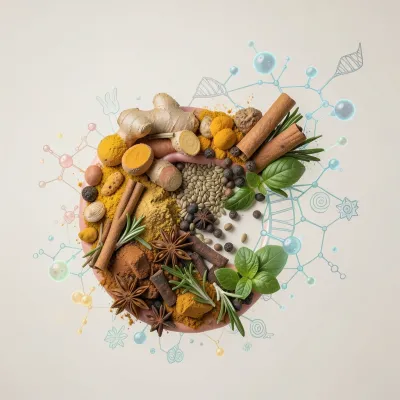
This book explores the intersection of culinary tradition and microbiome science, detailing how common herbs and spices function as potent modulators of digestive health. It categorizes spices by their biochemical properties, such as the anti-inflammatory pathways of turmeric and ginger, the antimicrobial and biofilm-disrupting capabilities of oregano and thyme, and the prebiotic-like effects of polyphenol-rich seeds like cumin and coriander. By examining the chemical compounds—such as curcumin, piperine, and eugenol—the text illustrates how these botanicals strengthen the gut barrier, calm systemic inflammation, and selectively influence microbial populations to favor diversity and resilience.
A significant portion of the book focuses on the practical application of spice chemistry, emphasizing how cooking methods and "spice synergy" affect bioavailability. It explains that pairing certain spices, such as turmeric with black pepper, or blooming them in healthy fats, can dramatically enhance the absorption of their active molecules. The text also addresses the dual nature of these substances, noting that while they offer therapeutic potential for conditions like IBS, IBD, GERD, and SIBO, they must be used mindfully to avoid irritation or negative interactions with pharmaceutical medications.
The narrative underscores the importance of personalization, acknowledging that individual genetics and baseline microbiome composition dictate how one responds to specific spices. It encourages a graduated approach to integration, moving from gentle carminatives to more potent anti-inflammatories while monitoring personal tolerance. By shifting the perspective of the spice rack from a collection of flavorings to a functional "pharmacy" in the kitchen, the book provides a framework for sustainable, food-based gut health management.
Ultimately, the book serves as a bridge between ancient medicinal wisdom and modern clinical research. It concludes with practical guidance on sourcing quality ingredients, avoiding contaminants, and meal planning to ensure a diverse intake of bioactive compounds. The goal is to empower readers to use a wide array of aromatic plants not just for culinary pleasure, but as a deliberate strategy to nourish the complex community of microbes essential to overall human well-being.
What You'll Find Inside:
- Spices contain bioactive compounds that interact with the gut microbiome through anti-inflammatory, antimicrobial, and prebiotic mechanisms, influencing digestion and microbial balance.
- The antimicrobial properties of spices require balance - they can help manage pathogens but may disrupt beneficial microbes at high doses or in susceptible individuals.
- Polyphenols in spices act as prebiotics that are metabolized by gut bacteria into beneficial compounds like short-chain fatty acids and urolithins.
- Individual microbiome composition and genetics significantly influence spice responses, emphasizing personalized approaches rather than one-size-fits-all recommendations.
- Evidence-based protocols are provided for using spices to manage common digestive conditions including IBS, IBD, GERD, and SIBO.
Who's It For:
This book is ideal for individuals interested in gut health who want to understand how culinary spices can support digestive function through evidence-based approaches. It will particularly benefit those managing digestive conditions like IBS, IBD, GERD, or SIBO who seek food-based strategies to complement medical care. Health-conscious cooks looking to optimize their spice use for both flavor and functional benefits will find practical guidance on preparation methods, dosing, and spice combinations. Readers interested in personalized nutrition will appreciate the emphasis on individual variation in microbiome composition and genetic factors that affect spice responses.
Table of Contents:
- Introduction
- Chapter 1 The Gut Ecosystem: Microbiome 101
- Chapter 2 Inflammation and Immunity in the Digestive Tract
- Chapter 3 Antimicrobial vs. Microbiome-Friendly: Finding the Balance
- Chapter 4 Prebiotics in the Spice Rack: Polyphenols, Fibers, and Metabolites
- Chapter 5 Turmeric and Curcumin: Pathways of Anti-Inflammation
- Chapter 6 Ginger: Motility, Nausea, and Microbial Modulation
- Chapter 7 Cinnamon: Glucose Regulation, Lipids, and Gut Communities
- Chapter 8 Garlic and the Alliums: Sulfur Compounds and Dysbiosis
- Chapter 9 Oregano and Thyme: Carvacrol, Thymol, and Biofilms
- Chapter 10 Rosemary and Sage: Rosmarinic Acid and Oxidative Stress
- Chapter 11 Clove and Allspice: Eugenol and Mucosal Defense
- Chapter 12 Black Pepper and Piperine: Bioenhancement and Barrier Integrity
- Chapter 13 Chili Peppers: Capsaicin, TRP Channels, and Sensitivity
- Chapter 14 Cumin, Coriander, and Caraway: Carminatives for Bloating and Gas
- Chapter 15 Fennel, Anise, and Dill: Smooth Muscle and Comfort
- Chapter 16 Cardamom and Saffron: Emerging Evidence and Applications
- Chapter 17 Fenugreek and Nigella: Mucilage, Thymoquinone, and IBS
- Chapter 18 Mint, Basil, and Cilantro: Cooling Herbs and Microbiota
- Chapter 19 Spice Synergy: Blends, Cooking Methods, and Bioavailability
- Chapter 20 Dosing and Form: Whole, Ground, Teas, Tinctures, and Extracts
- Chapter 21 Quality, Safety, and Contaminants: What to Watch For
- Chapter 22 Interactions and Contraindications: When Caution Is Warranted
- Chapter 23 Personalized Approaches: Microbiome, Genetics, and Tolerance
- Chapter 24 Protocols for IBS, IBD, GERD, and SIBO
- Chapter 25 Meal Planning and Daily Integration: From Pantry to Plate
- Chapter 26 Research Frontiers and How to Read a Study
Author:
Published By:
Date Published:
May 13, 2026
Type:
Nonfiction
Language:
English
Word Count:
77,397 words
Reading Time:
5 hours 25 minutes
Sample:
Order:
Order Spices and Gut Health (Hardcover) on MixCache.com:
Buy NowPrint copy is made to order and ships worldwide. Includes the ebook free, ready to read instantly.
$5 account credit for all new MixCache.com accounts, usable toward any ebook purchase!*