
Browse by Category
Fiction
- Action & Adventure
- African American
- Anthologies
- Children's Fiction
- Classics
- Comics & Graphic Novels
- Coming of Age
- Contemporary
- Cultural & Regional
- Drama
- Erotica
- Fantasy
- General
- Historical Fiction
- Horror
- Humor & Satire
- Literary Fiction
- Mystery, Thriller & Suspense
- Poetry
- Religious & Inspirational
- Romance
- Science Fiction
- Short Stories
- War & Military
- Westerns
- Women's Fiction
- Young Adult
Non-Fiction
- Antiques & Collectibles
- Arts & Photography
- Biographies & Memoirs
- Business & Money
- Children's Non-Fiction
-
Computers & Technology
- Artificial Intelligence
- Computer Science
- Cybersecurity & Cryptography
- Data Science & Analytics
- Databases & Big Data
- Game Development & Design
- General
- Hardware & DIY
- Mobile App Development
- Networking & Cloud Computing
- Operating Systems
- Programming
- Robotics
- Software
- Software Engineering
- User Experience (UX) & Design
- Web Development & Design
- Cooking, Food & Wine
- Crafts, Hobbies & Home
- Education & Teaching
- Engineering
- General
- Health, Fitness & Dieting
-
History
- African History
- African History - North Africa
- African History - Sub-Saharan Africa
- American History
- American History - 20th Century
- American History - Civil War
- American History - Colonial Period
- Ancient History
- Asian History
- Asian History - China
- Asian History - India
- Asian History - Japan
- Asian History - Southeast Asia
- European History
- European History - Ancient Greece
- European History - Ancient Rome
- European History - Medieval
- European History - Modern
- European History - Renaissance
- General
- Middle Eastern History
- Military History
- Military History - Aviation
- Military History - Naval
- Social & Cultural History
- World History
- Humor & Entertainment
- Industrial Technology
- Language Learning
- Law
- LGBTQ+ Non-Fiction
- Literary Criticism
- Medical Books
- Parenting & Relationships
- Philosophy
- Politics & Social Sciences
- Reference
- Religion & Spirituality
-
Science & Math
- Agricultural Sciences
- Astronomy & Space Science
- Behavioral Sciences
- Biological Sciences
- Botany & Plant Science
- Chemistry
- Earth Sciences
- Engineering - Chemical
- Engineering - Civil
- Engineering - Electrical
- Engineering - Mechanical
- Environment
- General
- Geology
- Mathematics
- Nature & Ecology
- Oceanography
- Paleontology
- Physics
- Statistics
- Self-Help
- Sports & Outdoors
- Study Aids
- Sustainability & Green Living
- Textbooks
- Transportation
- Travel
- True Crime
- Urban Planning & Development
- Veterinary Medicine
- Writing & Publishing
Jump to Section
MixCache.com Total Access
Unlimited reading and audiobooks for every book published by MixCache.com.
Included titles carry the MTA badge.
Learn more →
The Stress Response Manual: How Your Body Reacts and What to Do About It
MTA
Simple, clinically proven methods to reduce chronic stress and reverse physiological damage
About this book:
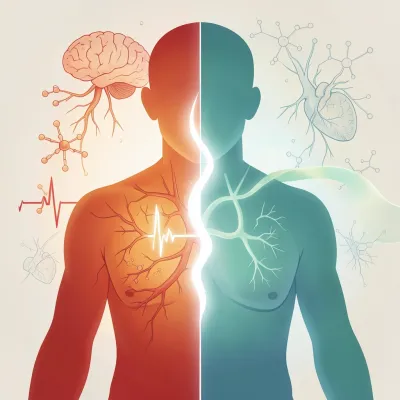
*The Stress Response Manual* provides a comprehensive, science-based framework for understanding and reversing the physiological damage caused by chronic stress. It explains how the body’s "fight-or-flight" machinery—specifically the autonomic nervous system and the HPA axis—is designed for acute survival but becomes destructive when perpetually activated by modern demands. This chronic state leads to "allostatic load," characterized by elevated cortisol, systemic inflammation, and structural remodeling of the brain, particularly in the amygdala, hippocampus, and prefrontal cortex. These biological shifts contribute to a wide range of cardiometabolic and immune disorders, including hypertension, insulin resistance, and gut dysbiosis.
To counteract these effects, the book advocates for a multi-layered approach centered on "working with biology rather than against it." It emphasizes the use of clinically proven breathing protocols, such as box breathing and resonance frequency techniques, to increase heart rate variability (HRV) and strengthen vagal tone. Additionally, it details how movement should be used as medicine, emphasizing moderate activity like walking and mobility work to improve metabolic flexibility without overtaxing a depleted recovery system. Nutritional strategies focus on stabilizing blood sugar and managing the use of caffeine and alcohol to prevent unnecessary hormonal spikes and sleep fragmentation.
The manual also integrates behavioral and environmental interventions to address the psychological and external drivers of stress. It introduces skills like cognitive reframing, acceptance, and pragmatic mindfulness to rewire the brain’s threat-appraisal circuits and quiet the "default mode network" associated with rumination. Environmental levers, including deliberate exposure to heat, cold, and morning sunlight, are presented as powerful tools to reset circadian rhythms and train autonomic resilience. By combining these practices into structured morning, midday, and evening protocols, the book illustrates how individuals can move from burnout to measurable biomarker improvement.
Ultimately, the book frames stress management as a skill of "oscillating between engagement and restoration." It provides rapid-reset tools for immediate stress spikes and concludes with strategies for long-term maintenance and relapse prevention. By tracking objective metrics like HRV and resting heart rate, readers are encouraged to develop a personalized, data-informed lifestyle that prioritizes the recovery windows necessary for physiological repair. The manual shifts the focus from avoiding stress to building a resilient nervous system capable of navigating life's challenges without a high biological cost.
What You'll Find Inside:
- Understanding the biological mechanisms of stress: how the autonomic nervous system and HPA axis work, and why chronic activation leads to allostatic load and physiological damage
- How chronic stress remodels key brain regions (amygdala, hippocampus, prefrontal cortex) and affects cognition, emotion, and behavior
- Evidence-based breathing protocols (box breathing, 4-7-8, resonance frequency) that reliably increase parasympathetic activity and heart rate variability
- Movement as medicine: specific walking, mobility, and strength training approaches that reduce stress biomarkers without overexertion
- Building sustainable daily protocols through habit design, environmental optimization, and rapid reset techniques for stress spikes
Who's It For:
This book is for professionals and individuals experiencing chronic stress who want science-backed, practical methods to reverse physiological damage. It will particularly benefit those noticing symptoms like fatigue, sleep disturbances, anxiety, or cognitive fog who are interested in measurable improvements through breathing, movement, nutrition, and behavioral strategies. Readers who appreciate understanding the 'why' behind interventions and want to track progress via biomarkers like HRV, resting heart rate, and sleep quality will find the most value. The manual is ideal for anyone seeking to work with their biology rather than against it to build lasting resilience.
Table of Contents:
- Introduction
- Chapter 1 The Biology of the Stress Response: Autonomic and HPA Systems
- Chapter 2 Cortisol, Adrenaline, and Allostatic Load
- Chapter 3 When Acute Stress Becomes Chronic
- Chapter 4 Stress and the Brain: Amygdala, Hippocampus, Prefrontal Cortex
- Chapter 5 Inflammation, Immunity, and Chronic Disease
- Chapter 6 Cardiometabolic Consequences: Blood Pressure, Glucose, and Lipids
- Chapter 7 The Gut–Brain Axis and the Microbiome Under Stress
- Chapter 8 Sleep, Circadian Rhythm, and Recovery
- Chapter 9 Assessing Your Baseline: Symptoms, Biomarkers, and HRV
- Chapter 10 Breathing Fundamentals: Diaphragmatic and Nasal Techniques
- Chapter 11 Clinically Tested Breathing Protocols: Box, 4-7-8, and Resonance
- Chapter 12 Vagal Tone and Parasympathetic Activation
- Chapter 13 Movement as Medicine: Walking, Mobility, and Strength
- Chapter 14 Exercise Dosing for High-Stress Individuals
- Chapter 15 Behavioral Skills: Cognitive Reframing and Acceptance
- Chapter 16 Attention and the Nervous System: Pragmatic Mindfulness
- Chapter 17 Habit Design for Stress Reduction: Triggers, Routines, Rewards
- Chapter 18 Work and Digital Overload: Boundaries, Focus, and Recovery Windows
- Chapter 19 Relationships and Social Buffering
- Chapter 20 Nutrition for a Calmer Physiology: Blood Sugar, Caffeine, Alcohol
- Chapter 21 Heat, Cold, and Light: Environmental Levers
- Chapter 22 Building Your Daily Protocol: Morning, Midday, Evening
- Chapter 23 Rapid Reset: 2–5 Minute Tools for Stress Spikes
- Chapter 24 Case Studies: From Burnout to Biomarker Change
- Chapter 25 Long-Term Maintenance and Relapse Prevention
Author:
Published By:
Date Published:
May 10, 2026
Type:
Nonfiction
Language:
English
Word Count:
69,810 words
Reading Time:
4 hours 53 minutes
Sample:
Order:
Order The Stress Response Manual: How Your Body Reacts and What to Do About It (Paperback) on MixCache.com:
Buy NowPrint copy is made to order and ships worldwide. Includes the ebook free, ready to read instantly.
$5 account credit for all new MixCache.com accounts, usable toward any ebook purchase!*


