
Browse by Category
Fiction
- Action & Adventure
- African American
- Anthologies
- Children's Fiction
- Classics
- Comics & Graphic Novels
- Coming of Age
- Contemporary
- Cultural & Regional
- Drama
- Erotica
- Fantasy
- General
- Historical Fiction
- Horror
- Humor & Satire
- Literary Fiction
- Mystery, Thriller & Suspense
- Poetry
- Religious & Inspirational
- Romance
- Science Fiction
- Short Stories
- War & Military
- Westerns
- Women's Fiction
- Young Adult
Non-Fiction
- Antiques & Collectibles
- Arts & Photography
- Biographies & Memoirs
- Business & Money
- Children's Non-Fiction
-
Computers & Technology
- Artificial Intelligence
- Computer Science
- Cybersecurity & Cryptography
- Data Science & Analytics
- Databases & Big Data
- Game Development & Design
- General
- Hardware & DIY
- Mobile App Development
- Networking & Cloud Computing
- Operating Systems
- Programming
- Robotics
- Software
- Software Engineering
- User Experience (UX) & Design
- Web Development & Design
- Cooking, Food & Wine
- Crafts, Hobbies & Home
- Education & Teaching
- Engineering
- General
- Health, Fitness & Dieting
-
History
- African History
- African History - North Africa
- African History - Sub-Saharan Africa
- American History
- American History - 20th Century
- American History - Civil War
- American History - Colonial Period
- Ancient History
- Asian History
- Asian History - China
- Asian History - India
- Asian History - Japan
- Asian History - Southeast Asia
- European History
- European History - Ancient Greece
- European History - Ancient Rome
- European History - Medieval
- European History - Modern
- European History - Renaissance
- General
- Middle Eastern History
- Military History
- Military History - Aviation
- Military History - Naval
- Social & Cultural History
- World History
- Humor & Entertainment
- Industrial Technology
- Language Learning
- Law
- LGBTQ+ Non-Fiction
- Literary Criticism
- Medical Books
- Parenting & Relationships
- Philosophy
- Politics & Social Sciences
- Reference
- Religion & Spirituality
-
Science & Math
- Agricultural Sciences
- Astronomy & Space Science
- Behavioral Sciences
- Biological Sciences
- Botany & Plant Science
- Chemistry
- Earth Sciences
- Engineering - Chemical
- Engineering - Civil
- Engineering - Electrical
- Engineering - Mechanical
- Environment
- General
- Geology
- Mathematics
- Nature & Ecology
- Oceanography
- Paleontology
- Physics
- Statistics
- Self-Help
- Sports & Outdoors
- Study Aids
- Sustainability & Green Living
- Textbooks
- Transportation
- Travel
- True Crime
- Urban Planning & Development
- Veterinary Medicine
- Writing & Publishing
Jump to Section
MixCache.com Total Access
Unlimited reading and audiobooks for every book published by MixCache.com.
Included titles carry the MTA badge.
Learn more →
Oceanic Command: A History of Naval Warfare from Triremes to Aircraft Carriers
MTA
Maritime strategy, sea power, and the technology that controlled the oceans
About this book:
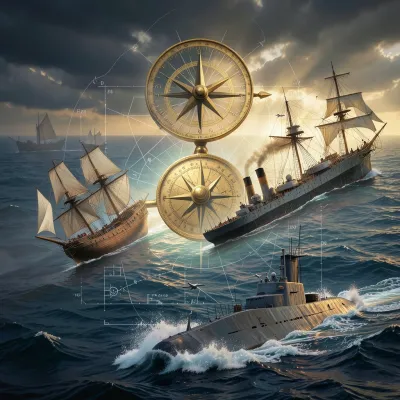
*Oceanic Command: A History of Naval Warfare from Triremes to Aircraft Carriers* explores the evolution of maritime strategy, technology, and power from antiquity to the 21st century. The narrative begins with the oared warships of the Mediterranean, such as the Greek trireme and Roman quinquereme, highlighting how ancient empires used rams, disciplined crews, and specialized logistics to achieve sea control. As gunpowder and sail replaced oars, the book traces the rise of the line of battle and the age of fighting sail, where broadside-armed ships of the line and galleons became the primary instruments of global trade and imperial expansion.
The industrial revolution transformed naval warfare through the introduction of steam propulsion, iron hulls, and armored plating, leading to a technological arms race between guns and armor. The book examines the strategic shift from the "Jeune École" theories of commerce raiding to Alfred Thayer Mahan’s emphasis on decisive fleet engagements, a doctrine that culminated in the era of massive dreadnoughts. World War I and II further revolutionized the domain with the introduction of submarines, mines, and naval aviation, eventually shifting the center of naval power from the battleship to the aircraft carrier and the carrier strike group.
The latter half of the book focuses on the Cold War and the modern era, detailing the impact of nuclear propulsion, guided missiles, and satellite surveillance. The text analyzes how the undersea contest for nuclear deterrence and the development of electronic warfare created a layered, networked battlespace. It also explores the unglamorous but essential role of maritime logistics, containerization, and international law in maintaining the global maritime commons, where freedom of navigation remains a cornerstone of international stability.
Looking toward the future, the book addresses the emerging challenges of the 21st century, including the rise of Anti-Access/Area-Denial (A2/AD) strategies, cyber warfare, and uncrewed autonomous systems. It concludes by considering how climate change and shifting geopolitical rivalries are reshaping maritime geography, particularly in the Arctic and littoral zones. Throughout the history, the work emphasizes that while technology and ship designs change, the fundamental principles of sea power—logistics, geography, and the pursuit of information dominance—remain the enduring pillars of oceanic command.
What You'll Find Inside:
- Traces the evolution of naval warfare from ancient triremes to modern carrier strike groups, highlighting key technological innovations like the corvus, ironclads, dreadnoughts, and nuclear submarines
- Examines the three persistent strategic problems of sea power: sea control, commerce protection, and power projection across different historical eras
- Analyzes how geography, technology, and organization interact to create maritime supremacy, from Mediterranean chokepoints to global maritime commons
- Covers pivotal theoretical developments including the Jeune École vs. Mahan debate on sea power strategies and their influence on naval doctrine
- Connects historical naval developments to contemporary challenges including A2/AD strategies, cyber warfare, uncrewed systems, and climate change impacts on maritime operations
Who's It For:
This book is ideal for naval officers, maritime historians, strategists, and policy makers seeking to understand the historical evolution of sea power. It will also benefit students of international relations and military history who want to grasp how naval developments have shaped global power dynamics. Professionals in maritime security, defense planning, or naval procurement will find valuable insights into enduring principles of naval warfare, while general readers interested in military history and technology-driven strategic change will find it engaging and informative.
Table of Contents:
- Introduction
- Chapter 1 Oars, Bronze, and Ram: The Rise of the Trireme
- Chapter 2 From Salamis to Actium: Classical and Hellenistic Sea Power
- Chapter 3 Rome’s Mare Nostrum: Corvus, Logistics, and Empire
- Chapter 4 Dhows, Junks, and Monsoons: Maritime Asia and the Indian Ocean
- Chapter 5 Galleys, Galleasses, and Gunpowder: The Mediterranean Contest
- Chapter 6 From Caravel to Galleon: Atlantic Exploration and Sea Lanes
- Chapter 7 Line of Battle: The Sailing Navy and the Age of Fighting Sail
- Chapter 8 Pirates, Privateers, and Commerce Protection
- Chapter 9 Steam, Shell, and Screw: Industrializing the Fleet
- Chapter 10 Ironclads and Monitors: Revolution in Ship Design
- Chapter 11 Jeune École vs. Mahan: Competing Theories of Sea Power
- Chapter 12 Dreadnoughts and the Battleship Era
- Chapter 13 Submarines, Mines, and Convoys in World War I
- Chapter 14 Interwar Innovation: Naval Aviation and Codes
- Chapter 15 Carrier Ascendant: The Pacific War and Global Air-Sea Battle
- Chapter 16 Amphibious Warfare and Maritime Logistics in World War II
- Chapter 17 The Battle of the Atlantic: ASW, Signals, and Industry
- Chapter 18 Cold War at Sea: Nuclear Submarines and Blue-Water Strategy
- Chapter 19 Missiles, Satellites, and the Electronic Ocean
- Chapter 20 From Brown to Green to Blue: Littoral Operations and Maritime Interdiction
- Chapter 21 Tankers, Containers, and the Global Maritime Commons
- Chapter 22 Law of the Sea, Chokepoints, and Freedom of Navigation
- Chapter 23 Jointness and Network-Centric Warfare: Carrier Strike Groups
- Chapter 24 A2/AD, Cyber, and Uncrewed Systems: The 21st-Century Contest
- Chapter 25 Futures of Sea Power: Climate, Technology, and Great-Power Competition
Author:
Published By:
Date Published:
May 7, 2026
Type:
Nonfiction
Language:
English
Word Count:
61,044 words
Reading Time:
4 hours 16 minutes
Sample:
Order:
Order Oceanic Command: A History of Naval Warfare from Triremes to Aircraft Carriers (Paperback) on MixCache.com:
Buy NowPrint copy is made to order and ships worldwide. Includes the ebook free, ready to read instantly.
$5 account credit for all new MixCache.com accounts, usable toward any ebook purchase!*


