Browse by Category
Fiction
- Action & Adventure
- African American
- Anthologies
- Children's Fiction
- Classics
- Comics & Graphic Novels
- Coming of Age
- Contemporary
- Cultural & Regional
- Drama
- Erotica
- Fantasy
- General
- Historical Fiction
- Horror
- Humor & Satire
- Literary Fiction
- Mystery, Thriller & Suspense
- Poetry
- Religious & Inspirational
- Romance
- Science Fiction
- Short Stories
- War & Military
- Westerns
- Women's Fiction
- Young Adult
Non-Fiction
- Antiques & Collectibles
- Arts & Photography
- Biographies & Memoirs
- Business & Money
- Children's Non-Fiction
-
Computers & Technology
- Artificial Intelligence
- Computer Science
- Cybersecurity & Cryptography
- Data Science & Analytics
- Databases & Big Data
- Game Development & Design
- General
- Hardware & DIY
- Mobile App Development
- Networking & Cloud Computing
- Operating Systems
- Programming
- Robotics
- Software
- Software Engineering
- User Experience (UX) & Design
- Web Development & Design
- Cooking, Food & Wine
- Crafts, Hobbies & Home
- Education & Teaching
- Engineering
- General
- Health, Fitness & Dieting
-
History
- African History
- African History - North Africa
- African History - Sub-Saharan Africa
- American History
- American History - 20th Century
- American History - Civil War
- American History - Colonial Period
- Ancient History
- Asian History
- Asian History - China
- Asian History - India
- Asian History - Japan
- Asian History - Southeast Asia
- European History
- European History - Ancient Greece
- European History - Ancient Rome
- European History - Medieval
- European History - Modern
- European History - Renaissance
- General
- Middle Eastern History
- Military History
- Military History - Aviation
- Military History - Naval
- Social & Cultural History
- World History
- Humor & Entertainment
- Industrial Technology
- Language Learning
- Law
- LGBTQ+ Non-Fiction
- Literary Criticism
- Medical Books
- Parenting & Relationships
- Philosophy
- Politics & Social Sciences
- Reference
- Religion & Spirituality
-
Science & Math
- Agricultural Sciences
- Astronomy & Space Science
- Behavioral Sciences
- Biological Sciences
- Botany & Plant Science
- Chemistry
- Earth Sciences
- Engineering - Chemical
- Engineering - Civil
- Engineering - Electrical
- Engineering - Mechanical
- Environment
- General
- Geology
- Mathematics
- Nature & Ecology
- Oceanography
- Paleontology
- Physics
- Statistics
- Self-Help
- Sports & Outdoors
- Study Aids
- Sustainability & Green Living
- Textbooks
- Transportation
- Travel
- True Crime
- Urban Planning & Development
- Veterinary Medicine
- Writing & Publishing
Jump to Section
MixCache.com Total Access
Unlimited reading and audiobooks for every book published by MixCache.com.
Included titles carry the MTA badge.
Learn more →
Nile Kingdoms: Statecraft and Society in Ancient Egypt and Nubia
MTA
Comparative Political, Religious, and Material Cultures along the Nile
About this book:
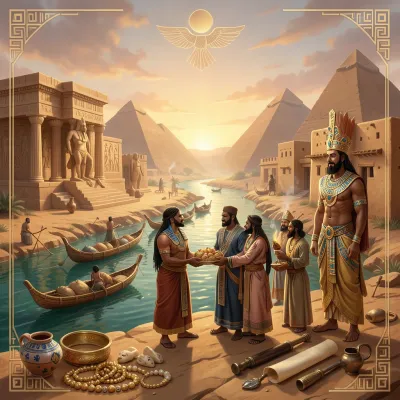
"Nile Kingdoms: Statecraft and Society in Ancient Egypt and Nubia" offers a comprehensive comparative analysis of the entangled histories of ancient Egypt and Nubia, examining how these two powerful civilizations shaped each other through a dynamic interplay of political, religious, and material cultures along the Nile River. The book challenges traditional interpretations of Nubia as merely a periphery to Egyptian imperial might, instead presenting it as a region of vibrant indigenous polities that actively engaged with, resisted, and influenced their northern neighbor. Through an interdisciplinary approach, the authors integrate archaeological findings, textual evidence, and scientific analyses to reconstruct a nuanced picture of cross-cultural interaction, demonstrating that the Nile was a connective artery rather than a rigid boundary.
The book traces the evolution of these interactions from Early Dynastic Egypt to the New Kingdom, highlighting how the unique geography of the Nile Valley—with its cataracts, deserts, and fertile floodplains—profoundly influenced statecraft, trade, and social organization. Chapters delve into specific aspects such as the forging of the Egyptian state, the rise of Nubian polities like the A-Group, C-Group, and Kerma kingdoms, and the strategic importance of borderlands like Wawat, Kush, and the fortified Semna Zone. It explores the intricate mechanisms of diplomacy, gift exchange, and warfare, illustrating how these tools were used to negotiate power and manage relationships across the cultural divide. The flow of vital resources like gold, ivory, and incense is shown to be central to both economies and political ambitions, driven by sophisticated networks of boats and caravans.
A significant portion of the book is dedicated to understanding the cultural and social dimensions of contact. It investigates the movement of gods like Amun, Hathor, and Dedun, demonstrating how religious integration created shared sacred geographies while also reinforcing political claims, particularly at sites like Jebel Barkal. The aesthetics of art in contact, the technologies of textiles and metallurgy, and the daily lives of households on the frontier reveal a pervasive hybridization of practices and identities, challenging notions of cultural purity. The book also addresses critical modern debates, including the legacy of colonialism in archaeological scholarship, the complexities of defining ancient identity, and the ethical responsibilities of interpreting a contested past.
Ultimately, "Nile Kingdoms" argues that the frontier between Egypt and Nubia was a dynamic laboratory where imperial strategies were tested, cultural forms were negotiated, and new social realities were constantly forged. It concludes by drawing global comparisons, positioning the Nile experience within a broader framework of ancient imperial dynamics, and underscoring the enduring legacies of these intertwined civilizations in shaping later political, economic, and cultural developments in the region and beyond. The book presents a compelling narrative of adaptation, resistance, and continuous interaction, revealing the deep interdependence that characterized life along the ancient Nile.
What You'll Find Inside:
- A comparative framework that treats Egypt and Nubia as entangled polities, highlighting Nubian agency and the mutual shaping of statecraft, religion, and material culture.
- Detailed analysis of Nile frontier geography—cataracts, deserts, and river routes—and how these physical features influenced trade, diplomacy, fortification, and settlement patterns.
- Examination of the economic networks that powered the corridor, focusing on gold, ivory, incense, and other commodities as media of tribute, exchange, and political leverage.
- Exploration of religious integration and syncretism, tracing the movement of deities such as Amun, Hathor, and Dedun and the creation of shared sacred landscapes across borders.
- Insights into daily life, craft production, and household economies along the Nile, showing how ordinary people negotiated identity, labor, and exchange in frontier zones.
Who's It For:
This book is designed for undergraduate and graduate students, educators, and general readers interested in ancient history, archaeology, and comparative state formation. It will particularly benefit those seeking a nuanced understanding of how Egypt and Nubia interacted as equal partners, how frontiers functioned as zones of negotiation rather than rigid barriers, and how trade, religion, and everyday life shaped imperial dynamics along the Nile Valley.
Table of Contents:
- Introduction
- Chapter 1 Landscapes of the Nile: Cataracts, Deserts, and the Making of Frontiers
- Chapter 2 Timelines and Cross-Currents: Early Dynastic Egypt to the Dawn of Kerma
- Chapter 3 Evidence and Method: Archaeology, Texts, and Scientific Analyses
- Chapter 4 Forging the Egyptian State: Kingship, Bureaucracy, and Ideology
- Chapter 5 Peoples and Polities of Nubia: A‑Group, C‑Group, and the Rise of Kerma
- Chapter 6 Naming the Borderlands: Wawat, Kush, and the Semna Zone
- Chapter 7 Fortresses and Frontier Towns: Buhen, Semna, Mirgissa, and Sai
- Chapter 8 Diplomacy, Gift Exchange, and War: Negotiating Power along the Nile
- Chapter 9 Gold, Ivory, and Incense: Networks of Trade and Tribute
- Chapter 10 Boats and Caravans: Riverine and Desert Corridors of Movement
- Chapter 11 Gods across Borders: Amun, Hathor, Dedun, and Sacred Geography
- Chapter 12 Ritual and Sovereignty: Ceremonies of Rule from Memphis to the Third Cataract
- Chapter 13 Deathscapes and Memory: Tombs, Tumuli, and Funerary Practice
- Chapter 14 Art in Contact: Iconography, Style, and the Politics of Aesthetics
- Chapter 15 Workshops of Power: Textiles, Metallurgy, and Craft Technologies
- Chapter 16 People on the Move: Migration, Captives, Mercenaries, and Intermarriage
- Chapter 17 Words of Empire: Hieroglyphs, Hieratic, and Nubian Onomastics
- Chapter 18 Provinces and Peripheries: Nomarchs, Chiefs, and Colonial Administrators
- Chapter 19 Middle Kingdom in Nubia: Expansion, Fortification, and Exchange
- Chapter 20 Second Intermediate Realignments: Hyksos, Kerma Ascendancy, and Alliances
- Chapter 21 The New Kingdom in Nubia: Administration, Temples, and Gold
- Chapter 22 Sacred Hegemonies: Amun of Thebes, Jebel Barkal, and Religious Integration
- Chapter 23 Borderlands at Work: Households, Diet, and Everyday Economies
- Chapter 24 Debating the Past: Colonialism, Identity, and Archaeological Controversies
- Chapter 25 Legacies and Comparisons: Ancient Imperial Dynamics in a Global Frame
Author:
Published By:
Date Published:
May 6, 2026
Type:
Nonfiction
Language:
English
Word Count:
69,704 words
Reading Time:
4 hours 53 minutes
Sample:
Order:
Order Nile Kingdoms: Statecraft and Society in Ancient Egypt and Nubia (Hardcover) on MixCache.com:
Buy NowPrint copy is made to order and ships worldwide. Includes the ebook free, ready to read instantly.
$5 account credit for all new MixCache.com accounts, usable toward any ebook purchase!*