
Browse by Category
Fiction
- Action & Adventure
- African American
- Anthologies
- Children's Fiction
- Classics
- Comics & Graphic Novels
- Coming of Age
- Contemporary
- Cultural & Regional
- Drama
- Erotica
- Fantasy
- General
- Historical Fiction
- Horror
- Humor & Satire
- Literary Fiction
- Mystery, Thriller & Suspense
- Poetry
- Religious & Inspirational
- Romance
- Science Fiction
- Short Stories
- War & Military
- Westerns
- Women's Fiction
- Young Adult
Non-Fiction
- Antiques & Collectibles
- Arts & Photography
- Biographies & Memoirs
- Business & Money
- Children's Non-Fiction
-
Computers & Technology
- Artificial Intelligence
- Computer Science
- Cybersecurity & Cryptography
- Data Science & Analytics
- Databases & Big Data
- Game Development & Design
- General
- Hardware & DIY
- Mobile App Development
- Networking & Cloud Computing
- Operating Systems
- Programming
- Robotics
- Software
- Software Engineering
- User Experience (UX) & Design
- Web Development & Design
- Cooking, Food & Wine
- Crafts, Hobbies & Home
- Education & Teaching
- Engineering
- General
- Health, Fitness & Dieting
-
History
- African History
- African History - North Africa
- African History - Sub-Saharan Africa
- American History
- American History - 20th Century
- American History - Civil War
- American History - Colonial Period
- Ancient History
- Asian History
- Asian History - China
- Asian History - India
- Asian History - Japan
- Asian History - Southeast Asia
- European History
- European History - Ancient Greece
- European History - Ancient Rome
- European History - Medieval
- European History - Modern
- European History - Renaissance
- General
- Middle Eastern History
- Military History
- Military History - Aviation
- Military History - Naval
- Social & Cultural History
- World History
- Humor & Entertainment
- Industrial Technology
- Language Learning
- Law
- LGBTQ+ Non-Fiction
- Literary Criticism
- Medical Books
- Parenting & Relationships
- Philosophy
- Politics & Social Sciences
- Reference
- Religion & Spirituality
-
Science & Math
- Agricultural Sciences
- Astronomy & Space Science
- Behavioral Sciences
- Biological Sciences
- Botany & Plant Science
- Chemistry
- Earth Sciences
- Engineering - Chemical
- Engineering - Civil
- Engineering - Electrical
- Engineering - Mechanical
- Environment
- General
- Geology
- Mathematics
- Nature & Ecology
- Oceanography
- Paleontology
- Physics
- Statistics
- Self-Help
- Sports & Outdoors
- Study Aids
- Sustainability & Green Living
- Textbooks
- Transportation
- Travel
- True Crime
- Urban Planning & Development
- Veterinary Medicine
- Writing & Publishing
Jump to Section
MixCache.com Total Access
Unlimited reading and audiobooks for every book published by MixCache.com.
Included titles carry the MTA badge.
Learn more →
Sport, Politics, and Identity in the Americas
MTA
Baseball, soccer, and national culture from ballfields to statecraft
About this book:
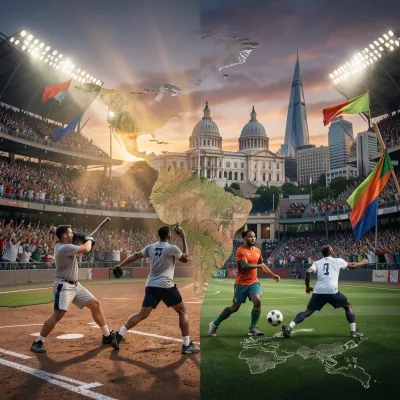
*Sport, Politics, and Identity in the Americas* explores the profound intersection of athletics, statecraft, and social evolution across the Western Hemisphere. Centering on the histories of baseball and soccer, the book illustrates how ballfields and stadiums have served as "public squares" where national virtues are performed and social fractures are exposed. From the industrial landscapes of the United States to the sugar plantations of the Caribbean and the urban barrios of Latin America, the narrative traces how these games migrated with capital and people, evolving into essential idioms of national belonging and instruments of soft power.
The text delves into the critical role of sport in navigating racial and gendered hierarchies. It examines the "color lines" of U.S. baseball and the myth of "racial democracy" in Brazilian soccer, highlighting how athletes from marginalized Indigenous and Afro-descendant communities used the pitch to demand visibility and dignity. The book also tracks the rise of women in these male-dominated spaces, illustrating how their struggle for professional recognition mirrored broader hemispheric shifts in power and visibility. Through case studies of mega-events like the 1968 Mexico City Olympics and the 1978 Argentina World Cup, the book demonstrates how authoritarian regimes and democratic states alike have conscripted sporting spectacles to manufacture legitimacy or distract from political repression.
Furthermore, the book analyzes the modern commodification of sport through the lenses of media, money, and transnational labor. It details the emergence of a global talent pipeline—exemplified by Dominican baseball academies—and the shift toward free agency and high-stakes transfer markets. This economic transition is balanced against the persistent emotional labor of diaspora fandoms, where migrant communities use digital platforms and local bars to maintain ties to their homelands. By examining the "legacy" of stadiums as both urban assets and sites of displacement, the book questions the true developmental impact of hosting global tournaments.
Looking toward the future, the work considers how climate change, biometric technology, and digital fragmentation are reshaping the athletic landscape. It concludes that while the business and delivery of sport are being revolutionized, the core stakes remain unchanged: the playing field continues to be a primary arena for negotiating citizenship, merit, and the right to the city. Ultimately, the book argues that sport in the Americas is not a diversion from reality but a concentrated version of it, where the possibilities for more just forms of belonging are continually tested and reimagined.
What You'll Find Inside:
- The book traces how baseball and soccer evolved from imported pastimes to central elements of national identity across the Americas, shaped by migration, imperialism, and transnational connections while reflecting local cultures and aspirations.
- It examines the complex relationship between sports and politics, demonstrating how stadiums have served as sites for both state propaganda and protest movements, from the 1968 Mexico City Olympics to contemporary social justice demonstrations.
- The text analyzes racial and gender dynamics in sports, tracing how Afro-descendant, Indigenous, and women athletes have navigated exclusion while using sporting platforms to assert visibility and challenge societal hierarchies.
- It investigates the economic structures of sports, including talent pipelines from the Caribbean and Latin America to major leagues, the impact of mega-events on host cities, and the transnational labor markets that shape player movements.
- The book considers contemporary challenges facing sports in the Americas, including climate change threats to sporting infrastructure, digital media's transformation of fandom, and evolving labor models in globalized sports economies.
Who's It For:
This book is ideal for students and scholars of Latin American and American studies, sports history, sociology, or political science who seek to understand how athletics intersects with national identity, power dynamics, and social movements. It will particularly benefit researchers examining the intersections of race, gender, and nationalism through sports, as well as professionals in sports management, international relations, or cultural policy needing historical context for contemporary issues. General readers with a deep interest in sports as a cultural phenomenon beyond scores and statistics will also find valuable insights into how the games we play reflect and shape the societies we live in.
Table of Contents:
- Introduction
- Chapter 1 Landscapes of Play: From Ballfields to Statecraft
- Chapter 2 The Making of a National Pastime: Baseball and U.S. Identity
- Chapter 3 Fútbol Takes Root: Popular Imagination in Latin America
- Chapter 4 Color Lines and Clubhouses: Race, Segregation, and Integration
- Chapter 5 Caribbean Circuits: Sugar, Migration, and the Baseball Archipelago
- Chapter 6 The Cuban Diamond: Revolution, Amateurism, and Internationalism
- Chapter 7 Dominican Dreams: Academies, Exports, and the Politics of Opportunity
- Chapter 8 Mexico’s Diamonds and Pitches: Borderlands, Rivalry, and Nationhood
- Chapter 9 Brazil’s Beautiful Game: Class, Color, and National Style
- Chapter 10 River Plate Football: Argentina, Uruguay, and the Craft of Myth
- Chapter 11 Canada’s Split Screen: Hockey’s Shadow and the Rise of Baseball and Soccer
- Chapter 12 Women on the Pitch and the Diamond: Gender, Visibility, and Power
- Chapter 13 Indigenous and Afro-Descendant Sporting Worlds: Recognition and Resistance
- Chapter 14 Stadiums as Public Squares: Protest, Policing, and the Right to the City
- Chapter 15 Mexico City 1968: Olympics, Performance, and Global Protest
- Chapter 16 Cold War Games: Boycotts, Soft Power, and Hemispheric Diplomacy
- Chapter 17 Argentina 1978: World Cup Spectacle under a Dictatorship
- Chapter 18 USA 1994: World Cup, Immigration, and the Marketing of Multiculturalism
- Chapter 19 Brazil’s Mega-Events: 2014 World Cup, 2016 Olympics, and the Politics of Promise
- Chapter 20 Media, Money, and Myths: Broadcasting, Sponsorship, and Nation Branding
- Chapter 21 Transnational Leagues and Labor: Free Agency, Transfers, and the Global Draft
- Chapter 22 Diaspora Fandoms: Barrios, Bars, and Digital Communities across Borders
- Chapter 23 Matches as Diplomacy: Rivalries and Reconciliations across the Americas
- Chapter 24 Measuring Impact: Development, Inequality, and the Legacy Debate
- Chapter 25 Futures of Play: Climate, Technology, and the Next Hemispheric Games
Author:
Published By:
Date Published:
May 5, 2026
Type:
Nonfiction
Language:
English
Word Count:
68,301 words
Reading Time:
4 hours 47 minutes
Sample:
MixCache.com Total Access
Get unlimited access to this book + all books published by MixCache.com for $11.99/month
Subscribe to MTAOr purchase this book individually below
Order:
Buy the Sport, Politics, and Identity in the Americas ebook on MixCache.com:
Buy Now
Full ebook will be available immediately
- read online or download as a PDF file.
$5 account credit for all new MixCache.com accounts, usable toward any ebook purchase!*



Ratings & Reviews
Ask Questions About This Book
Have a question about the content? Ask our AI assistant!
Start by asking a question about "Sport, Politics, and Identity in the Americas"
Example: "Does this book mention William Shakespeare?"
Thinking...