Browse by Category
Fiction
- Action & Adventure
- African American
- Anthologies
- Children's Fiction
- Classics
- Comics & Graphic Novels
- Coming of Age
- Contemporary
- Cultural & Regional
- Drama
- Erotica
- Fantasy
- General
- Historical Fiction
- Horror
- Humor & Satire
- Literary Fiction
- Mystery, Thriller & Suspense
- Poetry
- Religious & Inspirational
- Romance
- Science Fiction
- Short Stories
- War & Military
- Westerns
- Women's Fiction
- Young Adult
Non-Fiction
- Antiques & Collectibles
- Arts & Photography
- Biographies & Memoirs
- Business & Money
- Children's Non-Fiction
-
Computers & Technology
- Artificial Intelligence
- Computer Science
- Cybersecurity & Cryptography
- Data Science & Analytics
- Databases & Big Data
- Game Development & Design
- General
- Hardware & DIY
- Mobile App Development
- Networking & Cloud Computing
- Operating Systems
- Programming
- Robotics
- Software
- Software Engineering
- User Experience (UX) & Design
- Web Development & Design
- Cooking, Food & Wine
- Crafts, Hobbies & Home
- Education & Teaching
- Engineering
- General
- Health, Fitness & Dieting
-
History
- African History
- African History - North Africa
- African History - Sub-Saharan Africa
- American History
- American History - 20th Century
- American History - Civil War
- American History - Colonial Period
- Ancient History
- Asian History
- Asian History - China
- Asian History - India
- Asian History - Japan
- Asian History - Southeast Asia
- European History
- European History - Ancient Greece
- European History - Ancient Rome
- European History - Medieval
- European History - Modern
- European History - Renaissance
- General
- Middle Eastern History
- Military History
- Military History - Aviation
- Military History - Naval
- Social & Cultural History
- World History
- Humor & Entertainment
- Industrial Technology
- Language Learning
- Law
- LGBTQ+ Non-Fiction
- Literary Criticism
- Medical Books
- Parenting & Relationships
- Philosophy
- Politics & Social Sciences
- Reference
- Religion & Spirituality
-
Science & Math
- Agricultural Sciences
- Astronomy & Space Science
- Behavioral Sciences
- Biological Sciences
- Botany & Plant Science
- Chemistry
- Earth Sciences
- Engineering - Chemical
- Engineering - Civil
- Engineering - Electrical
- Engineering - Mechanical
- Environment
- General
- Geology
- Mathematics
- Nature & Ecology
- Oceanography
- Paleontology
- Physics
- Statistics
- Self-Help
- Sports & Outdoors
- Study Aids
- Sustainability & Green Living
- Textbooks
- Transportation
- Travel
- True Crime
- Urban Planning & Development
- Veterinary Medicine
- Writing & Publishing
Jump to Section
MixCache.com Total Access
Unlimited reading and audiobooks for every book published by MixCache.com.
Included titles carry the MTA badge.
Learn more →
Dragon Diplomacy: China’s Foreign Relations from Tribute to Superpower
MTA
From the tribute system to modern diplomatic strategies, an international history of Chinese external relations
About this book:
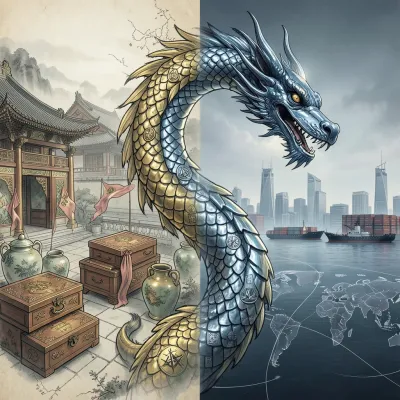
*Dragon Diplomacy* traces the two-millennium evolution of Chinese foreign relations, moving from the ritualized hierarchy of the imperial tribute system to the complex strategies of a modern superpower. The narrative begins by analyzing how the concepts of "All Under Heaven" and the tribute system established a durable grammar for regional order based on managed reciprocity, ritualized status, and the strategic control of trade. It examines how this framework adapted to the arrival of silver bullion, nomadic incursions, and maritime expansion, emphasizing that China’s historical diplomacy was rarely isolationist, but rather a pragmatic exercise in calibrated access designed to preserve the center's dignity and security.
The book details the profound rupture caused by the 19th-century "Unequal Treaty" regime, during which gunboat diplomacy forced the Qing state to adopt Western legal and diplomatic norms. This period of "informal empire" catalyzed the professionalization of the Chinese diplomatic state, as reformers sought to master international law and technology to regain sovereignty. The text follows this trajectory through the fractured Republican era and into the revolutionary realignment of the early People’s Republic. Initially "leaning to one side" with the Soviet Union, China eventually pivoted toward Third World solidarity and a historic rapprochement with the United States, illustrating a persistent theme of prioritizing regime security and national autonomy over rigid ideological consistency.
In the contemporary era, the focus shifts to economic statecraft and the "Belt and Road" turn, where China leverages its massive industrial capacity, financial resources, and technological standards to shape global governance. The book analyzes the modern application of traditional principles—such as non-interference and territorial integrity—alongside new instruments of power like cyber diplomacy, maritime assertiveness in the South China Sea, and the "One Country, Two Systems" model. These chapters highlight how China increasingly seeks to lead from within multilateral institutions while simultaneously building parallel networks that reflect its own preferences for sovereignty and stability.
The conclusion reflects on the enduring patterns of Chinese statecraft, arguing that today’s foreign policy is a palimpsest of historical repertoires and modern innovations. Whether managing great-power competition with the United States, securing energy lanes, or projecting soft power through diaspora networks, Beijing continues to favor a style of diplomacy that prizes indirection, face-management, and the conversion of economic wealth into geopolitical influence. Ultimately, the book presents China not as a disruptive newcomer, but as a sophisticated actor returning to a role of global centrality, using a blend of ancient pragmatism and high-tech coercion to navigate a changing world order.
What You'll Find Inside:
- The enduring influence of the tribute system's hierarchy, ritual, and managed exchange on China's diplomatic approach across centuries
- How global silver flows reshaped China's external relations and created new diplomatic instruments from the Qing era onward
- The evolution from unequal treaty ports to economic statecraft through modern initiatives like Belt and Road and technology standards
- The persistent tension between China's proclaimed principles of noninterference/territorial integrity and its practices of influence
- China's adaptive reuse of historical diplomatic grammar in contemporary contexts including maritime claims and global governance
Who's It For:
This book is essential for scholars of international relations, Chinese foreign policy specialists, diplomats, and policymakers seeking to understand the historical foundations of China's current global engagement. It provides critical context for students and professionals who need to comprehend how China's diplomatic traditions shape its behavior in the 21st century, particularly regarding its approach to sovereignty, economic statecraft, and multilateral institutions.
Table of Contents:
- Introduction
- Chapter 1 Under Heaven: Worldviews, Ritual, and the Architecture of the Tribute System
- Chapter 2 Frontiers and Envoys: Foreign Relations from the Han to the Tang
- Chapter 3 Merchants, Monks, and Maritime Gateways: Diplomacy in the Song Era
- Chapter 4 Eurasian Convergence: The Yuan Dynasty and Steppe–Sown Interactions
- Chapter 5 Voyages and Vigilance: The Ming World Order from Zheng He to Coastal Defense
- Chapter 6 Rivers of Silver: Global Bullion Flows and the Making of a Qing Commercial Order
- Chapter 7 High Qing Hegemony: Tributaries, Protectorates, and Imperial Expansion
- Chapter 8 The Canton System: Ports, Protocol, and Early Encounters with Europe
- Chapter 9 Gunboat Encounters: Opium Wars and the Birth of the Unequal Treaty Regime
- Chapter 10 Treaty Ports and Informal Empire: Missionaries, Merchants, and Extraterritoriality
- Chapter 11 Reforming the Diplomatic State: Self-Strengthening and the Quest for International Recognition
- Chapter 12 Republic in a Fractured World: War, Alliance, and Diplomacy, 1911–1949
- Chapter 13 Revolution and Realignment: The Early PRC, Korea, and “Leaning to One Side”
- Chapter 14 From Split to Solidarity: The Sino–Soviet Rupture and Third World Diplomacy
- Chapter 15 Opening the Door: Sino–American Rapprochement and Reform Era Foreign Policy
- Chapter 16 Sovereignty Reimagined: Hong Kong, Macau, and the Cross-Strait Question
- Chapter 17 Entering the Halls: Multilateralism, the United Nations, and Global Governance
- Chapter 18 Principles in Practice: Noninterference, Territorial Integrity, and Their Limits
- Chapter 19 Economic Statecraft: Trade, Finance, and the Belt-and-Road Turn
- Chapter 20 Sea Lanes and Shorelines: Maritime Claims, Energy Security, and Regional Orders
- Chapter 21 Wires and Waves: Technology, Standards, and the Politics of Information
- Chapter 22 Flags and Exercises: Military Diplomacy and Security Partnerships
- Chapter 23 Stories, Students, and Soft Power: Public Diplomacy and the Overseas Chinese
- Chapter 24 Pressure and Prudence: Coercive Measures, Sanctions, and Crisis Management
- Chapter 25 Continuity and Choice: Scenarios for China’s Role in a Changing World
Author:
Published By:
Date Published:
May 4, 2026
Type:
Nonfiction
Language:
English
Word Count:
72,454 words
Reading Time:
5 hours 4 minutes
Sample:
Order:
Order Dragon Diplomacy: China’s Foreign Relations from Tribute to Superpower (Hardcover) on MixCache.com:
Buy NowPrint copy is made to order and ships worldwide. Includes the ebook free, ready to read instantly.
$5 account credit for all new MixCache.com accounts, usable toward any ebook purchase!*